

By Dr Majid Khan (Melbourne):
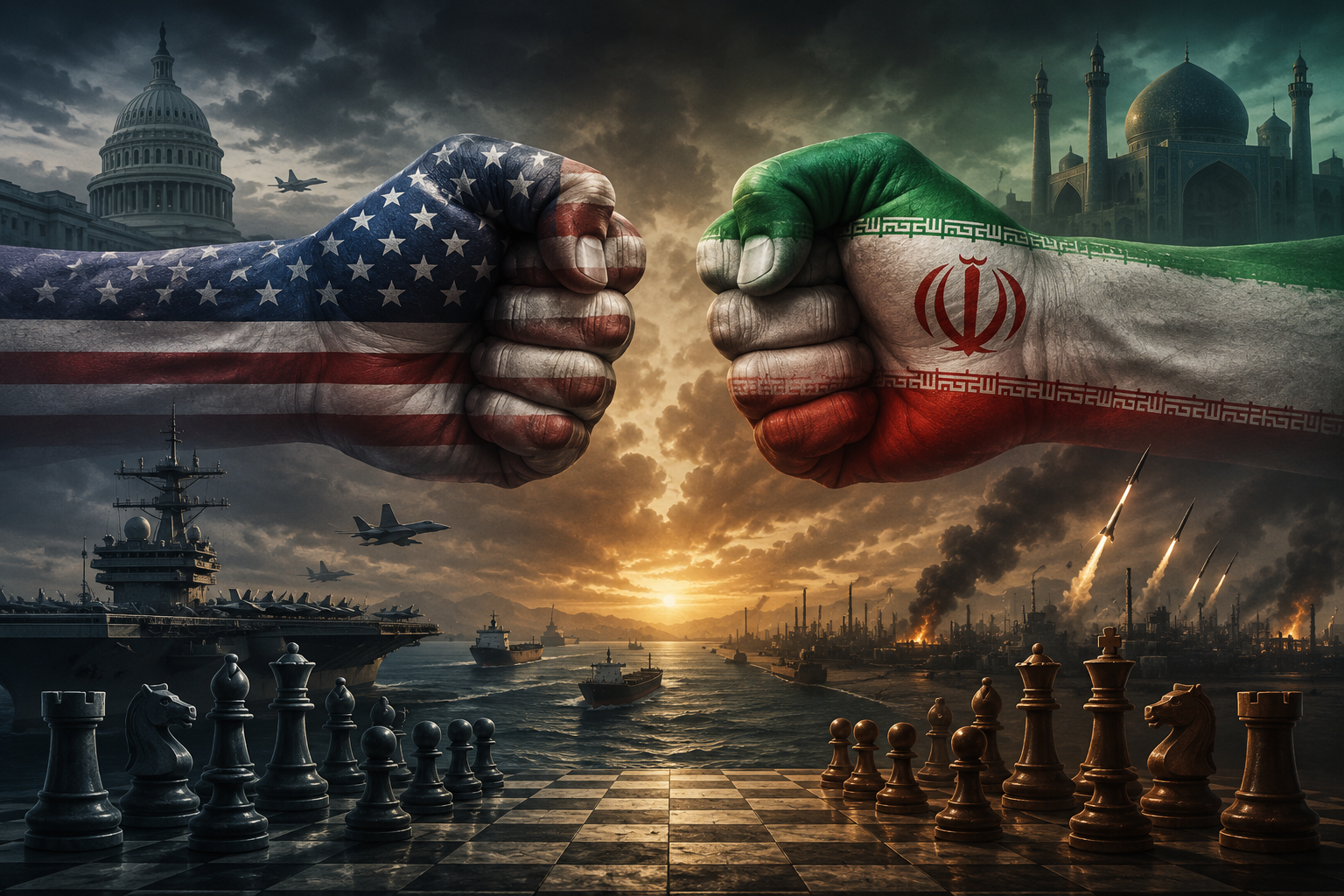
After a fragile period of reduced hostilities, the conflict between the United States and Iran has erupted anew, raising deep concerns about renewed regional warfare, global economic instability, and the persistent reality that wars have become not only instruments of strategy but engines of profit. In early July 2026, following a brief and tenuous ceasefire, the United States carried out a new wave of airstrikes against Iranian military targets after Tehran attacked several commercial vessels in the strategic Strait of Hormuz. The strikes, the fiercest since the previous ceasefire, have reignited fears that a conflict once thought to be winding down may instead be entering a new and unpredictable phase.
The U.S. Central Command said it targeted more than eighty Iranian sites, including air‑defense systems, command and control centers, coastal radar installations, anti‑ship missile facilities, and more than 60 Islamic Revolutionary Guard Corps boats operating near the narrow waterways of the Hormuz strait. According to the Pentagon, these strikes were intended to degrade Iran’s ability to threaten international commercial shipping and to impose “heavy costs” for what Washington described as a violation of the ceasefire and an attack on maritime commerce. Tehran, for its part, denounced the operation as outright aggression and vowed a “crushing response,” asserting that it would no longer distinguish between U.S. and allied targets in the region.
The renewed violence has dramatically underscored the fragility of the diplomatic frameworks that emerged just weeks earlier. After months of intermittent hostilities that began in late February 2026, the United States and Iran had signed a fragile ceasefire agreement brokered by Pakistan and Qatar and supported by early rounds of negotiations in Switzerland. That deal had sought to stabilize the region by reopening shipping lanes in the Strait of Hormuz a vital artery through which nearly a fifth of the world’s crude oil and liquefied natural gas flows and creating a process for addressing long‑standing disputes, including Iran’s nuclear program and its support for regional militias.
The recent flare‑up has reversed much of that tentative progress. Iran’s attacks on commercial tankers in the strait, reportedly aimed at pushing back against perceived economic and military pressure, triggered an immediate U.S. response. President Donald Trump, speaking amid the escalation, declared that he was considering further military action and asserted that the conflict was far from over, though he also sought to reassure markets and domestic audiences that the U.S. was not seeking a broader war. His rhetoric including comments that he was Tehran’s “number one target” reflected the continuing adversarial relationship between Washington and Tehran and the difficulty of disentangling geopolitical competition from the threats of open conflict.
The immediate consequences have been felt not only on the battlefield but in global markets. Oil prices surged sharply as traders reassessed the risks of prolonged disruption to supplies passing through the Gulf. Brent crude settled at multi‑week highs, jumping more than 5 percent in early trading as fears of instability returned to the forefront of investor concerns. The resurgence in prices underscored how fragile global energy markets remain in the face of renewed hostilities in a region that supplies oil and gas to markets across Asia, Europe, and Africa.
The renewed conflict has triggered a broader reassessment of global economic prospects. The International Monetary Fund in its latest World Economic Outlook warned that the resurgence of fighting between the U.S. and Iran could dampen global growth and increase vulnerability to geopolitical shocks. The IMF lowered its forecast for global expansion in 2026, highlighting that geopolitical uncertainty, particularly in volatile regions like the Middle East, remains a significant risk to economic stability.
The human cost of this renewed crisis, while still unfolding, threatens to compound the immense suffering already wrought by months of intermittent violence. Since the conflict erupted in February, thousands of people soldiers, civilians, and workers caught in the crossfire have been killed or displaced, forcing evacuations across Iran and surrounding states, disrupting daily life and fracturing communities in ways that will have long‑term social and economic consequences.
Yet the dramatic escalation also offers a stark window into a paradox of modern geopolitics: while wars devastate lives and disrupt societies, they have become deeply profitable for certain sectors of the global economy. Defense manufacturers and military suppliers have seen significant financial gains throughout the broader 2026 confrontation, driven by urgent demand for weapons, surveillance systems, interceptors, and advanced military hardware. Governments in Europe, Asia, and the Middle East have substantially increased their defense budgets, ordering billions of dollars in systems designed to protect strategic interests and respond to new threats. These procurement cycles, often spanning years, sustain factory production lines, create jobs in industrial sectors, and generate revenue for shareholders and defense technology firms. Even as peace negotiations were underway, long‑term contracts for defense equipment expanded, reflecting an enduring commercial dimension to conflict dynamics.
This economic reality has consequences that extend beyond corporate balance sheets. The continued demand for military hardware ensures that once conflicts begin, they rarely dissipate quickly. War becomes a driver of economic activity, with governments reluctant to scale back spending on defense when sectors of their economies depend on sustained procurement. The expansion of defense industries in the United States and allied countries has made military capabilities a central element of national economic planning, with defense contractors wielding significant influence in political and policy circles.
In this context, the flare‑up between the United States and Iran is unlikely to be easily contained. The strategic stakes in the Gulf including control over shipping lanes, energy resources, and regional influence are deeply intertwined with military presence, naval deployments, and advanced weapons systems. The very infrastructure that underpins the regional ceasefire mechanisms from coastal radar installations to missile defense networks forms part of a broader ecosystem of military readiness that benefits from ongoing tensions.
Moreover, political leaders on all sides face domestic pressures that complicate efforts to pursue sustained diplomacy. In Washington, members of Congress and political leaders have voiced mixed messages about the conflict’s direction, with some urging restraint and others advocating a more assertive approach aimed at degrading Iranian military capabilities. In Tehran, hardliners have seized on the renewed hostilities to argue against concessions, framing the U.S. strikes as proof that Iran must accelerate its strategic autonomy. This interplay of domestic political narratives reinforces a feedback loop in which escalation becomes politically expedient even when diplomatic options exist.
The renewed conflict also risks drawing in other regional actors. Allied states, wary of instability on their borders, are accelerating their own defense procurement programs. Gulf countries, already significant buyers of U.S. and European weapons systems, are expanding orders for missile defense platforms, naval assets, and surveillance technologies in anticipation of future clashes. These procurement decisions, while justified as measures of national security, also fuel the global arms market, sustaining production capacity and reinforcing the economic link between conflict and industrial profit.
International diplomatic efforts to re‑establish a lasting truce continue, with mediators reiterating the need for dialogue even as military exchanges intensify. Pakistan and Qatar, key facilitators of previous negotiations, have reaffirmed their commitment to fostering peace and reducing hostilities. Their continued involvement underscores a recognition among regional actors that instability in the Gulf has consequences far beyond the immediate military theatre. Yet the renewed conflict also highlights the limitations of diplomacy when military incentives remain deeply embedded in global economic and strategic frameworks.
As the dust settles on the latest exchange of fire, global observers are left confronting the uncomfortable truth that war, despite its profound human cost, has become interwoven with economic systems that benefit from conflict. Defense contracts, military spending, and prolonged geopolitical tensions have created conditions in which disengagement is as difficult economically as it is politically. The resurgence of fighting between the United States and Iran may not lead to another all‑out regional war, but it has exposed the fragility of peace in an era where the machinery of war is both a strategic tool and a business model.
The challenge for leaders worldwide is to reconcile these competing forces the imperative to protect civilian lives and stability, and the economic structures that thrive on continued conflict. In the weeks ahead, whether diplomacy once again gains ground or military escalation deepens, the world will be watching not just for the cessation of hostilities but for signs that we can break the cycle in which war itself becomes a profitable enterprise.


