By Mohammad Raashid (Islamabad):
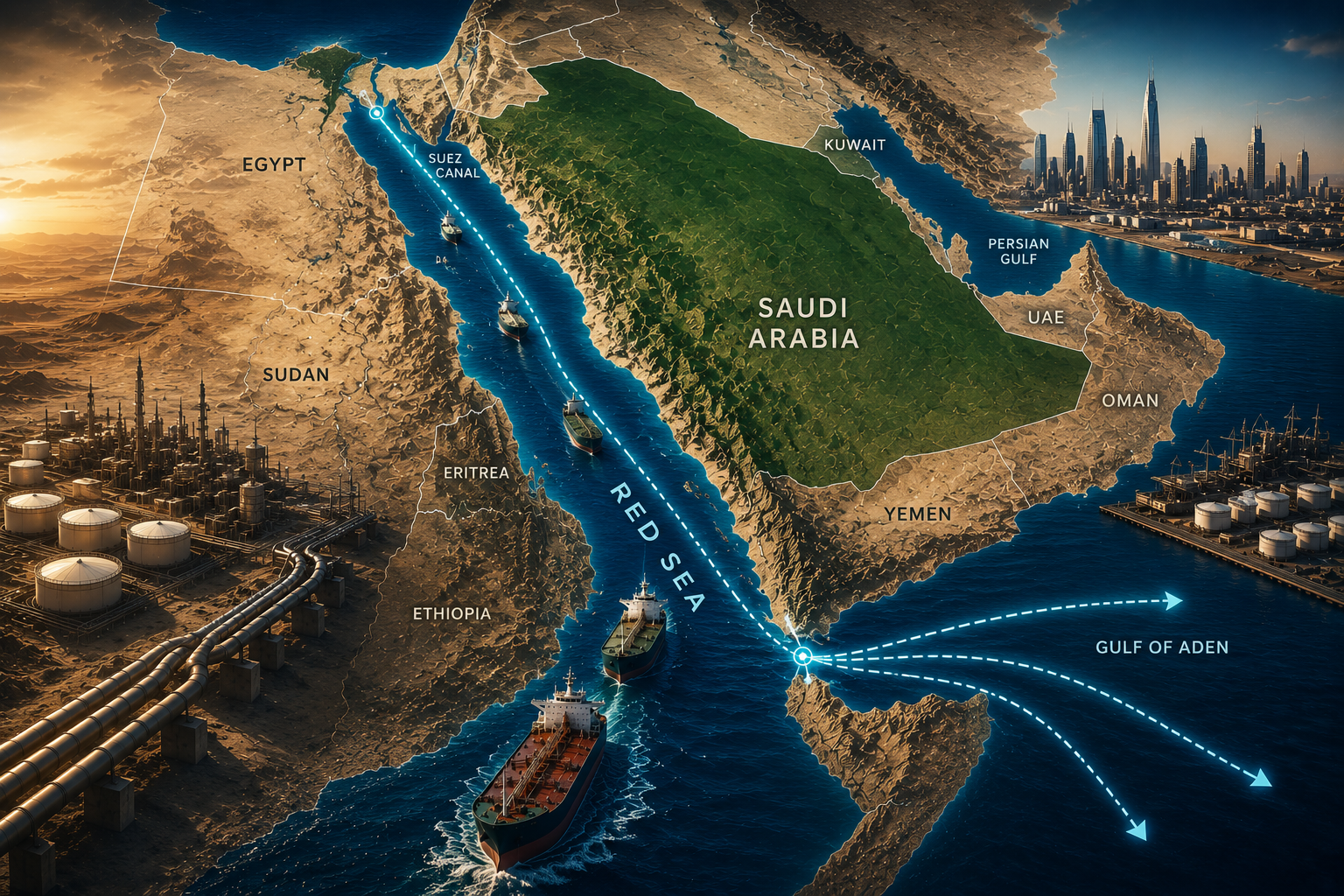
While everyone was watching the Strait of Hormuz, Saudi Arabia quietly built alternative routes through the Red Sea, partnered with MSC, and maximized its massive East-West pipeline. The Iran’s strongest card just got significantly weaker.
In the escalating tensions surrounding the Strait of Hormuz, Iran has long viewed its control over this critical chokepoint through which roughly one-fifth of global oil and LNG typically passes as a decisive strategic weapon. Tehran assumed that any blockade or disruption would force the world to acknowledge its supremacy and compel concessions.
However, while global attention fascinated on the strait, Saudi Arabia quietly advanced alternative routes that have significantly diminished the strait’s effectiveness as a coercive tool. These moves, largely overlooked in mainstream coverage among the crisis, have provided crucial bypass options for energy and trade flows. Saudi Arabia executed three key initiatives that have boosted redundancy and resilience in global supply chains.
Expansion of Red Sea Shipping Networks
Saudi Arabia has accelerated development and utilization of its Red Sea infrastructure, including ports like Yanbu, Jeddah, and King Abdullah Port, as well as ambitious projects such as NEOM. This creates a viable western corridor for exports and imports, routing shipments through the Red Sea and, where feasible, onward via the Suez Canal or southern routes. While the Red Sea route carries its own risks (from Houthi threats in the Bab El-Mandeb area), it offers a strategic alternative that bypasses the Persian Gulf entirely for certain volumes.
Partnership with MSC, the World’s Largest Container Shipping Company
Mediterranean Shipping Company (MSC) the global leader in container shipping, launched a new Europe/Red Sea/Middle East express service in May 2026. This multimodal “land bridge” route sees vessels transit the Suez Canal to Saudi Red Sea ports (Jeddah and King Abdullah Port). Cargo is then trucked across the kingdom to Dammam on the Gulf coast for onward feeder distribution to other Gulf hubs. This hybrid sea land model effectively circumvents the Strait of Hormuz for container trade, enhancing connectivity for Europe and the broader region.
Maximizing the East-West Crude Oil Pipeline (Petroline)
Saudi Arabia’s most strong move has been ramping up its 1,200 km East-West Pipeline (also known as Petroline), which transports crude from eastern Gulf fields (near Abqaiq) across the peninsula to the Red Sea export terminal at Yanbu. Originally built during the 1980s Iran-Iraq War for similar reasons, the pipeline’s capacity has been pushed to a full 7 million barrels per day, during the current crisis. This has allowed substantial volumes of Saudi (and potentially other) crude to reach international markets via the Red Sea without traversing Hormuz.
The pipeline’s sustainable tested capacity is significant but limited compared to total pre-crisis Hormuz flows (historically over 20 mb/d regionally). It has faced attacks and logistical constraints, and it cannot fully replace the strait for all Gulf exporters (Iran, Iraq, Kuwait, etc., remain far more dependent). Red Sea routes also introduce new vulnerabilities, such as Houthi risks. Nevertheless, these Saudi initiatives have demonstrably kept substantial flows moving when Hormuz was heavily disrupted.
Countries and Stakeholders Benefiting from Saudi Arabia’s Moves
Saudi Arabia itself strengthens its position as a reliable energy supplier, boosts its logistics ambitions (aligning with Vision 2030 and the National Transport Strategy), and reduces vulnerability to Iranian pressure.
Major Oil Importers (e.g., Europe, India, China, Japan, South Korea) continued access to Saudi and potentially rerouted Gulf crude helps stabilize global prices and supplies, mitigating shortages that could have spiked energy costs worldwide. India, for instance, has received alternative routing options.
Egypt benefits from increased traffic through the Suez Canal, SUMED pipeline connections, and related Red Sea corridors, enhancing its role as a logistics hub.
Other Gulf States (UAE, Bahrain, Qatar, Kuwait, Oman) indirect gains through MSC’s land bridge, shared infrastructure resilience, and potential access to alternative export/import pathways. The UAE also uses its own Fujairah bypass.
Global Shipping and Trade, MSC and other operators gain new viable routes, broader supply chain stability supports industries worldwide.
Europe can get direct benefits from the new MSC service linking Baltic and other ports to the region faster via Saudi hubs.
These Saudi initiatives underscore a broader shift: while the Strait of Hormuz remains vital, strategic foresight in building redundancies has blunted its weaponization. As the situation evolves, further investments in pipelines, ports, and multimodal corridors could permanently reshape Middle East energy and trade geography.
Strategic & Geopolitical Impact
Reduced Iranian Leverage: Iran can no longer assume a blockade will cripple Saudi Arabia or force immediate global concessions. Saudi’s moves demonstrate redundancy, undermining the “supremacy” narrative.
Global Market Resilience: Alternative routes have prevented a total collapse in supply, though prices still spiked and inventories were drawn down sharply.
Longer-term Shift: These initiatives accelerate Saudi Vision 2030 logistics goals and encourage further investment in pipelines, rail (future land bridge), and Red Sea infrastructure potentially making Hormuz less dominant permanently.The Great Bypass: Saudi Arabia’s Red Sea Vision Challenges Hormuz Dominance