By Raza Syed
The smoke has cleared from the ruins of the Khadijatul Kubra Mosque, but the acrid stench of failure now hangs over the entire capital.
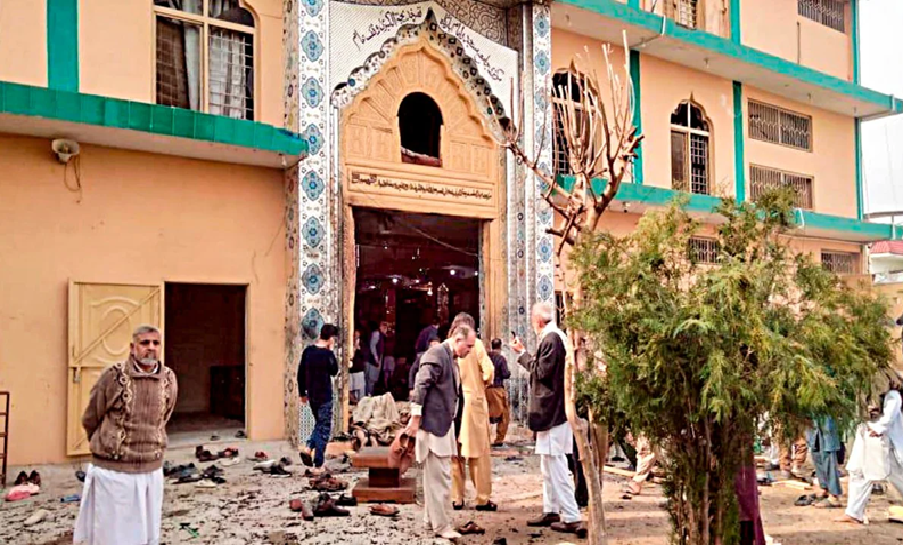
In a grotesque escalation of the sectarian bloodshed that has scarred Pakistan for decades, a suicide bomber detonated explosives inside the Khadijatul Kubra Mosque also known as the Tarlai Imambargah in southeastern Islamabad’s Tarlai Kalan area during Friday prayers, slaughtering at least 31 worshippers and wounding over 169 others. The blast, which targeted a Shia congregation in one of the capital’s ostensibly secure outskirts, transformed a sacred haven into a slaughterhouse of rubble, blood, and anguish, with debris strewn across the prayer hall and frantic rescuers pulling mangled bodies from the wreckage.
Eyewitnesses recounted scenes of unmitigated horror: survivors staggering through smoke-filled chaos, screaming for aid as the acrid stench of explosives mingled with cries of the dying. Hospitals across the city, including major facilities like the Pakistan Institute of Medical Sciences, declared emergencies, overwhelmed by the surge of critically injured victims—many with shrapnel wounds, burns, and traumatic amputations. Initial reports underestimated the carnage at 10-20 fatalities, but the toll climbed relentlessly to 31 as more bodies were unearthed from the debris, a grim tally that underscores not just the attack’s lethality but the state’s sluggish response. Preliminary investigations suggest the perpetrator was a suicide bomber, possibly a foreign national affiliated with the Tehrik-e-Taliban Pakistan (TTP) or the Islamic State Khorasan Province (ISKP), groups infamous for their genocidal campaigns against Shia minorities. No group has claimed responsibility, but the fingerprints of these extremists are unmistakable in a nation where sectarian hatred festers unchecked.
This atrocity is no mere “isolated incident”it is a searing indictment of the Shehbaz Sharif government’s catastrophic incompetence, a regime that prioritizes political survival over the sanctity of human life. For years, Pakistan’s Shia community, comprising roughly 20% of the population, has endured a relentless barrage of targeted violence, with mosques and religious processions turned into killing fields by militant outfits like the TTP and its splinter factions. The 2023 Peshawar mosque bombing, which obliterated over 100 lives inside a purportedly fortified police compound, should have been the catalyst for sweeping reforms. Instead, it revealed the same festering decay: intelligence blackouts, woefully inadequate protections for vulnerable sites, and a government entangled in political intrigue rather than resolute counter terrorism.
Today’s carnage in Islamabad, the epicenter of national power, housing federal institutions, foreign embassies, and military bastions—lays bare the depths of this negligence. Despite a labyrinth of checkpoints, surveillance networks, and patrols that ostensibly safeguard the elite, a bomber infiltrated a mosque during peak prayers, exposing a security perimeter as porous as it is performative. Shia leaders had issued repeated alerts about escalating threats, including suspicious loitering around religious sites, yet security provisions remained superficial at best. The Islamabad Police’s delayed arrival, hampered by “jurisdictional hurdles” in a city engineered for rapid response, is nothing short of criminal dereliction. How could explosives breach the capital’s defenses? The answer reeks of misplaced priorities: billions siphoned into military escapades against phantom external foes, while domestic militancy thrives amid economic collapse and political paralysis.
In the ghastly aftermath, Prime Minister Shehbaz Sharif and President Asif Ali Zardari offered the nation the same scripted liturgy of grief. Their words—”heinous,” “barbaric,” “unacceptable”—are the empty echoes of ghosts, leaders who rule from behind bulletproof glass, utterly disconnected from the terror experienced by citizens who simply wish to pray in peace. What is the value of a “full force” that mobilizes only after the screams have faded? What is the meaning of “resolve” demonstrated solely in press releases? The people see the truth: a government that can lockdown an entire city to arrest a political rival cannot secure a single house of worship. A security apparatus that functions with ruthless efficiency to guard the corridors of power goes lethally dormant when the powerless are threatened.
Law enforcement institutions, gorged on taxpayer funds yet riddled with corruption and cronyism, share the bloodstained blame. The Punjab Police and federal agencies boast a sordid history of dismissing minority pleas for safeguards, as evidenced by assaults on Ahmadiyya mosques where officers have not only failed to intervene but occasionally spearheaded the vandalism. In this latest outrage, social media erupts with righteous fury: users decry the government’s “helpless spectator” posture, with one post lamenting the “Shia vs Sunni bloodbath” and another spotlighting the soaring death toll while interrogating how such a “deadly explosion” could pierce a “secured” capital. X feeds pulse with outrage, one viral clip capturing worshippers in shock outside the mosque, a verified testament to the blast’s immediacy. These digital laments amplify a national scream: Why do checkpoints proliferate for VIP convoys while mosques remain death traps?
At the apex of this institutional rot stands Interior Minister Mohsin Naqvi, whose stewardship of internal security has proven disastrously inept. Appointed in March 2024 amid controversy over his media empire and concurrent role as chairman of the Pakistan Cricket Board, Naqvi’s divided loyalties symbolize the government’s frivolity—prioritizing cricket spectacles over countering terror. Under his watch, intelligence coordination has crumbled, surveillance gaps have widened, and minority protections have evaporated. His ministry’s “reviews” and “task forces” post-attack are mere theater, cosmetic bandages on a hemorrhaging wound. Naqvi’s failure to fortify places of worship, despite documented spikes in militant activity spilling from Afghanistan’s borders, borders on malfeasance. How many more massacres must stain his tenure before accountability bites?
The journalistic corps must confront its own complicity. Too frequently, media giants regurgitate official spin, smothering tales of systemic collapse beneath tabloid sensationalism. We demand unyielding scrutiny: independent inquiries that pierce the veil of “ongoing investigations” destined for dusty shelves, not perfunctory probes that vanish into the ether.
This explosion transcends tragedy; it is the crimson yield of protracted governmental apathy, law enforcement’s collusion, and ministerial ineptitude. As Islamabad grieves under a pall of fear—vigils flickering amid cordons, communities bracing for reprisals—the stark query looms: How many innocents must perish before Pakistan’s overlords reckon with their culpability? The capital, meant to embody stability and justice, now symbolizes fragility and betrayal. Cosmetic lockdowns and aerial drones offer no salve; what the nation craves is a seismic overhaul—dismantling terror networks, shielding minorities, and purging the corrupt. Anything less dishonors the dead and courts further apocalypse. The fuse is lit; the reckoning must ignite reform, or watch the republic burn.