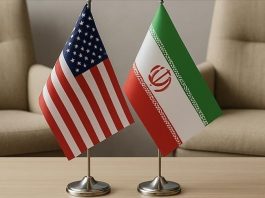
GENEVA/TEHRAN – Iran has firmly reiterated its deterrent capabilities and sovereign rights as indirect nuclear negotiations with the United States continue in Geneva under Omani mediation.
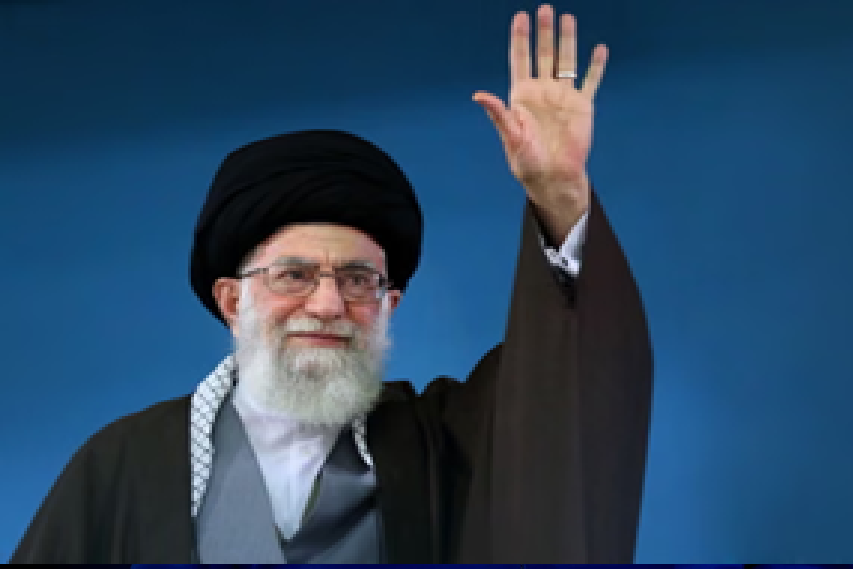
Speaking in Tehran on Tuesday, Leader of the Islamic Revolution Ayatollah Ali Khamenei warned that foreign military intimidation would not go unanswered, stressing that Iran possesses the means to defend itself against any aggression in the Persian Gulf.
Referring to recent statements by U.S. President Donald Trump regarding America’s military strength and the deployment of additional warships to the region, Ayatollah Khamenei stated that military hardware alone does not determine the balance of power.
“They repeatedly speak of sending warships toward Iran,” he said. “A warship is indeed a dangerous instrument, but more decisive than a warship is the capability that can neutralize it.”
His remarks came amid renewed U.S. military signaling in the region, including Trump’s announcement that the USS Gerald R. Ford—described as the world’s largest aircraft carrier—could be deployed should negotiations fail. The USS Abraham Lincoln and accompanying destroyers are already stationed in the Persian Gulf.
Iranian officials have emphasized that such deployments will not pressure Tehran into concessions. Instead, they underscore the need for serious, balanced diplomacy.
Addressing the ongoing nuclear talks, Ayatollah Khamenei cautioned against prejudging negotiations. “When negotiations are underway, determining their outcome in advance is wrong and unwise,” he said, signaling Iran’s readiness for diplomacy grounded in mutual respect rather than coercion.
The second round of indirect talks between Tehran and Washington began Tuesday in Geneva, facilitated by Oman. The Iranian delegation is led by Foreign Minister Abbas Araghchi, while the U.S. side is headed by Special Envoy Steve Witkoff. Both sides have been exchanging messages through Omani Foreign Minister Badr Albusaidi.
Tehran has consistently maintained that negotiations must focus on the effective removal of sanctions and the recognition of Iran’s legitimate rights under international law. Iranian officials have made clear that while the country seeks a fair and durable agreement, it will not negotiate under threats or military pressure.
The current round of diplomacy follows the resumption of indirect contacts in Muscat earlier this month, nearly eight months after talks were suspended in the aftermath of a 12-day conflict between Iran and Israel.
Iran’s top military leadership has also reinforced the country’s defensive posture. On Sunday, Major General Abdolrahim Mousavi warned that any act of aggression would be met with a decisive response, stating that those who initiate conflict would face consequences.
As negotiations proceed in Geneva, Tehran’s message remains consistent: diplomacy is possible, but intimidation will neither alter Iran’s strategic calculations nor weaken its resolve.