

By Dr.Beruniy Alimov
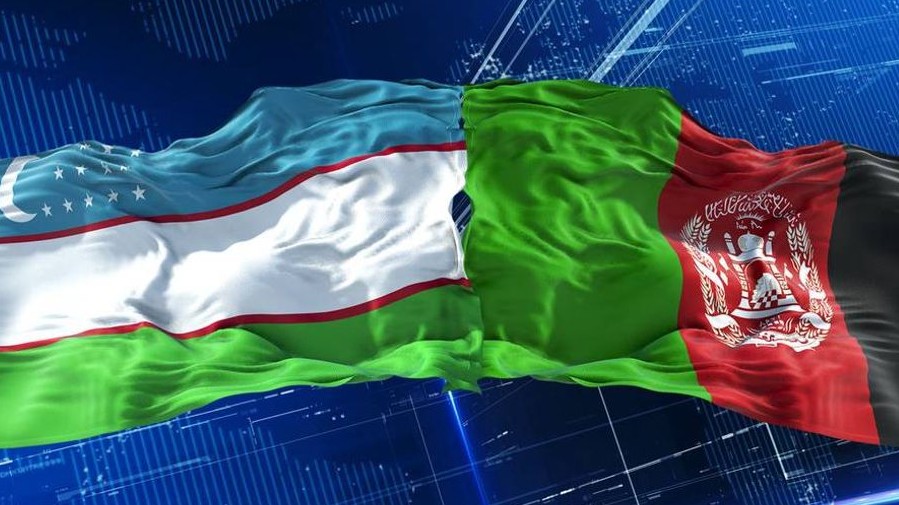
In recent years, Uzbekistan has been actively expanding its economic capabilities, strengthening its position as one of the most dynamically developing markets in Central Asia.
Particular importance in the country’s new development strategy is given to the diversification of foreign economic relations and the deepening of regional integration. In this context, cross-border cooperation is becoming a strategic priority, especially in the southern direction, where Uzbekistan interacts with Afghanistan.


The authorities of Uzbekistan and Afghanistan signed a Preferential Trade Agreement, as well as a Programme of Bilateral Cooperation in Trade, Economic and Industrial Spheres for 2025–2026, the press service of the Ministry of Investment, Industry and Trade of Uzbekistan reports. The documents were signed following negotiations between Uzbekistan’s Minister Laziz Kudratov and Acting Minister of Industry and Commerce of Afghanistan Nooruddin Azizi on the sidelines of the IV Tashkent International Investment Forum.
According to the Chairman of the Chamber of Commerce and Industry of Uzbekistan, Davron Vakhabov, exports to Afghanistan in the first four months of 2026 reached 550 million US dollars, reflecting steady growth in supplies and an increasing number of Uzbek exporters operating in this market.


Afghanistan is gradually strengthening its position as one of the most rapidly developing external markets for Uzbek businesses. Trade and economic cooperation demonstrates stable positive dynamics: export volumes increased from 117 million US dollars in January to 125 million in February, 135 million in March, and 160 million US dollars in April 2026.
A significant share of exports falls on agricultural and food products. Around 138 million US dollars accounted for food goods, including vegetable oil, eggs, and live poultry. This structure reflects strong demand for basic food products in the Afghan market and the competitiveness of Uzbek agricultural production. A particularly notable increase is observed in vegetable oil exports, which grew from 2 million US dollars in January to 10 million in April, reaching a total of 18 million US dollars over the period. Egg exports amounted to around 3.5 million US dollars, while live poultry supplies reached 5.7 million US dollars, also demonstrating steady positive dynamics.

Alongside the growth in trade turnover, business activity between the two countries is strengthening. Regular business missions of Uzbek entrepreneurs are organized to Kabul and Mazar-i-Sharif, contributing to the establishment of direct business contacts, expansion of partnerships, and promotion of products in local markets.
Uzbekistan’s geographical location determines its key role as a transit hub between Central and South Asia. The southern regions of the country, particularly Surkhandarya region, possess strategic potential for developing logistics routes connecting major economic spaces.
The development of cross-border trade not only strengthens the regional economy but also creates a stable platform for access to the markets of the Middle East, South Asia, and other regions.
The concept of a cross-border “global market” involves the creation of a specialized trade and economic zone, including:
- international trade pavilions and warehouses;
- logistics and transport services;
- simplified customs and border procedures;
- conditions for direct interaction between entrepreneurs from both countries and foreign partners.
The main objective of the project is to reduce trade barriers and form a sustainable ecosystem for the international exchange of goods and services.
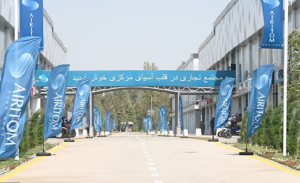
On 29 August 2024, the official opening ceremony of the Termez International Trade Center was held in Termez. The event was attended by the Prime Minister of Uzbekistan, Abdulla Aripov, the Acting Prime Minister of Afghanistan, Abdul Ghani Baradar, as well as representatives of the governments of Azerbaijan, Kazakhstan, Kyrgyzstan, and others. It is emphasized that the Termez International Trade Center is designed to create a favorable business environment, develop logistics capabilities, simplify administrative procedures, and provide comfortable conditions for doing business.
The Termez Free Trade Zone was established as part of Uzbekistan’s long-term strategy to strengthen economic stability in border regions and expand regional integration in Central and South Asia. Its formation was a response to the need to create a stable trade mechanism between Uzbekistan and Afghanistan amid the transformation of the regional economic architecture and growing demand for direct supply channels.
The decision to develop a trade and economic zone in Termez is based on its unique geographical location. The city is a key hub in southern Uzbekistan, directly connected to Afghanistan via the Termez–Hairatan transport corridor. This makes it a natural platform for cross-border trade, logistics, and goods distribution.
From a political-economic perspective, the creation of the zone pursues several strategic objectives: expanding institutionalized trade cooperation with Afghanistan, reducing reliance on informal trade channels, and strengthening Uzbekistan’s role as a regional transit hub between Central and South Asia.
The project is particularly important in the context of regional stability. The involvement of Afghanistan in legal trade processes is seen as an instrument of long-term economic development and reducing the country’s isolation. In this sense, the Termez zone performs not only a commercial but also a stabilizing function.
Thus, the Termez Free Trade Zone is an element of a broader geoeconomic strategy of Uzbekistan aimed at strengthening regional connectivity and developing cross-border economies.
Considering the economic prospects and benefits of the Termez International Trade Center and cross-border infrastructure, it can be confidently stated that it opens new opportunities for both Uzbekistan and Afghanistan.
For Uzbekistan, the project strengthens the country’s position as a regional logistics and trade hub. Export opportunities for producers are expanding, particularly in food products, construction materials, textiles, and pharmaceuticals. The growth of trade turnover contributes to increased business revenues, development of small and medium-sized enterprises, and job creation.
In addition, the project stimulates modernization of transport and logistics infrastructure. Increasing cargo flows create conditions for investment in warehouses, logistics centers, and transport terminals, which in the long term enhances the transit potential of southern Uzbekistan. For Afghanistan, the project ensures more stable access to essential goods and supports gradual integration into regional trade processes. Despite its high potential, the project faces a number of challenges.
The key factor remains political and economic instability in Afghanistan, which may affect the stability of trade flows and investment attractiveness. Another major constraint is insufficient infrastructure. The growth of trade turnover requires modernization of transport corridors, customs checkpoints, and warehouse facilities. International sanctions regimes and restrictions also exert influence, complicating the financing of certain projects. Nevertheless, experts note that these risks can be mitigated through the development of multilateral cooperation, improvement of the legal framework, and engagement of international financial institutions.
Regarding future plans and strategic vision, the Termez International Trade Center is seen as a foundation for the formation of a multifunctional economic hub in southern Uzbekistan. Priority development areas include digitalization of trade processes, introduction of modern customs mechanisms, and expansion of e-commerce. Special attention is given to transport infrastructure, including the development of railway routes linking Central and South Asia. The implementation of these projects can significantly strengthen Termez’s role as an international trade center. In the long term, the project may become a key element of Uzbekistan’s new regional policy based on economic interdependence, openness, and pragmatic cooperation.
Thus, the establishment of the Termez International Trade Center on the Uzbek–Afghan border has become one of the most significant economic projects in Central Asia in recent years. The project reflects Uzbekistan’s aspiration not only to expand foreign economic relations but also to develop new mechanisms of regional interaction based on mutual benefit and pragmatism.
Today, Termez is gradually becoming an important platform for interregional trade. Growth in trade turnover, intensification of business contacts, and infrastructure development confirm the high potential of this direction. Despite existing challenges, the strategic importance of the project remains high. Its successful implementation may serve as an example of how economic cooperation can strengthen trust between states and contribute to the development of an entire region. In the long term, the Termez International Trade Center has the potential to become part of a broader system of transport and trade corridors linking Central Asia with South Asia, the Middle East, and global markets.


