

By Dr Majid Khan (Melbourne):
Australia is confronting a sustained—and in some respects worsening—skin-cancer burden through mid-2025. While the country has pioneered world-class melanoma care and prevention campaigns, the numbers remain sobering. About two in three Australians will develop some form of skin cancer during their lifetime, and melanoma is still one of the most commonly diagnosed cancers nationwide.
Current projections put new melanoma diagnoses this year at roughly the high-sixteen-thousand range, continuing a long-term rise from the early 1980s. Mortality has improved thanks to earlier detection and modern therapies, but absolute deaths remain significant, and experts warn that non-melanoma skin cancers have seen a marked increase in mortality over the last two decades. In other words: clinical progress is real; the population-level challenge is far from over.
Several forces drive these trends. Australia’s latitude and climate produce intense ultraviolet (UV) radiation for much of the year, and UV exposure is the dominant cause of skin cancer. A large share of the population is of European ancestry with fair complexions that provide less melanin-based protection against UV damage.
Lifestyle patterns matter, too: from beach culture to outdoor sport and work, many Australians accumulate years of sun exposure—often starting in childhood—unless they consciously counter it. Demography compounds the risk: older Australians, especially men who grew up before sun-safety became mainstream, are now presenting with cancers that reflect decades of past behaviour.
Geography adds another layer: rural and remote communities typically face later diagnoses and longer travel times to specialists, which worsens outcomes. Finally, data limitations cloud the full picture for non-melanoma skin cancers, which are extremely common but historically under-recorded; treatment volumes suggest the true burden is enormous.
Experts converge on three core messages for mid-2025: prevent what you can, find what you can’t prevent as early as possible, and close the structural gaps that allow serious disease to progress unnoticed. Dermatologists emphasise that strong, routine sun protection at UV index 3 and above remains the single most effective population-wide intervention. Oncologists point out that melanoma outcomes are closely tied to thickness at diagnosis; if a lesion is caught early—before it grows deep—the chance of cure is high.
Public-health leaders stress that protecting high-risk groups yields outsize gains: older men, outdoor workers, and regional communities should be the priority for targeted messaging, mobile screening, and rapid referral pathways.
The numbers underpinning these priorities are compelling. Melanoma incidence has more than quadrupled since the early 1980s, reaching an age-standardised rate that sits among the world’s highest. Even as five-year survival has climbed into the mid-90s for recent diagnostic periods—reflecting both earlier detection and the availability of immunotherapies and targeted drugs—thousands of families each year still confront a melanoma diagnosis, and more than a thousand Australians die from the disease annually.
Meanwhile, keratinocyte cancers—basal cell carcinoma and squamous cell carcinoma—outnumber melanoma by a wide margin and account for more than a million treatments each year. While many of these are caught early and cured surgically, a small but significant subset becomes locally advanced or metastatic; mortality from these high-risk non-melanoma cancers has roughly doubled over the last twenty years, reminding clinicians and policymakers that “non-melanoma” does not mean “non-lethal.”
Clinicians also caution against complacency sparked by encouraging youth trends. Some cohorts of younger Australians are showing early signs of lower melanoma risk—likely due to stronger sun-safe norms at school, hat policies, shade in playgrounds, and greater ethnic diversity. That is welcome, but experts warn it can be undone quickly by fashion and social-media cycles that glamorise tanning or minimise the risks of intermittent blistering sunburns.
The consensus is clear: sustained behaviour change from childhood through adulthood is required to flatten the curve of new disease, and messaging must keep pace with how teens and young adults actually consume content.
Beyond broad drivers, the sector-by-sector picture clarifies where action will have the most impact:
Schools and youth settings. Educators and paediatric dermatologists agree that early habits endure. Mandatory hat and sun-protective clothing during outdoor activities, permanent shade structures over high-use spaces, and lessons that teach students to understand the UV index—and to do quick, age-appropriate skin checks—are considered best practice.
Experts also recommend the routine coupling of sporting events and excursions with sun-safety reminders and sunscreen stations. In recent years, school-based initiatives have been linked with fewer severe childhood sunburns, which may influence melanoma risk decades later.
Workplaces, especially outdoor industries. Occupational-health specialists argue that UV exposure should be treated like any other workplace hazard. That means enforceable policies, not suggestions: provision of broad-brim hats and long-sleeved, UPF-rated uniforms; readily available SPF 50+ sunscreen; shade canopies at worksites; scheduled breaks away from peak UV; and toolbox talks that normalise self-checks and reporting of suspicious lesions.
Insurers and safety regulators note a growing number of compensation claims where inadequate sun protection was alleged, a trend that is prompting stronger compliance frameworks. Industry groups in construction, agriculture, mining, delivery logistics and landscaping increasingly view sun protection as part of productivity and duty-of-care—not an optional extra.
Rural, remote, and regional communities. General practitioners and rural physicians repeatedly highlight the “distance penalty”—long drives to dermatology, fewer specialists, and delayed follow-up after biopsies. The solutions they champion are practical: mobile skin-check clinics; teledermatology with high-resolution dermoscopic imaging; fast-track pathways that move high-risk lesions to surgery without weeks of waiting; and locally tailored campaigns that reach older men and seasonal outdoor workers.
Mayors and local councils can contribute by investing in shade at beaches, pools, markets and sports ovals, and by promoting the daily UV index alongside weather reports.
Clinical and health-system pathways. Dermatologists and surgeons emphasise two bottlenecks: time to biopsy and time to definitive excision for high-suspicion lesions. Streamlined referral protocols that allow GPs to triage lesions with dermoscopy, direct-to-procedure slots for likely melanomas or high-risk squamous cell carcinomas, and quick access to multidisciplinary review for advanced disease can all reduce morbidity.
On the data side, cancer-registry experts advocate building a robust national system for non-melanoma skin cancers so resources can be planned around real burdens, not estimates. Health economists add that skin-cancer control is cost-effective: preventing severe sunburns in childhood and catching lesions early saves downstream treatment costs in surgery, radiation, and systemic therapy.
Media, research and policy. Public-health communicators call for a permanent, modernised campaign cadence—short, high-reach bursts each summer; targeted pushes to outdoor trades in spring; youth-oriented creatives on platforms where teens actually are; and myth-busting content that counters tanning trends.
Research leaders are pursuing next-generation tools: AI-assisted lesion analysis to support non-expert screening, circulating-biomarker studies to flag high-risk individuals, and trials that refine surveillance for people with multiple dysplastic naevi or strong family histories. Policymakers have, in early 2025, backed work on a national roadmap for targeted skin-cancer screening; expert panels widely support a risk-based approach (age, sex, phenotype, UV exposure history, prior lesions) rather than blanket screening, to concentrate resources where they prevent the most harm.
Crucially, none of these measures stand alone. Specialists repeatedly underscore that the most reliable gains come from layering protections and systems: a culture that prizes shade and sleeves; schools and employers that make protection the default; primary-care teams equipped with dermoscopy and clear referral lanes; regional outreach that brings services to people rather than the reverse; and a data backbone that captures not only melanoma but also the vast non-melanoma burden.
When these layers align, incidence can plateau and mortality can keep falling—even as Australia remains a sun-drenched nation.
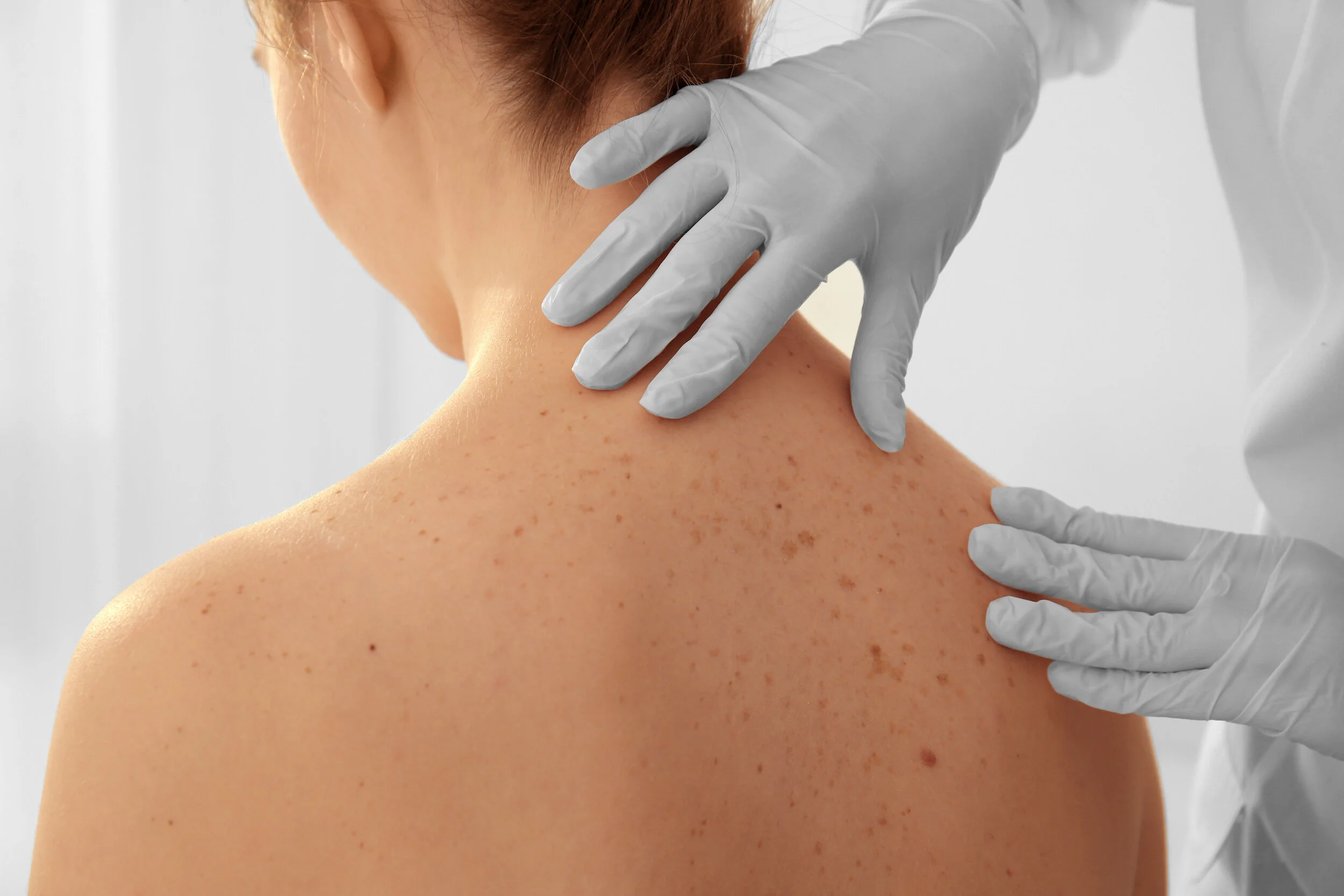
The message for individuals is straightforward and unchanged, but worth repeating with mid-2025 urgency. Check the UV index and act when it is 3 or above. Wear a broad-brim hat, long sleeves and sunglasses. Apply SPF 50+ generously and reapply. Seek shade, especially around the middle of the day. Never treat sunburn as trivial. Know your skin; if a spot changes in size, shape, colour, or sensation—or if a wound won’t heal—book a check promptly.
For those who have had a skin cancer before, keep follow-up appointments without delay. As one senior melanoma surgeon noted, Australia has “an epidemic of melanoma in older males”—a legacy of past attitudes to sun protection—and vigilance now is the difference between a small scar and a life-threatening illness.
For governments and organisations, the path is equally clear. Keep prevention visible. Fund rural access. Mandate workplace protection. Modernise data systems. And support research that accelerates early detection and precision care.
Australia’s leadership in treatment has already saved many lives; pairing that with relentless prevention and early-diagnosis systems offers the best chance to bend the curve of new cases—and, over time, to make “the lucky country” luckier still against its most preventable cancer.