

By Dr Majid Khan (Melbourne):
The Russia-Ukraine conflict, nearing its four-year mark of full-scale invasion, has entered a period of unprecedented diplomatic volatility, driven by a determined and controversial push from United States President Donald Trump to broker an immediate and binding peace pact. Leaked documents, frantic shuttle diplomacy, and public pressure from Washington have created a political and military crisis for Kyiv, forcing President Volodymyr Zelenskyy to confront what many in Europe and in his own country see as a grim choice between sovereignty and survival.
The core of the recent tension is the so-called “28-Point Peace Plan,” a framework quietly negotiated by Trump’s special envoy, Steve Witkoff, and Russian sovereign wealth fund chief, Kirill Dmitriev. The initial draft, widely circulated among diplomatic circles in the third week of November 2025, sparked immediate and profound alarm due to its explicit inclusion of several maximalist Russian demands, effectively transforming the US from a guarantor of Ukraine’s defense into the architect of a highly divisive settlement.
While the diplomatic machinery of peace talks grinds forward, the war on the ground remains brutal, characterized by a slow, attritional Russian advance and massive, long-range strikes targeting civilian infrastructure. The battlefield situation in late November 2025 underscores Ukraine’s critical vulnerabilities, particularly its shortage of manpower and its increasingly depleted air defense capacity following a significant reduction in direct US military assistance.
Russian forces have secured marginal but symbolically significant gains, primarily in the Donetsk region. Reports indicate a sustained offensive push around Pokrovsk and Myrnohrad, key Ukrainian strongholds. The relentless pressure has tested the limits of the Ukrainian defense-in-depth strategy, although analysts agree that there is no imminent danger of a complete “unraveling” of the Ukrainian army or a collapse of the contact line, which currently stretches over 800 miles.
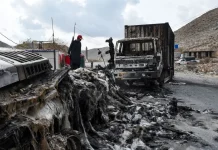
A renewed barrage of Russian missile and drone attacks has targeted Ukraine’s energy grid across multiple oblasts, including Kyiv, Odesa, Chernihiv, Dnipropetrovsk, and Kharkiv. Ukrainian authorities have confirmed that these precision strikes are succeeding in reducing national power generation capacity, necessitating the immediate imposition of rolling blackouts nationwide just as the harsh winter sets in. This systematic targeting of vital services is viewed as a calculated Russian effort to weaken Ukraine’s internal resolve and create leverage in the ongoing peace negotiations.
President Trump’s recent diplomatic surge is less a mediation effort and more an aggressive push to enforce a quick resolution. His actions, from the back-channel negotiation of the original 28-point plan to the application of direct political pressure, highlight his personal investment in securing a peace deal under his tenure.
The original plan, which Ukrainian and European officials argued was largely crafted without Kyiv’s consultation, contained numerous provisions highly favorable to Moscow, many of which closely resembled demands Russia has repeatedly put forth since the start of the war:
The most contentious point mandated that the United States and other parties recognize Crimea, Luhansk, and Donetsk as de facto Russian territory. Crucially, this included ceding parts of Donetsk currently under Ukrainian control to create a demilitarized buffer zone. The contact lines in Kherson and Zaporizhzhia would also be frozen, effectively leaving Russia in permanent control of significant occupied cities like Mariupol and the land bridge to Crimea. Ukraine would be required to cap its armed forces at 600,000 personnel, a substantial reduction from its current fighting strength of over 800,000. Russia faced no comparable constraints on its military power.
Ukraine would be permanently barred from joining NATO, a stipulation to be enshrined in its constitution. NATO, in turn, would agree not to expand further or station troops on Ukrainian soil.
The plan included phased sanctions relief for Russia, its re-entry into the G8, and the use of frozen Russian assets for Ukraine’s reconstruction. Notably, the plan stipulated that $100 billion in frozen Russian assets would be used for reconstruction efforts led by the US, with a clause granting the US 50% of the profits from this venture a point that drew heavy criticism for its appearance of economic opportunism.
The sheer imbalance of the original draft led many US and European foreign policy experts to denounce it as a “colonial deal” or a “pro-Kremlin abomination” that would reward aggression and fundamentally undermine the post-WWII principle against territorial change by force.
Following the intense backlash, the Trump administration engaged in emergency talks with Ukrainian officials. US Secretary of State Marco Rubio and Ukrainian President’s Chief of Staff Andriy Yermak met in Geneva, resulting in an updated and refined peace framework, reportedly reduced to 19 points.
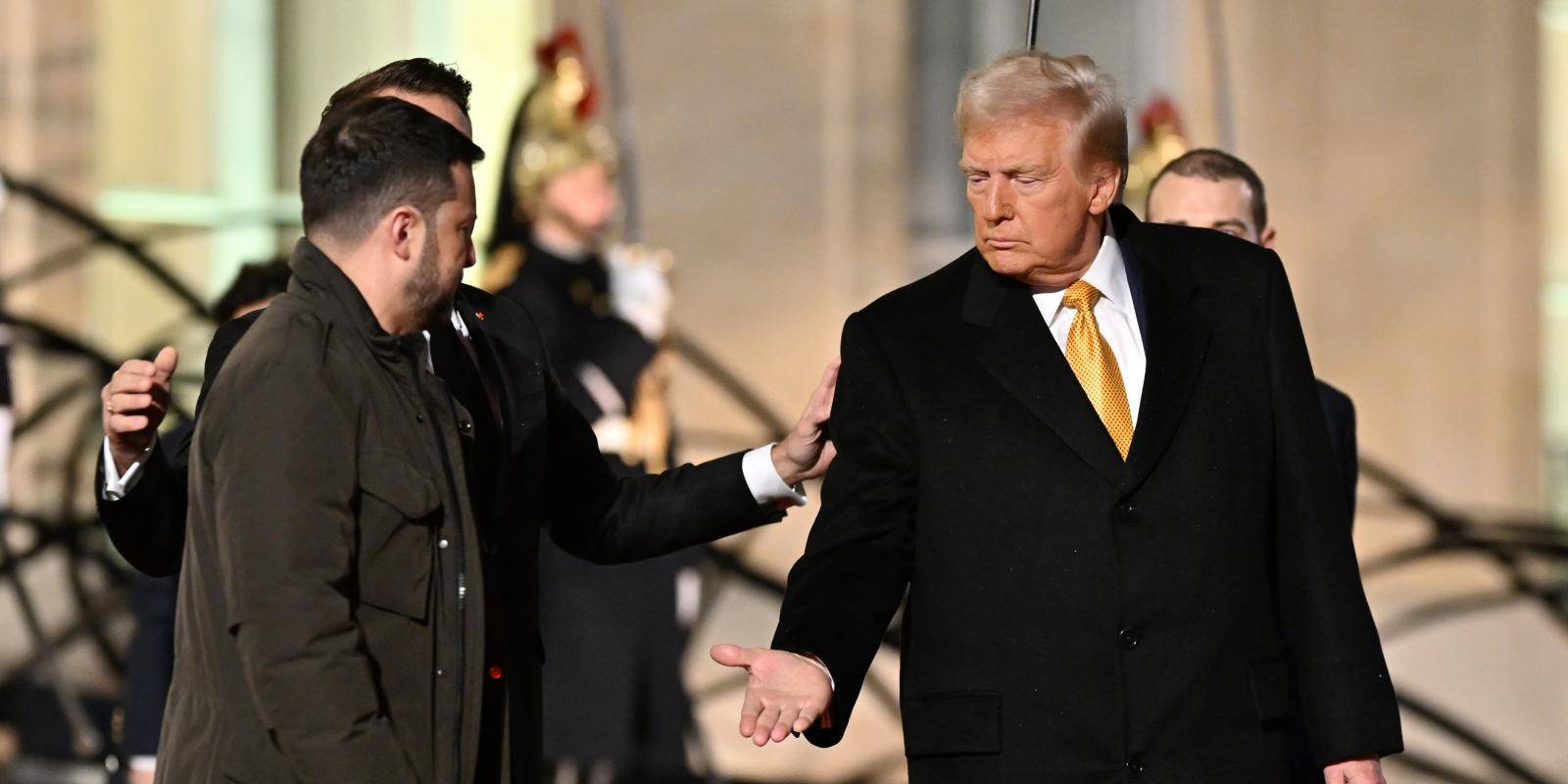
President Trump, having initially signaled an aggressive deadline for the deal’s acceptance, has since softened his rhetoric but maintained an urgent pressure, stating that “something good just may be happening” while dispatching key officials for further talks in Abu Dhabi. Ukrainian officials, while expressing gratitude for US diplomatic leadership, have indicated that the most sensitive points, particularly the crucial issue of territorial concession, have been placed in brackets and must be decided upon directly by Presidents Trump and Zelenskyy in a forthcoming high-stakes meeting.
This intense diplomatic activity comes at a low point for President Zelenskyy, who is facing the most significant domestic political and corruption scandal of his presidency. This internal crisis, Western diplomats suggest, provides a window of opportunity for Moscow to exploit Ukrainian weakness and for Washington to apply maximal pressure for a rapid, if painful, settlement.
The initial back-channel negotiation and the substance of the 28-point plan have generated significant alarm among US allies in Europe, leading to an open divergence in diplomatic efforts.
France, Germany, and the UK, having been largely excluded from the initial Trump-Russia talks, have reportedly drafted a European counter-proposal that seeks to amend the most egregious points of the US-Russian draft. Key European amendments include increasing the cap on the Ukrainian army to 800,000 personnel during peacetime and outright rejecting the initial plan’s clauses on NATO expansion and Russia’s guarantee not to invade neighboring countries. Most critically, European leaders have insisted that a just and lasting peace must be grounded in international law and fully respect Ukraine’s sovereignty, which implicitly rules out the de jure or de facto recognition of any land seized by military force.
For President Zelenskyy, the situation presents a stark, impossible choice, as he termed it. Rejecting the American-brokered deal, even if it amounts to a bitter pill, risks provoking President Trump’s wrath and potentially seeing the complete withdrawal of vital US military and intelligence support a loss that could critically undermine Ukraine’s ability to sustain the fight through the coming winter and into 2026. Accepting the deal, however, would force him to make territorial and constitutional concessions that would be seen as a national capitulation, potentially igniting mass domestic protests and accusations of betraying the thousands of soldiers who have died defending every meter of Ukrainian soil.
The next few days will be critical. Ukrainian officials are pressing for a meeting between Zelenskyy and Trump in Washington to finalize the agreement. The outcome of this summit will not only dictate the borders and future of Ukraine but will also redefine the nature of the Western alliance and set a global precedent for whether military aggression can be translated into permanent geopolitical gain. The world awaits to see if the final pact will be a dignified end to the killing or simply a temporary halt that institutionalizes an unjust status quo.