

By Dr. Beruniy Alimov
Director, New Media Education Centre NGO,
Tashkent, Uzbekistan
Over the past ten years, Central Asia has undergone a profound transformation in its regional dynamics. Once perceived primarily through the lens of fragmentation, competition, and geopolitical vulnerability, the region is increasingly framed as a coherent political, economic, and cultural space. At the heart of this shift stands Uzbekistan, whose proactive foreign policy and regional initiatives—under the leadership of President Shavkat Mirziyoyev—have accelerated cooperation among Central Asian states. This article examines how intensified economic, political, and people-to-people ties have contributed to the emergence of a new regional framing of Central Asia as an integrated and respected geopolitical entity. It also explores how this transformation enhances regional stability and compels major global powers to engage with Central Asia on more balanced and respectful terms.
From Fragmentation to Regional Consciousness
For much of the post-Soviet period, Central Asia was often characterized by weak regional coordination, closed borders, unresolved disputes, and limited intra-regional trade. International discourse tended to frame the region as a passive geopolitical space—an arena of competition among larger powers rather than an active subject of global politics.
This narrative has shifted markedly since the mid-2010s. Over the last ten years, Central Asian countries—Kazakhstan, Kyrgyzstan, Tajikistan, Turkmenistan, and Uzbekistan—have entered a new phase of interaction marked by pragmatic cooperation, mutual trust-building, and growing interdependence. Central Asia is increasingly discussed not merely as a geographical region but as a political and strategic community.
A decisive factor in this transformation has been Uzbekistan’s renewed regional policy. Under President Shavkat Mirziyoyev, Uzbekistan repositioned itself from relative isolation toward active regional engagement, emphasizing dialogue, openness, and shared development. This approach has reshaped both intra-regional relations and the way the global community perceives Central Asia.
Growth of Intra-Regional Trade
One of the most tangible indicators of deepening regional cooperation is the steady growth in trade among Central Asian states. Over the past eight years, intra-regional trade volumes have increased significantly, supported by reduced trade barriers, improved customs procedures, and greater political goodwill.
Uzbekistan has played a catalytic role by: simplifying border-crossing procedures; expanding bilateral and multilateral trade agreements; promoting cross-border industrial cooperation and logistics hubs.
As borders became more transparent and predictable, businesses gained confidence, supply chains expanded, and regional markets became more interconnected. This economic integration moved beyond declarations and entered the realm of measurable outcomes.
Infrastructure and Connectivity as Regional Glue
Economic cooperation has been reinforced by investments in regional infrastructure—transport corridors, energy networks, and logistics platforms. Uzbekistan has actively supported initiatives aimed at improving rail and road connectivity, recognizing that physical integration is a prerequisite for economic and social cohesion.
These efforts have strengthened Central Asia’s position as: a transit hub between East and West; a bridge between South Asia, China, Russia, and the Middle East; a region with shared economic interests rather than competing national agendas.
Revival of Regional Political Platforms
Political dialogue among Central Asian states has intensified both in frequency and substance. Regular consultative meetings of heads of state, foreign ministers, and sectoral leaders have become an established practice rather than an exception.
This political rhythm has contributed to: the peaceful resolution of long-standing disputes; coordinated responses to regional challenges, the emergence of shared regional priorities.
Uzbekistan’s diplomacy has emphasized non-confrontation, mutual respect, and consensus, helping to lower tensions and replace zero-sum thinking with cooperative logic.
Leadership and Initiative: The Role of President Shavkat Mirziyoyev
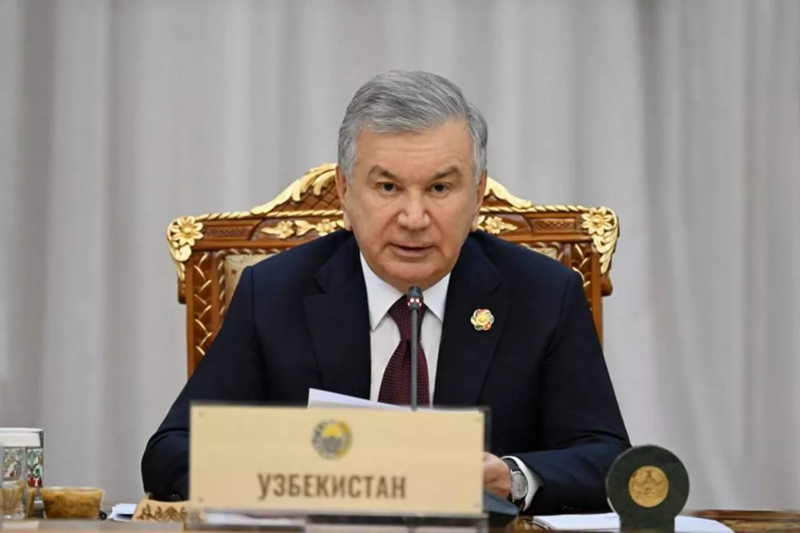
President Shavkat Mirziyoyev’s personal engagement has been central to this process. His regional vision rests on several key principles: Central Asia’s security is indivisible; development must be inclusive and cooperative; regional trust is a strategic asset.
Through high-level visits, regional summits, and international platforms, Mirziyoyev has consistently promoted Central Asia as a unified region with shared interests and a collective voice. This leadership has given momentum to initiatives that might previously have stalled due to political inertia.
Increased Mobility and Human Exchange
Perhaps the most transformative change has occurred at the societal level. Over the past eight years, cross-border travel among Central Asian citizens has expanded dramatically. Visa liberalization, simplified border regimes, and improved transportation have turned borders from barriers into points of connection.
As a result: family ties disrupted in earlier decades have been restored; tourism within the region has grown; educational, cultural, and youth exchanges have intensified.
This human dimension of regional cooperation has helped anchor political agreements in lived social realities.
Cultural Proximity as a Strategic Asset
Central Asia’s shared history, languages, traditions, and cultural values have gained renewed importance. Uzbekistan has actively promoted cultural diplomacy, emphasizing common heritage as a foundation for future cooperation.
By reinforcing cultural proximity, regional cooperation has acquired emotional and symbolic depth—something that purely economic or political frameworks often lack.
Central Asia as a New Geopolitical Framing
One of the most significant outcomes of intensified regional cooperation is the changing global perception of Central Asia. The region is increasingly framed as: a coherent political entity; a strategic partner rather than a peripheral space; a region capable of articulating its own interests.
This shift has encouraged major geopolitical actors—global and regional powers alike—to engage with Central Asia collectively and respectfully.
Respect and Recognition from Global Power Centers
As Central Asian states coordinate more closely, large political blocs and global actors find it necessary to: account for regional positions; avoid unilateral approaches; engage in dialogue based on partnership rather than patronage.
Uzbekistan’s initiatives have been instrumental in projecting this new framing onto the global stage, reinforcing the idea of Central Asia as a region that matters—not only geopolitically, but normatively.
Cooperation as a Stability Mechanism
Enhanced regional cooperation has contributed directly to peace and stability. Regular dialogue, economic interdependence, and people-to-people contact reduce the likelihood of conflict and create incentives for peaceful dispute resolution.
Uzbekistan’s approach emphasizes: preventive diplomacy; regional ownership of security challenges; non-militarized solutions to shared problems.
A Stable Region in an Unstable World
In a global environment marked by geopolitical tension and fragmentation, Central Asia’s trajectory stands out. The region’s cooperative framing offers an alternative model—one based on trust, gradual integration, and respect for sovereignty.
This stability enhances Central Asia’s attractiveness as a partner and strengthens its resilience against external shocks.
Toward a Mature Regional Identity
The past ten years have demonstrated that Central Asia’s future lies in cooperation rather than fragmentation. Uzbekistan’s leadership and proactive diplomacy have been decisive in accelerating this process, transforming the region’s internal dynamics and external image.
Today, Central Asia is increasingly recognized as: a unified regional space; a credible geopolitical actor; a zone of cooperation, stability, and opportunity.
The emerging regional framing is not merely rhetorical—it is grounded in real economic ties, political trust, and human connections. As this trajectory continues, Central Asia is likely to consolidate its position as a respected and influential region in the global system.
In this context, Uzbekistan’s role as a driver of integration and a promoter of dialogue underscores a broader lesson: regional leadership, when grounded in openness and cooperation, can reshape not only policies—but perceptions, narratives, and futures.