

By Prof.Shabnam Delfani
The Syrian war is often described as a conflict that has entered a post-war phase. The territorial defeat of the Islamic State, the survival of the Assad government, and the gradual normalization of relations between Damascus and several regional capitals have reinforced the perception that Syria’s most violent chapter has closed. Yet this framing obscures a central reality: Syria’s war ended militarily in parts, but it never concluded politically.
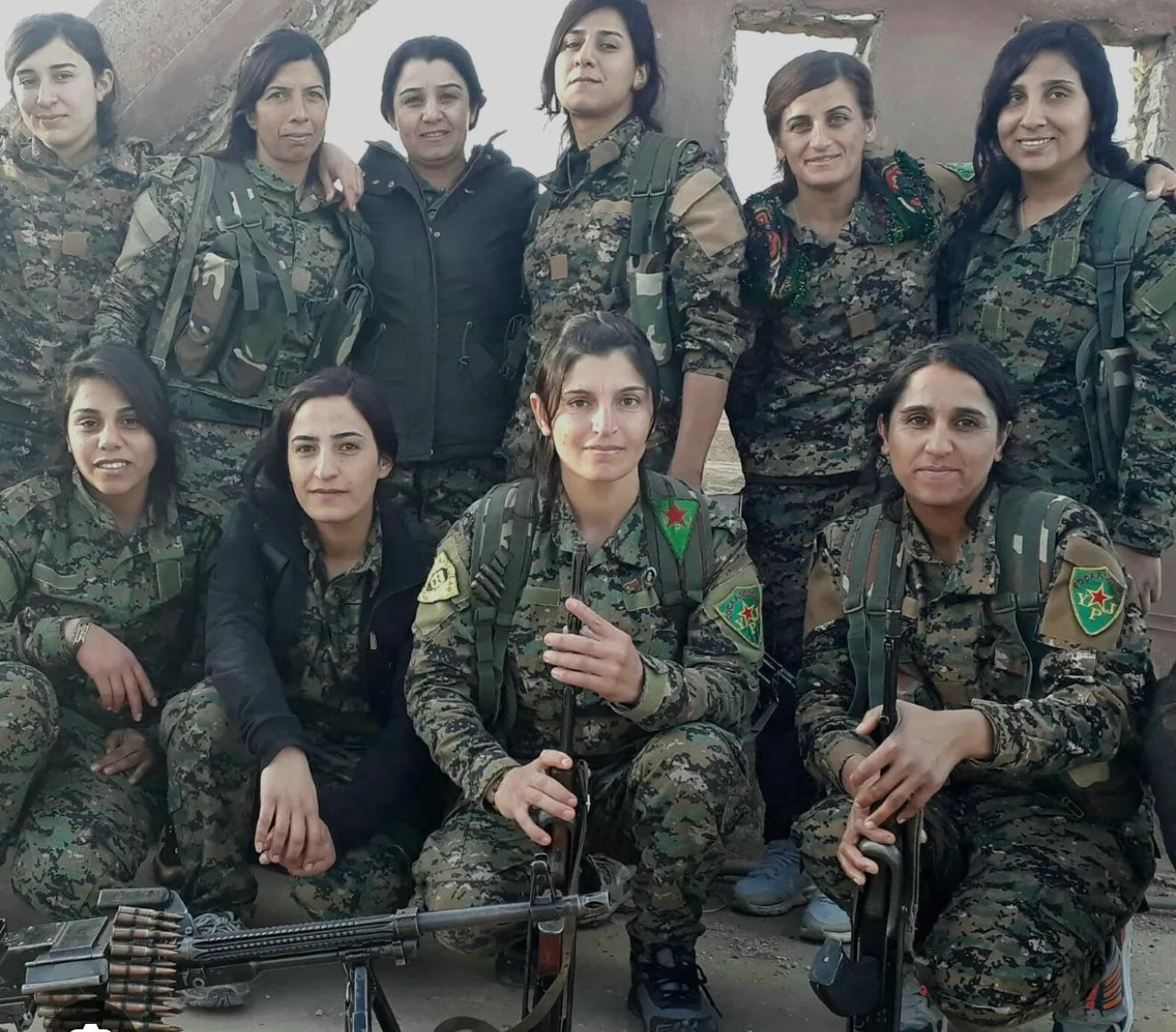
Nowhere is this failure more evident than in northern and northeastern Syria, where Kurdish-led forces remain armed, mobilized, and politically unresolved. The persistence of Kurdish militarization is not an aberration or an ideological statement; it is the logical outcome of a post-war order built on ambiguity, external rivalries, and deliberate avoidance of difficult political compromises. The Kurdish question has become the clearest indicator of whether Syria’s future will be governed through negotiated inclusion or enforced reintegration. It also serves as a broader case study in the limits of externally managed conflict stabilization in the Middle East.
The Kurdish Role in Syria’s War: From Margins to Center
Before 2011, Syria’s Kurds occupied a politically marginalized position. Denied cultural recognition and, in many cases, citizenship, they were excluded from meaningful participation in state institutions. The uprising and subsequent collapse of state authority in large parts of the country transformed this marginalization into opportunity—but also into risk.
As the Syrian state withdrew from Kurdish-majority areas in 2012, Kurdish actors moved quickly to fill the vacuum. Local councils, security forces, and later more formal administrative structures emerged not as secessionist initiatives but as survival mechanisms. The rapid expansion of ISIS after 2013 further entrenched Kurdish authority, as Kurdish militias became among the few forces capable of resisting jihadist advances.
The U.S.-led campaign against ISIS elevated Kurdish forces—organized primarily under the Syrian Democratic Forces (SDF)—from local actors to indispensable partners. Kurdish fighters bore a disproportionate share of the ground combat burden, suffering heavy casualties while providing territorial control across large areas of eastern Syria. This partnership, however, was explicitly framed as tactical. From the outset, Washington avoided endorsing Kurdish political aspirations, emphasizing that cooperation was limited to counterterrorism objectives. This distinction would later prove decisive.
Post-ISIS Syria: The Absence of a Political Transition
The defeat of ISIS’s territorial caliphate in 2019 marked a military milestone but also exposed the absence of a post-war political plan. For Kurdish authorities, the expectation—never formally promised, but widely assumed—was that their contribution would translate into political leverage. Instead, the end of the ISIS campaign coincided with a sharp contraction of international engagement. Kurdish-led administrations found themselves governing territory without recognition, defending borders without guarantees, and negotiating with Damascus from a position of increasing vulnerability. Their autonomy existed in practice but not in law, protected by arms rather than institutions.
This condition of “armed autonomy” is inherently unstable. It deters immediate coercion but invites long-term pressure. It also leaves Kurdish actors vulnerable to accusations of separatism, despite their repeated insistence on remaining within the Syrian state under a decentralized framework.
The United States: Tactical Partnership, Strategic Retreat
From a policy perspective, the United States played a decisive role in shaping this outcome. U.S. engagement in Syria was defined by operational effectiveness and strategic minimalism. Washington achieved its primary objective—the destruction of ISIS’s territorial control—at relatively low cost. What it avoided was the more complex task of shaping Syria’s post-war political architecture.
The gradual drawdown of U.S. involvement, particularly after 2019, sent an unmistakable signal to both allies and adversaries. Kurdish forces understood that American military presence was conditional and reversible. Turkey interpreted U.S. restraint as acquiescence to its security priorities. Damascus and its backers concluded that time and pressure would eventually dismantle Kurdish autonomy without the need for concessions. This approach reflected a broader trend in U.S. Middle East policy: preference for crisis management over conflict resolution. In Syria, this meant maintaining just enough presence to prevent ISIS resurgence, while avoiding commitments that might require confrontation with Turkey or deeper involvement in Syrian political negotiations.
The strategic cost of this posture has been significant. It undermined U.S. credibility among local partners and reduced American influence over Syria’s long-term trajectory.
Turkey and the Regionalization of the Kurdish Question
No actor has shaped Kurdish prospects more decisively than Turkey. Ankara’s approach to Syria’s Kurds is inseparable from its domestic Kurdish conflict. Turkish policymakers view any form of Kurdish self-rule along the southern border as a direct security threat, regardless of its ideological orientation or political moderation.
This perception has driven repeated Turkish military interventions in northern Syria, resulting in territorial fragmentation, demographic shifts, and the disruption of Kurdish administrative continuity. These operations have been justified as counterterrorism measures but have functioned strategically to impose a ceiling on Kurdish political ambitions.
Turkey’s role has effectively regionalized the Kurdish question, transforming it from a Syrian governance issue into a transnational security dilemma. This regional veto has constrained diplomatic solutions and reinforced militarization as the default mode of Kurdish survival.
Israel, Iran, and the Logic of Fragmentation
While Israel is not a direct party to Kurdish-Syrian confrontations, its actions have significantly shaped Syria’s strategic environment. Israel’s sustained campaign against Iranian-linked targets has weakened Damascus’s ability to consolidate control and reinforced a fragmented security landscape. From Israel’s perspective, a divided Syria limits Iran’s strategic depth and reduces coordinated threats along its borders. Kurdish-held areas—largely insulated from Iranian influence—align indirectly with this containment logic. However, this alignment is situational rather than strategic and does little to promote long-term stabilization.
Iran, conversely, views Kurdish autonomy with suspicion, fearing it could restrict its influence and complicate logistics across Syria. This convergence of Israeli containment and Iranian entrenchment has produced a strategic stalemate that discourages comprehensive political settlement.
Kurdish Governance: Achievements and Limits
Despite operating under constant pressure, Kurdish-led administrations in northeastern Syria have delivered outcomes that contrast sharply with much of the country. They have maintained relative internal security, managed large displaced populations, and limited sectarian violence. These achievements are not trivial in a post-conflict environment characterized by institutional collapse. However, Kurdish governance remains constrained by external dependence, economic isolation, and legal ambiguity. Without formal recognition or integration into a national framework, administrative capacity is inherently fragile. Armed deterrence compensates for institutional weakness but cannot substitute for political legitimacy.
The Risks of Collapse
The dismantling of Kurdish governance would not result in the restoration of effective Syrian state authority. Instead, it would likely produce fragmented control, militia competition, and renewed security vacuums. Such conditions have historically enabled extremist reconstitution and cross-border instability. From a regional security standpoint, the cost of collapse would outweigh the perceived benefits of coercive reintegration. Yet the absence of credible alternatives has allowed this risk to persist.
Policy Implications for Washington and Europe
For the United States, the Kurdish question presents a choice between continued tactical management and renewed strategic engagement. A sustainable approach would involve articulating a political framework that supports decentralized governance within Syrian sovereignty, backed by diplomatic engagement with both Kurdish authorities and Damascus.
Washington also retains leverage with Turkey that remains underutilized. Conditioning security cooperation on restraint in Syria could help reopen political space for negotiations.
For the European Union, engagement beyond humanitarian assistance is essential. The EU has financial leverage through reconstruction and normalization discussions that could be tied to inclusive governance arrangements. European diplomacy could also play a mediating role less encumbered by regional security rivalries.
Conclusion: Armed Stability Is Not Peace
The persistence of armed Kurdish forces in Syria is not evidence of defiance but of exclusion. It reflects a post-war order that prioritized military outcomes over political resolution. As long as Kurdish autonomy remains informal, reversible, and contested, arms will remain central to Kurdish strategy. Syria’s long-term stability will depend not on restoring territorial control through force, but on integrating diverse governance models into a negotiated political framework. The Kurdish question is not a marginal issue—it is a test case for whether Syria’s post-war order will be inclusive or coercive.
Until that question is answered, no arms will be laid down, and Syria’s peace will remain incomplete.