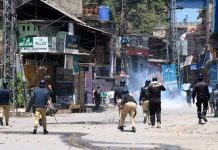


Fresh violence has once again erupted in India’s northeastern state of Manipur, prompting authorities to impose curfews and suspend internet services in an attempt to restore order. The latest unrest followed the alleged assault of a member of the Tangkhul Naga community in Ukhrul district’s Litan Sareikhong village, triggering arson, displacement, and the deployment of additional security forces. Officials have described the situation as volatile, while analysts warn that the flare-up reflects a deeper, unresolved crisis rooted in identity politics and long-standing ethnic divisions.
Manipur has witnessed persistent unrest for years, with violence intensifying sharply since May 2023. What began as a dispute over affirmative action and demands for Scheduled Tribe status for the Meitei community escalated into large-scale ethnic conflict between Meiteis of the Imphal Valley and Kuki-Zo tribal communities inhabiting the surrounding hills. According to official figures, hundreds have been killed, tens of thousands displaced, and entire neighbourhoods—including homes and religious sites—destroyed. Unofficial estimates suggest the toll may be far higher.
The immediate trigger for the 2023 violence was a Manipur High Court order recommending Scheduled Tribe status for the Meiteis, a move strongly opposed by tribal groups who feared increased encroachment on hill lands. Protests on 3 May 2023 quickly degenerated into clashes, arson, and killings, spreading across valley and hill districts. What followed resembled a civil conflict, marked by armed mobs, looted weapons, militant involvement, and the near-collapse of law and order.
Months of mounting tension preceded the violence. Tribal communities accused the state government of discriminatory policies, including eviction drives in hill districts, rhetoric linking Kukis to illegal immigration and drug cultivation, and alleged patronage of Meitei nationalist militias. Once violence erupted, both sides accused the administration and security forces of bias. Reports documented targeted attacks, mass displacement, and the destruction of churches, temples, and villages.
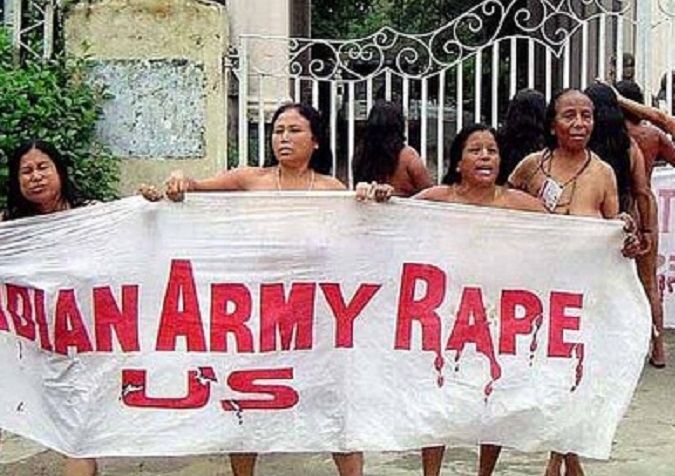
As the conflict dragged on, calls for political separation intensified. Kuki legislators demanded a separate administrative arrangement, arguing that coexistence under the existing system had become impossible. Separatist rhetoric hardened on all sides, weapons proliferated, and repeated outbreaks of violence undermined ceasefire efforts. High-profile incidents—including the public sexual assault of Kuki women and attacks on human rights defenders—drew national and international condemnation and raised serious concerns about governance, accountability, and human rights protections.
The prolonged crisis eventually led to major political fallout. Allegations surfaced that senior state leaders had either instigated or mishandled the violence. Amid mounting pressure, electoral setbacks, and legal scrutiny, Chief Minister N. Biren Singh resigned in February 2025 after nearly two years of intermittent unrest. President’s Rule was subsequently imposed, placing Manipur under direct federal control.
Beyond immediate political failures, the Manipur conflict has exposed deeper structural fault lines. Colonial-era administrative arrangements entrenched divides between the valley and the hills, concentrating political power, economic development, and state resources in the Meitei-dominated Imphal Valley. Grievances among tribal communities have been further complicated by regional instability, including refugee inflows from conflict-hit areas of Myanmar, which have been politicised and framed as security threats.
The violence has also reignited a broader national debate about secularism, minority rights, and the role of ideology in governance. Critics argue that the rise of Hindutva politics under the Bharatiya Janata Party (BJP) has emboldened extremist elements and normalized hostility toward religious and ethnic minorities. Prominent voices, including Nobel laureate Amartya Sen, have warned that India’s secular foundations are being eroded by systematic prejudice and ideological intolerance. Analysts caution that unless these trends are addressed, communal polarization and identity-based conflicts will persist.
India today stands at a critical crossroads. The unfolding tragedy in Manipur is not an isolated breakdown of law and order, but a symptom of a deeper malaise that has steadily hollowed out constitutional values, weakened federalism, and normalized coercion as a tool of governance. After Indian Illegally Occupied Jammu and Kashmir (IIOJK), Manipur has emerged as another stark reminder of how repression has increasingly been prioritized over reconciliation, force over dialogue, and political optics over human lives.
Curfews and internet shutdowns—now routine responses to unrest—may temporarily suppress dissent, but they do little to address root causes. Instead, they deepen alienation, restrict access to information, and shield the state from accountability. India has employed internet suspensions more frequently than any other democracy, effectively attempting to control not only the streets, but the narrative itself.
The parallels with IIOJK are difficult to ignore. The revocation of Kashmir’s special status in 2019, accompanied by military lockdowns and prolonged communication blackouts, resulted in widespread human rights violations and deepened mistrust. The perceived lack of international consequences appears to have reinforced a dangerous lesson: repression can be politically expedient.
Despite heavy security deployments and extraordinary powers granted to forces, violence in Manipur has persisted, underscoring the futility of a purely coercive approach. When grievances are met with batons instead of dialogue, unrest becomes cyclical. Each incident hardens communal identities and deepens mistrust, pushing society further toward fragmentation.
While BJP defenders argue that strong measures are necessary to maintain order, decisiveness without empathy and strength without justice reflect authoritarian tendencies, not democratic leadership. India’s constitution recognizes that unity cannot be imposed by force; it must be built through inclusion, equality, and respect for diversity.
Over the past three decades, the BJP has reshaped India’s political discourse, moving it away from pluralism toward an exclusionary vision of nationhood. Minority communities—defined by religion, ethnicity, or language—are increasingly vulnerable in a political climate that appears to privilege majoritarian approval over constitutional obligation.
Manipur’s tragedy also exposes the hollowness of development rhetoric divorced from justice and social harmony. Infrastructure and economic indicators cannot substitute for governance that protects lives, rights, and dignity. The muted response from New Delhi, including the conspicuous silence of Prime Minister Narendra Modi, has reinforced perceptions that some regions and communities matter less in the calculus of power.
Internationally, India continues to project itself as the world’s largest democracy, yet repeated episodes of internal repression undermine this image. As Manipur burns, the gap between democratic claims and ground realities grows increasingly stark.
For Manipur, lasting peace will require far more than curfews and security deployments. It will demand political accountability, inclusive dialogue, equitable development, and a genuine commitment to constitutional values. For India as a whole, the crisis raises a fundamental question: will the republic continue down a path of control and coercion, or rediscover the pluralism and justice that once formed its democratic foundation?
History is unequivocal states that rely on force to manage diversity achieve only temporary calm while sowing long-term instability. Manipur’s unrest is not an aberration but a warning. Ignoring it, or responding with more repression, risks deepening fractures across India. The people of Manipur, like all marginalized communities, deserve a state that protects them not through brute force, but through justice, compassion, and respect for their rights.
“Framing curfews, media silence, rapes, and widespread attacks as hallmarks of a three-year-old tragedy that began in May 2023 over land rights and affirmative action disputes between the Meitei and Kuki-Zo communities. In recent clashes that erupted on February 7, 2026, over 200 deaths and 60,000 displacements have been officially reported, while actual figures are believed to be far higher. Internet blackouts, the use of brutal force, and heavy security deployments are deepening alienation, minimizing the prospects for inclusive dialogue and accountability. Children’s drawings from relief camps, depicting burning villages and gunmen, highlight the profound psychological toll, while federal President’s Rule, in place since February 2025, has failed to curb the unrest,” commented a retired ICS officer when asked for her expert remarks as an end note to the report.
She requested anonymity; therefore, her name and the names of other officials who contributed to this Special Report are being withheld on request.
Source:https://dnd.com.pk/curfews-silence-rapes-and-violence-are-bywords-of-manipur-tragedy/328652/