

By MD.Moon(Paris,France)
From 10 to 12 October 2025, the heights of Montmartre in Paris will host a singular cultural encounter: the venerable Korean “jonggajip” (ancestral household) cuisine of Andong will appear at the Fête des Vendanges de Montmartre, offering festival-goers a taste of recipes handed down over five centuries. This year’s participation carries special significance: Suwun Japbang , the culinary manual preserved in the Gwangshin Kim clan’s Ancestral Household, has just passed the final evaluation by South Korea’s government as part of its campaign to have the work inscribed on the UNESCO Memory of the World register.
In the midst of Montmartre’s vivid celebration of wine, food, and heritage, the appearance of such a Korean gastronomic tradition invites reflection on the multiple threads that link food, memory, identity, and diplomacy.
Montmartre’s Harvest Festival: A Parisian Tradition
The Fête des Vendanges de Montmartre is a long-standing Paris autumn ritual, celebrated every second weekend of October, whose roots stretch back to the early 1930s. In 2025, the 92nd edition unfolds from Wednesday 8 to Sunday 12 October. The festival melds concerts, parades, tastings, exhibitions, and the “Parcours du Goût” (Taste Trail) around the slopes of Montmartre, centred near the vineyards of the Clos Montmartre and the Sacré-Cœur precinct.
Montmartre’s vineyard — though modest in size — is symbolic: it is part of Paris’s cultural patrimony. The wine from Clos Montmartre is vinified under municipal auspices; the proceeds from its limited production are allocated to social causes and initiatives in the 18th arrondissement. Over decades, the festival has evolved into one of Paris’s preeminent popular events, drawing residents and visitors alike to savour music, food, and conviviality in the city’s storied “butte.”
It is precisely within this ambiance — where tradition, terroir, and urban vitality interweave — that the Andong Korean culinary heritage enters the stage.
Andong’s Jonggajip cuisine meets Paris
The Gwangshin Kim Clan and Suwun Japbang
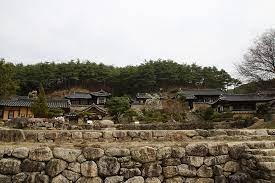
The Gwangshin Kim clan of Andong has preserved over generations a storied lineage of Confucian scholarship, ritual practice, and refined household culture. Among its treasures is Suwun Japbang (水雲雜方), a compendium of recipes and beverage preparations dating to the mid–16th century, authored by Kim Yu (1491–1555) and later expanded by his grandson Kim Ryeong (1577–1641). The title may be rendered loosely as “Assorted Recipes of Water and Cloud”, evoking a cultivated, poetic sensibility.
Within its pages are over 120 entries, covering not only food but also drinks, medicinal preparations, pickles, and hospitality practices. More than mere recipes, Suwun Japbang incorporates the household’s approach to ritual etiquette, seasonal adaptation, and caring for guests — for instance, recipes created to soothe ailments (e.g. rhinitis) for returning guests — reflecting a deep integration of culinary, medical, and social knowledge.Because it represents a living repository of inherited kitchen wisdom, many in Korea regard Suwun Japbang as a key intangible record of Joseon scholar-gentry life.
Its counterpart, Eumsik Dimibang — a classic Korean female-authored cookbook from the Joseon period — is also being pitched by Korean authorities as a UNESCO candidate. Together the two texts are nominated under the “Asia-Pacific Memory of the World” programme.
Recently, the Korean government certified that Suwun Japbang passed its “final national inspection” (신사, 信査) — a necessary procedural step before formal nomination to UNESCO. This institutional recognition underscores the text’s cultural weight and the seriousness of Korea’s submission campaign.
Culinary Diplomacy in Montmartre
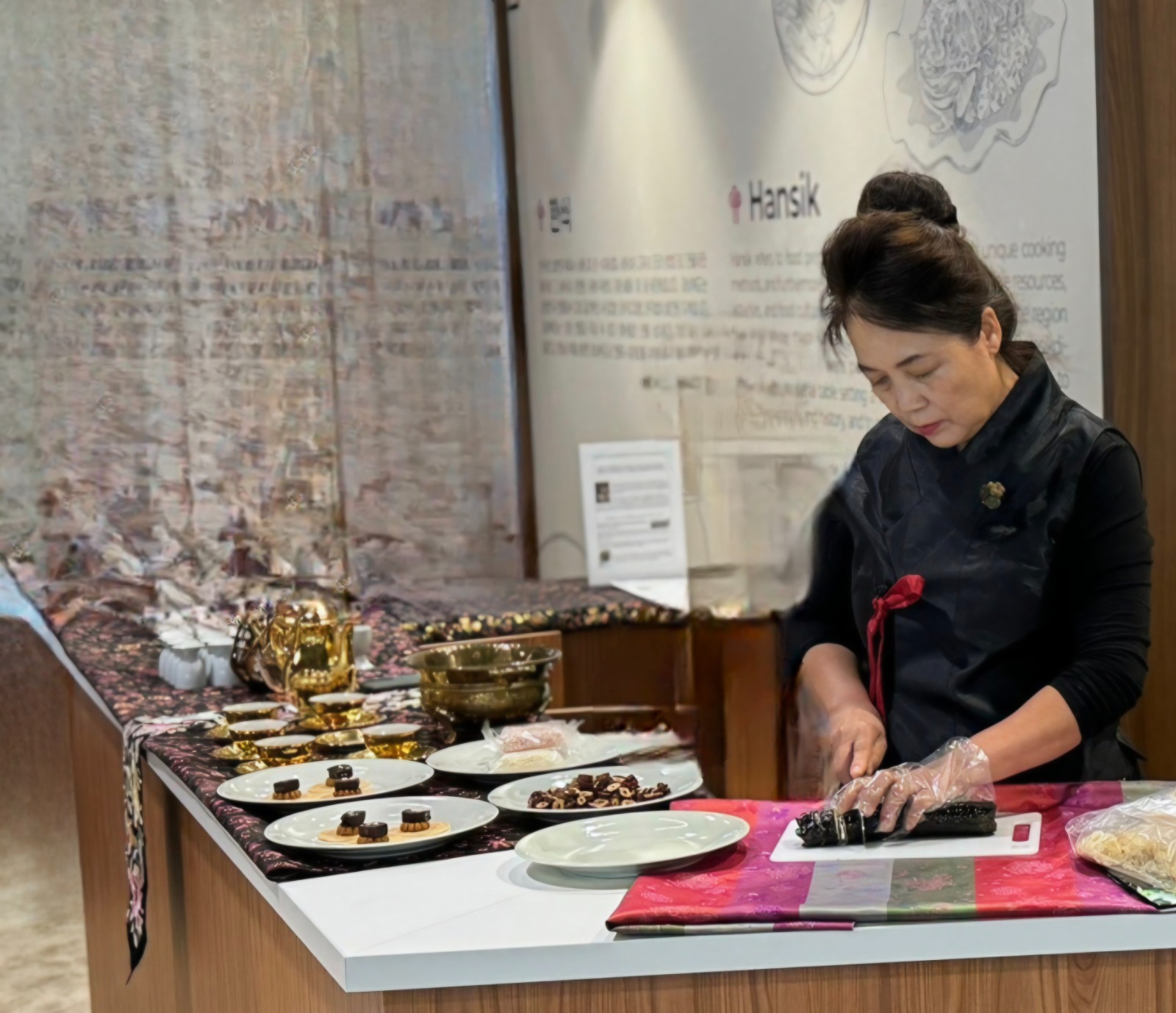
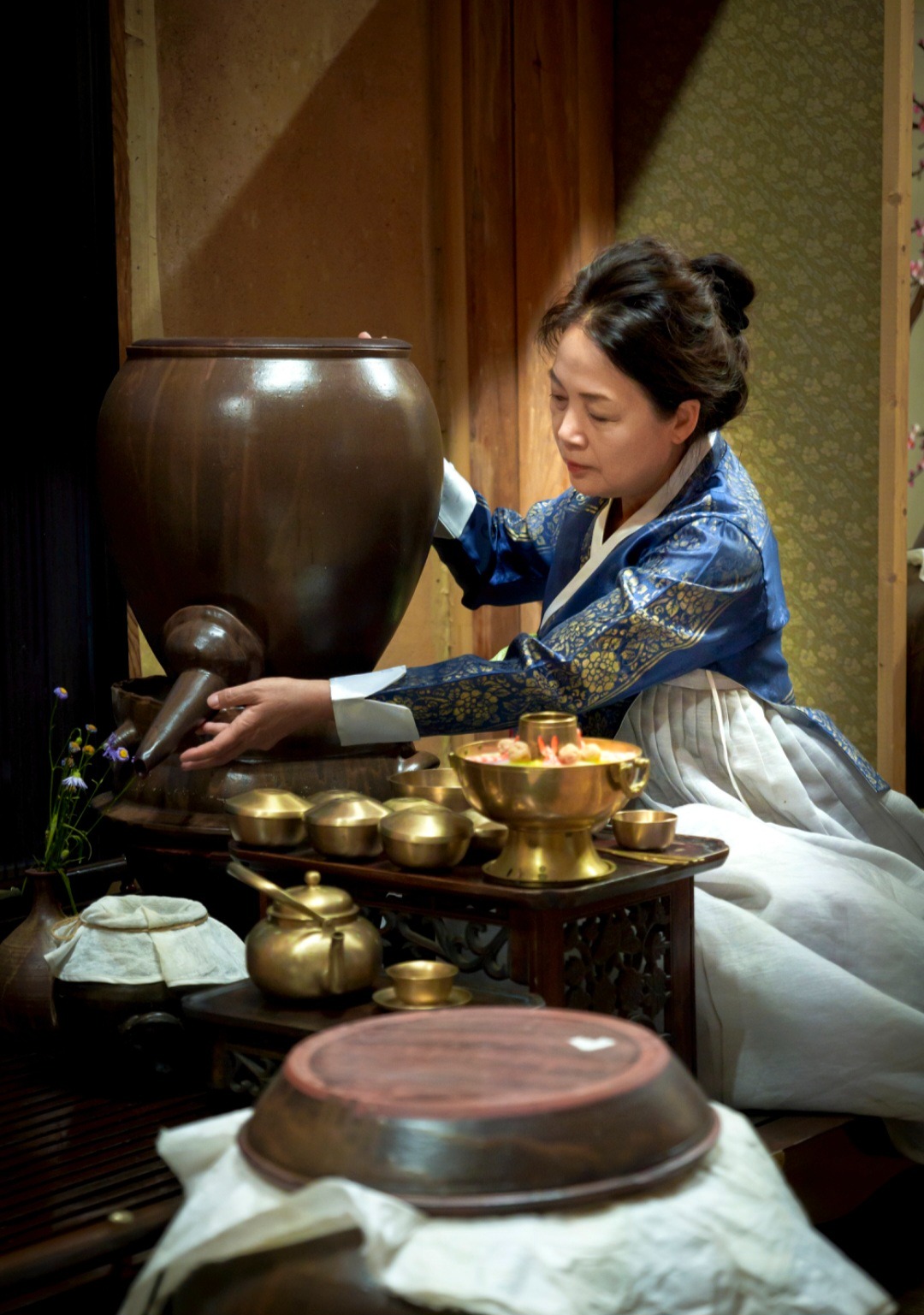
At Montmartre, the Gwangshin Kim clan, represented by its current head and culinary specialists, will present a curated selection of Suwun Japbang recipes — likely in small-plate tasting format — allowing festival attendees to experience flavours from 500 years ago. This will not be mere gastronomy: it is a gesture of cultural diplomacy, inviting Parisians and international visitors to taste history itself.
To French and European audiences accustomed to terroir, regional appellations, and centuries-old gastronomic traditions, the introduction of Suwun Japbang invites dialogue: what is the Korean equivalent of terroir? How do ancestral recipes anchor modern identity? And how can food function as living archive?
In Montmartre, the Korean pavilion (or stand) will be positioned among the many “villages” of regional and world cuisine within the Parcours du Goût. (Fête des Vendanges de Montmartre) It may also be woven into demonstration sessions or tastings during off-peak hours, and possibly in pairing events — juxtaposing local wine and Korean flavours.
Beyond immediate consumption, the event offers symbolic resonance: the 2025 Montmartre festival theme emphasises youth, creativity, and intergenerational exchange. (Fête des Vendanges de Montmartre) The insertion of a 500-year culinary tradition into this youthful festival underscores continuity and dialogue between past and present, East and West.
Broader Significance: Heritage, Identity, and Diplomacy
The Record of legacy in the age of UNESCO
The possibility of Suwun Japbang’s inscription on the UNESCO Memory of the World register is both a recognition and a political statement. UNESCO’s register aims to preserve historical documents of global significance, safeguarding them for future generations and affirming their communal value.
If inscribed, Suwun Japbang would join a panoply of cooking manuscripts, ritual codices, and archival chronicles deemed vital for human heritage. The campaign connects national pride, family lineage (the Gwangshin Kim clan), and global cultural networks.
In European media, this intersection of culinary history and heritage diplomacy offers rich narrative arcs: Korea’s safeguarding of intangible culture, the living continuity of a scholar-gentry household, and transnational exchange via food.
Comparative Precedents in Gastronomic Heritage
While Suwun Japbang is unique, Europe offers illustrative analogues: medieval manuscripts of cuisine (e.g. Le Viandier by Taillevent in France), the Libro de Sent Soví (14th century Catalonia), or Italian Renaissance cookbooks such as Bartolomeo Scappi’s Opera. Many European museums and institutions now treat such texts as documentary treasures, contextualising them historically, culinarily, and socially.
In Asia, too, the digitisation and museumisation of food manuscripts (e.g. Chinese Ming dynasty recipe compendia, Japanese Edo cookbooks) have become part of heritage campaigns. In this light, Suwun Japbang’s entry into a European festival becomes part of a larger conversation about food as archival artefact.
Cultural Tourism, Public Perception, and Soft Power
For Korea’s cultural diplomacy, this Montmartre debut can enhance K-heritage visibility among European publics. It is more than a “taste of Korea” — it is a statement: that Korean history includes refined domestic culture, historical mindfulness, and an orientation toward international exchange.
At a time when Korean popular culture (K-pop, K-drama, K-food) dominates global headlines, the presentation of ancestral Korean cuisine in Paris enriches that narrative, emphasizing depth, continuity, and civility.
From Montmartre’s vantage, the gesture also complements the festival’s ethos: Montmartre’s harvest festival is not only about local wine, but about convivial exchange, cultural diversity, and sustaining tradition in a changing city.