


By Winnie Kamau. Nairobi, Kenya
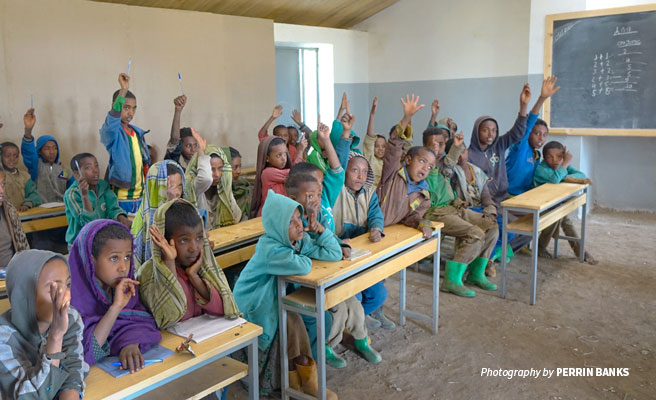
Sub-Saharan Africa, home to the world’s youngest and fastest-growing population, faces profound educational challenges amid rapid demographic shifts, economic pressures, and escalating climate threats. Sustainable Development Goal 4 (SDG 4) calls for inclusive, equitable quality education and lifelong learning opportunities for all by 2030. As we approach the end of 2025, progress remains uneven: while enrollment has expanded over decades, quality, relevance, and equity lag, perpetuating cycles of poverty and vulnerability. Education for Sustainable Development (ESD), embedded in SDG Target 4.7, provides a vital framework by equipping learners with knowledge, skills, values, and attitudes to address sustainability challenges—environmental integrity, economic viability, and social justice. In a region on the frontlines of climate change, food insecurity, and inequality, ESD transforms education from rote learning into a tool for resilience and empowerment.
The current state of education in Sub-Saharan Africa reveals stark disparities. Recent UNESCO and UN reports indicate approximately 118 million children, adolescents, and youth out of school across Africa, with Sub-Saharan Africa bearing the brunt—over half the global total. Pre-primary participation rates stand at about 48.6%, far below global averages, undermining early foundations. Primary completion hovers around 62-65% on time, with lower rates for secondary levels. Learning outcomes are critically low: in many countries, fewer than 10-58% of children achieve minimum proficiency in reading and mathematics by primary’s end. Teacher shortages are acute, with Sub-Saharan Africa needing an estimated 15 million new educators by 2030; around 40% of primary teachers lack national qualifications, and trained teacher ratios are the lowest globally at about 65%.
Gender disparities persist, narrowing at primary but widening at secondary and tertiary, especially in STEM. Poverty, child labor, early marriage, conflict, and cultural norms disproportionately affect girls. Infrastructure improvements—such as drinking water and sanitation—have advanced by over 10 percentage points in some areas since 2016, yet basic services remain inadequate in many schools.


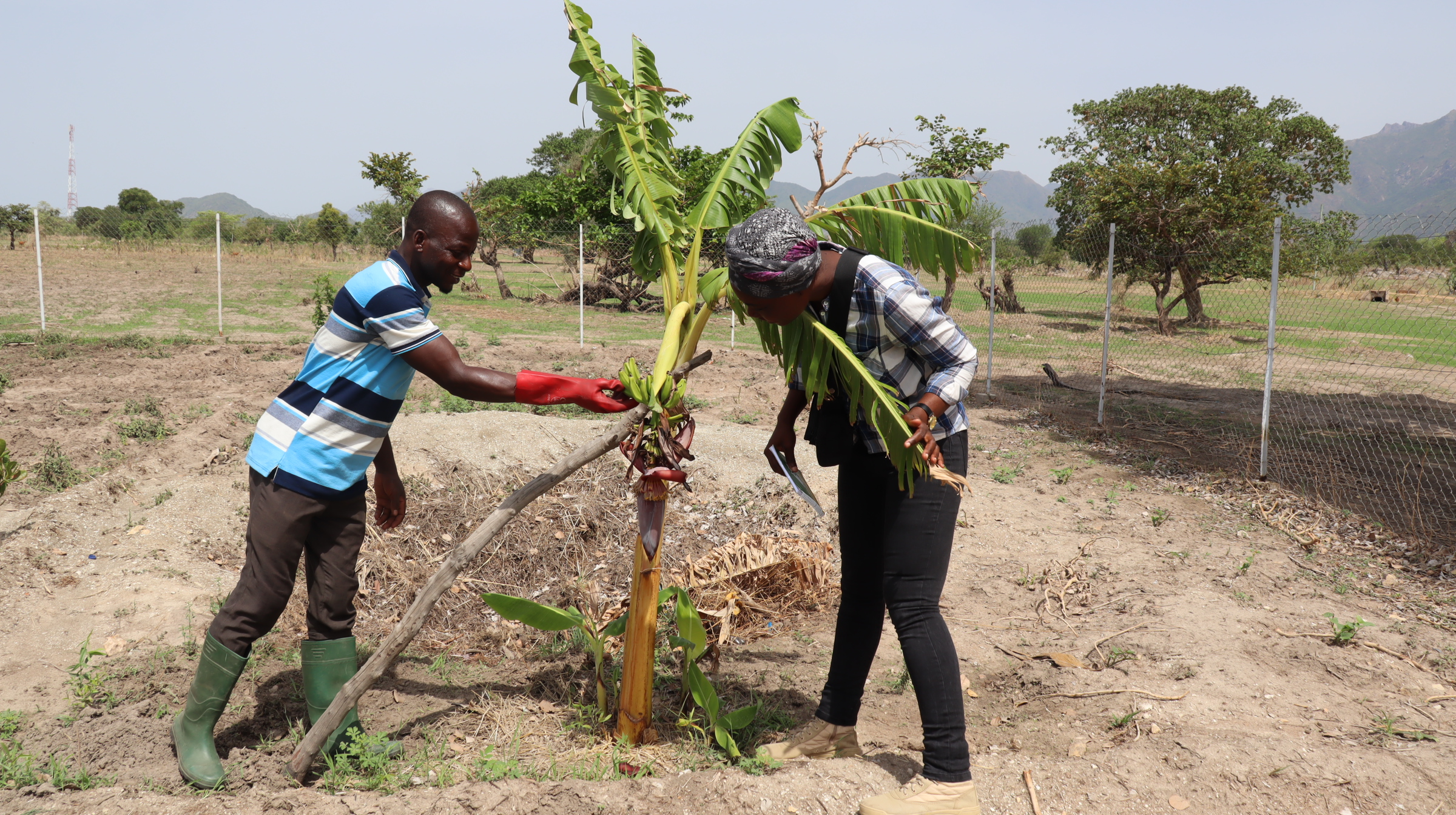
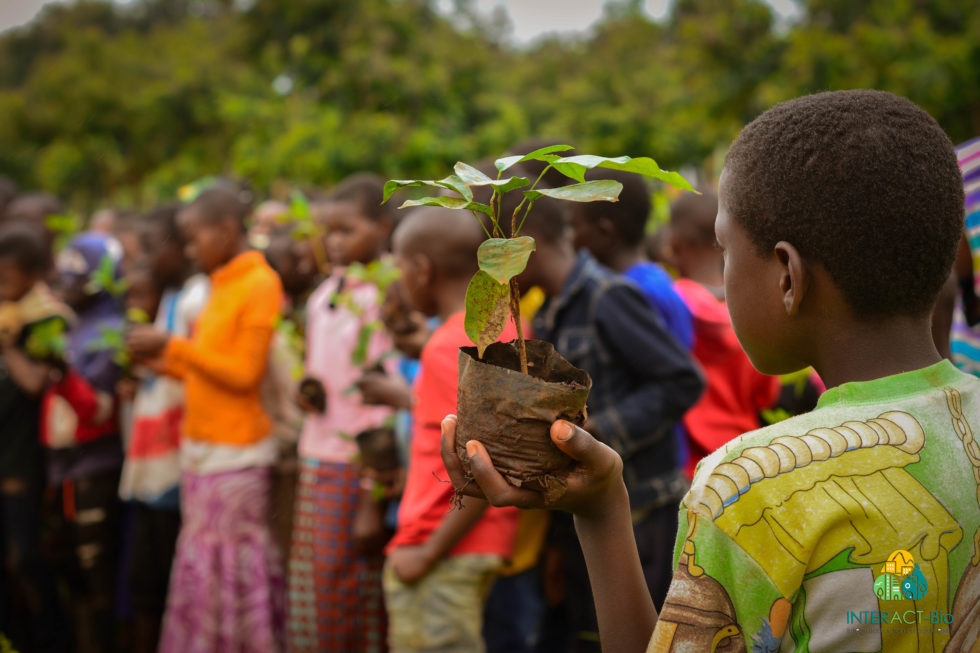
ESD reorients education toward transformative learning, fostering critical thinking, problem-solving, collaboration, and action for sustainability. Defined by UNESCO’s ESD for 2030 framework, it empowers informed decisions for a just society. In Sub-Saharan Africa, where climate impacts disrupt schooling—extreme weather caused millions of lost school days in 2024—ESD integrates local issues like drought-resistant farming, biodiversity conservation, and community resilience. Initiatives in 2025, such as regional workshops in Senegal for West and Central Africa, advance ESD mainstreaming through multisectoral approaches. Programs in Botswana, South Africa, and the Sahel promote teacher training embedding sustainability, linking classrooms to real-world challenges like agroecology and green economies. ESD supports interconnected SDGs: climate action (13), gender equality (5), and reduced inequalities (10).

Structural barriers impede progress. Financing gaps are massive: Sub-Saharan Africa shoulders much of the global $97-100 billion annual shortfall for SDG 4, exacerbated by debt burdens where governments spend more on servicing than education. Many fall short of the 4-6% GDP benchmark. Curriculum overload, rigid exam-focused systems, and inadequate teacher preparation marginalize ESD. Conflicts, displacement, and climate events—floods, droughts—disrupt learning, pushing millions out of school. Digital divides and resource scarcity hinder inclusive, innovative approaches. Cultural barriers require localizing ESD with indigenous knowledge.
African educationalists emphasize context-sensitive solutions. Dr. Julius Atuhurra highlights shifting from quantity to “quality along with quantity,” studying “positive deviance” in high-performing teachers for scalable practices. Professor Jude Chikadibia Onwunyirimadu calls universities hubs for teacher production, pedagogical research, and community literacy. Others, like Dr. Amina K. Mutesi, stress rooting ESD in local systems—sustainable agriculture, water conservation—for relevance. Prof. Thabo Ndlovu advocates transformative pedagogy, empowering teachers to foster innovation and adaptation.
Pathways forward demand bold action. Increase targeted financing through innovative models like debt-for-education swaps (e.g., Côte d’Ivoire’s 2024 success) and partnerships like the Global Partnership for Education. Reform curricula for competency-based, ESD-integrated learning across subjects. Empower teachers via massive recruitment, continuous development, and better conditions. Address inequities with inclusive policies—scholarships, school feeding, safe infrastructure—for girls, rural children, and crisis-affected groups. Leverage regional collaboration: African Union Agenda 2063, Sahel Teacher Initiatives, and platforms like Imaginecole for shared resources. Strengthen data monitoring and embrace digital tools responsibly. Build climate-resilient schools and community-based learning.

Technology offers opportunities: mobile platforms and radio education expand reach, but equitable deployment is key to avoid deepening divides. ESD ensures innovation supports human-centered, sustainable learning.
As 2025 closes, Sub-Saharan Africa stands at a crossroads with five years to 2030. ESD bridges access to meaningful, transformative education, equipping youth to navigate climate crises, drive green economies, and build equitable societies. Grounded in local realities, teacher-driven, and systemically supported, ESD can make SDG 4 achievable—fostering resilient futures for Africa’s generations and the planet.
Note:This article is produced to you by London Post, in collaboration with INPS Japan and Soka Gakkai International, in consultative status with UN ECOSOC.