


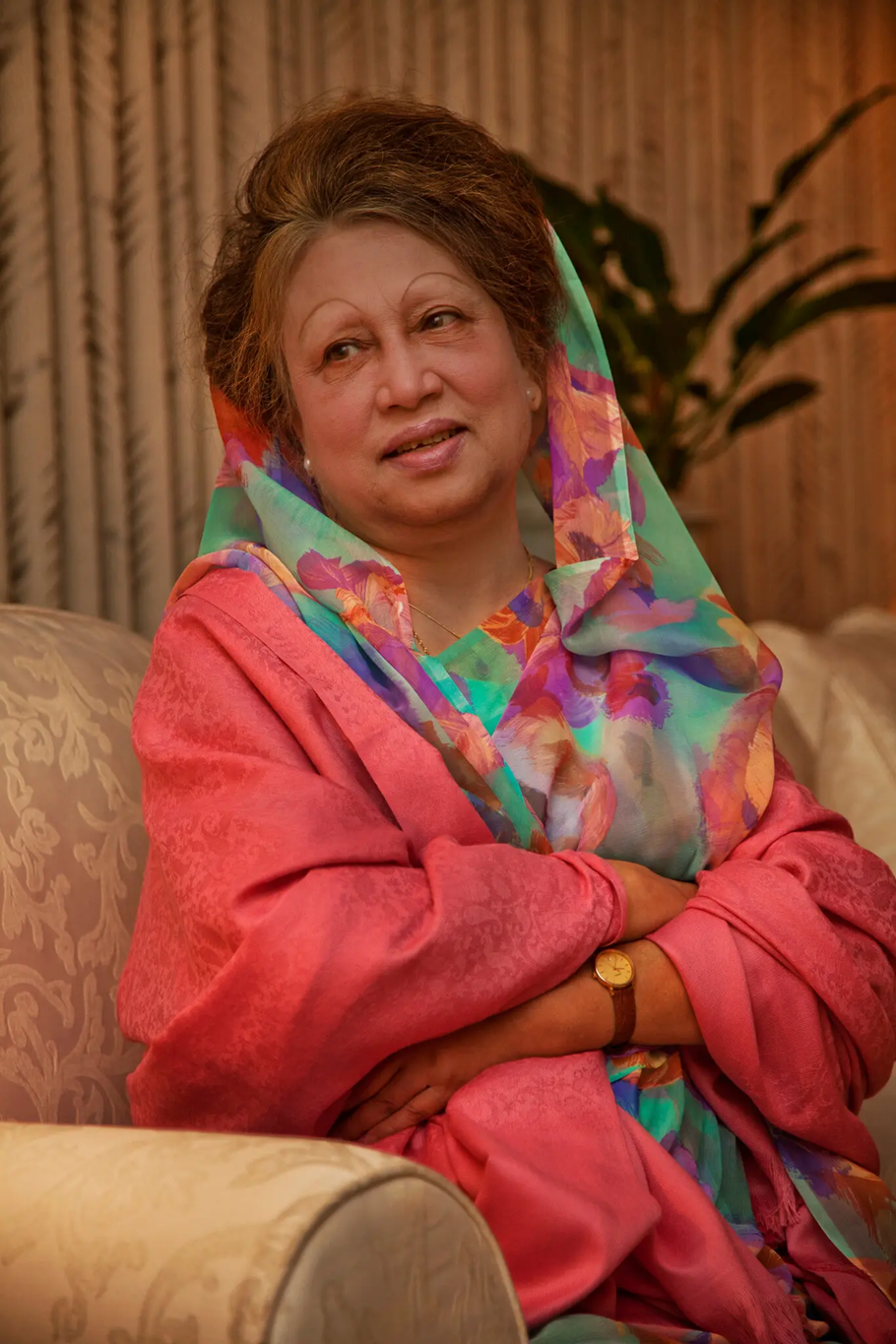
DHAKA, Dec 30 — Khaleda Zia, Bangladesh’s first female prime minister and longtime leader of the opposition Bangladesh Nationalist Party (BNP), has died at the age of 80 after a prolonged illness.
The BNP announced her passing in a statement posted on social media: “BNP Chairperson and former Prime Minister, the national leader Begum Khaleda Zia, passed away at 6:00 a.m. today, shortly after the Fajr (dawn) prayer.” The party called for prayers for her soul, adding that details of her funeral would be announced later.
Zia had been receiving treatment at Evercare Hospital in Dhaka since November 23, where she spent over a month in intensive care battling multiple complications, including advanced liver cirrhosis, heart disease, diabetes, arthritis, kidney issues, and lung infections. She was on life support in her final weeks.
Political Career and Legacy
Khaleda Zia made history in 1991 by becoming Bangladesh’s first woman prime minister, leading the BNP to victory. She served from 1991 to 1996 and again from 2001 to 2006, marking her as one of the country’s most influential leaders.
Her political journey began tragically after the 1981 assassination of her husband, President Ziaur Rahman, founder of the BNP. Emerging from relative seclusion, she unified the party and became a key figure in the movement against military rule in the 1980s.
Zia’s decades-long rivalry with Sheikh Hasina, leader of the Awami League, defined Bangladeshi politics, with the two women—often called the “battling begums”—alternating in power.
In 2005, Forbes magazine ranked her among the world’s most powerful women.
Later Years: Imprisonment and Health Struggles
Zia faced corruption charges, which she and her supporters described as politically motivated. Arrested in 2018, she received lengthy prison sentences but was released on humanitarian grounds during the COVID-19 pandemic and largely confined to her Gulshan residence, “Firoza.”
Following the August 2024 student-led uprising that ousted Prime Minister Sheikh Hasina, Zia was fully released. In January 2025, Bangladesh’s Supreme Court acquitted her in her final corruption case, clearing the way for potential participation in upcoming elections.
Earlier this year, she traveled to London for advanced treatment, returning to Dhaka in May after 117 days abroad. Despite initial improvements, her health declined sharply in recent months.
Her son, Tarique Rahman, the BNP’s acting chairman, had recently returned from long-term exile in London, arriving just days before her death.
Zia’s passing marks the end of an era in Bangladeshi politics, closing a chapter dominated by her intense rivalry with Hasina. The BNP, seen as a frontrunner in planned February 2026 elections, now faces a leadership transition amid national mourning.