

By Dr Majid Khan (Melbourne):
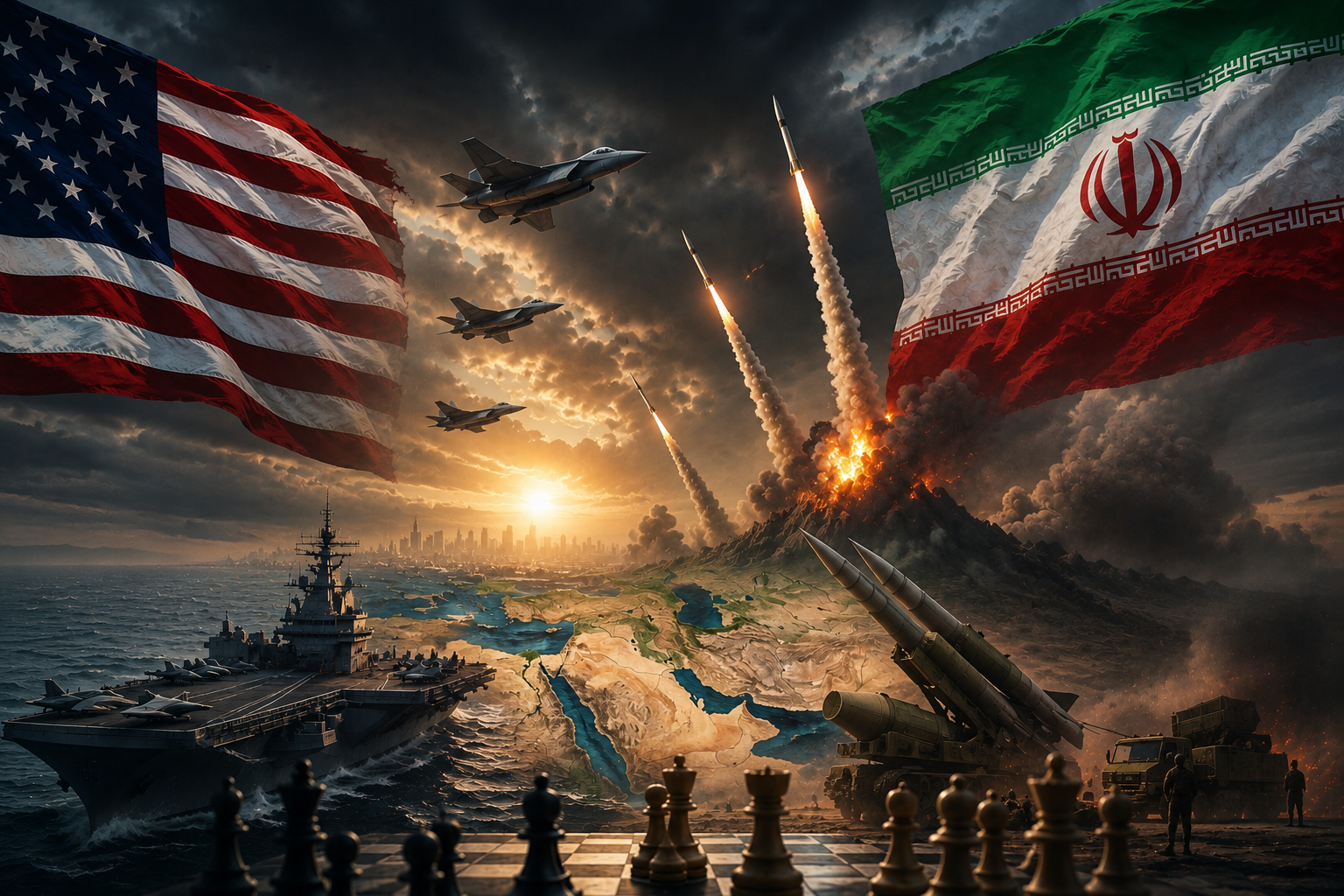
The conflict between the United States and Iran, a confrontation that has flared repeatedly since February 2026, has surged once more into open hostilities, threatening to unravel recent diplomatic efforts and reshaping global strategic and economic calculations. What began as a complex war with multiple theaters of violence, ceasefire frameworks, and mediation attempts has now returned to a cycle of military exchanges that imperil international commerce, regional stability, and long‑term prospects for peace.
The United States launched a new wave of airstrikes against Iranian military installations, coastal infrastructure, radar systems and naval assets, characterizing the operation as necessary to counter what Washington described as Iran’s renewed threats to shipping in the Strait of Hormuz and to regional allies. Iran responded with missile, drone, and ground assaults not only inside its own territory but by targeting U.S. allied bases in Bahrain, Kuwait, Qatar and Oman, demonstrating a widening battlefield that extends far beyond Iran’s borders. These engagements represent the most severe flare‑up of hostilities since the war first erupted in late February 2026 with large‑scale strikes by U.S. and Israeli forces against Iranian targets.
One of the most consequential developments in the latest escalation took place around the Strait of Hormuz, a pivotal maritime corridor through which nearly a fifth of the world’s traded oil and gas flows. In recent days, Iran’s Islamic Revolutionary Guard Corps declared the strait closed to vessels a move that, by international law, does not hold legal legitimacy but has raised urgent safety concerns for commercial shipping and drawn immediate U.S. military retaliation. The United States responded by declaring a renewed blockade of Iranian ports and asserting control over the waterway, even announcing plans to charge a controversial 20 percent “security and passage fee” on cargo transiting through the strait. This proclamation, issued by U.S. President Donald Trump, stirred deep international unease, as global shipping norms forbid such tolls on international waterways, and further polarized diplomatic opinion. The dynamic in the strait one day asserted by Tehran as its territory, the next by Washington as a guarded passage under U.S. protection encapsulates the strategic stakes and escalating tensions.
The renewed hostilities have disrupted tentative diplomatic processes that had been established earlier in 2026. Earlier peace accords including interim ceasefire frameworks mediated by Pakistan, Qatar and Egypt had sought to reduce direct confrontation and open channels for negotiation toward a permanent settlement. Those arrangements had briefly eased violence, reopened shipping lanes and initiated discussions over sensitive matters such as Iran’s nuclear activities and de‑escalation mechanisms in contentious regions like Lebanon. While diplomacy did not completely end the war, it had created a narrow window of relative calm. The current eruption of military strikes, attacks on allied countries, and competing claims of control over the Hormuz corridor now threaten to collapse even the fragile parameters of those agreements, underscoring the tenuousness of peace in environments where strategic mistrust runs deep.
Across the region, the human toll of the resurgent conflict continues to mount. While exact casualty figures remain contested due to the fog of war, explosions in southern Iran near Bushehr and other strategic locales have been reported in recent days, indicating continuing violence that affects civilians alongside military personnel. Cities long accustomed to intermittent conflict have once again endured the hardships of war‑related destruction, displacement and the disruption of daily life. These human consequences, though often overshadowed in global headlines by strategic calculations and military statistics, underpin the profound social cost of resurgent violence even as key capitals direct resources toward defense and retaliation.
The economic reverberations of the latest escalation have also been immediate and tangible. Oil markets reacted sharply to the heightened risk of disruption in the Strait of Hormuz, prompting significant rises in crude prices and contributing to volatility in financial markets worldwide. West Texas Intermediate and Brent crude benchmarks climbed by several percentage points in early trading as traders recalibrated expectations for supply continuity. Simultaneously, stock‑index futures dipped, reflecting investor concern over geopolitical risk even as broader market trends emphasized other sectors such as technology investment. The interplay between military conflict and global markets has once again demonstrated how geopolitical instability in a strategic region can produce ripple effects felt far from the battlefield, affecting inflationary pressures, energy security, and national economic forecasts.
Beyond the human and economic costs, the renewed U.S.–Iran confrontation highlights a persistent and troubling paradox of modern conflict: war has become deeply interwoven with economic interests that extend beyond national security imperatives. Defense contractors, arms manufacturers, and related industries have seen heightened demand for weapons systems, drones, missiles, surveillance technologies and naval platforms over the course of the 2026 conflict. Multi‑billion‑dollar procurement contracts from governments seeking to replenish depleted arsenals and enhance strategic capabilities have buoyed the defense sector in multiple countries. This phenomenon is not unique to the Middle East; global military spending has surged in recent years in response to conflicts in Ukraine, Gaza and now the U.S.–Iran war, reflecting a broader pattern in which instability often begets sustained demand for sophisticated military hardware. Although such procurement is framed domestically as necessary for national defense, it also creates enduring economic incentives that can make disengagement more politically and financially complex. The continuity of defense orders and industrial commitments across periods of both active conflict and fragile truces illustrates the entanglement of wartime needs and peacetime economic structures, where segments of industry and investment portfolios thrive on the maintenance of security fears and persistent tensions.
Politically, the flare‑up has exacerbated divisions within and between key capitals. In Washington, policymakers are sharply divided about the scope and objectives of engagement with Iran, with some advocating a more aggressive posture to degrade Tehran’s military capacity and assert U.S. control over strategic waterways, and others warning that escalation risks wider regional conflagration with unpredictable consequences. These debates are playing out against the backdrop of domestic political currents, electoral considerations and legislative oversight, all of which influence the pace and intensity of American military operations. In Tehran, hardline factions have seized on the latest clashes to reinforce narratives about resistance to foreign intervention and national sovereignty, consolidating internal support for defiance even as economic pressures from sanctions and conflict mount. The interplay between domestic politics and strategic decision‑making on both sides underscores the difficulty of achieving sustained détente in conflicts with deep ideological, historical and geopolitical roots.
The involvement of regional players further complicates the security landscape. Gulf states, many of which had been directly impacted by earlier phases of the conflict through missile alerts, defensive engagements and economic disruptions, are once again re‑evaluating their security postures. The willingness of Iran to strike allied bases in Bahrain, Kuwait, Oman and Qatar reflects a capacity to shape events beyond its borders, elevating concerns among neighboring states about escalating violence and potential spillover effects. At the same time, these states are balancing their own diplomatic relationships with both the United States and Iran, seeking to avoid becoming direct combatants while safeguarding national stability and economic interests. This delicate balance is a hallmark of Middle Eastern geopolitics, where overlapping alliances, internal divisions and competing strategic interests frequently transform localized conflicts into broader regional crises.
International organizations and neutral countries have urged restraint and a return to diplomacy, emphasizing the catastrophic global implications of unbridled escalation between two major powers. The United Nations and various international bodies have reiterated calls for negotiation and de‑escalation, warning that the resurgence of violent engagement undermines efforts to secure long‑term peace and stability in the region. These calls echo broader concerns among policymakers, analysts and civil society groups about the prospect of an entrenched conflict that could last years, perhaps decades, affecting generations of civilians, disrupt global commerce, and constrain developmental progress in multiple countries.
Looking ahead, the future of the U.S.– Iran confrontation remains uncertain. The renewed hostilities risk derailing earlier peace initiatives and reopening fault lines that had been only partially contained by prior diplomatic efforts. The strategic importance of the Strait of Hormuz, as well as energy markets and maritime trade, ensures that this conflict will continue to have global ramifications far beyond the immediate region. If military exchanges escalate further, the potential for broader involvement by regional actors and geopolitical blocs cannot be discounted, raising the specter of a much larger conflagration. Conversely, revived diplomatic engagement potentially involving renewed mediation by Pakistan, Qatar, Egypt and other interested parties may yet provide a path toward de‑escalation, though the window for effective negotiation is narrow and closing.
The resurgence of the U.S.–Iran conflict thus represents not just a continuation of an already violent war, but a test of international diplomacy’s capacity to manage and ultimately resolve a confrontation rooted in decades of mistrust, strategic rivalry and competing visions for regional order. In the immediate term, the world is witnessing renewed fire exchange, militant retaliation, and strategic posturing that highlight how fragile peace can be when the underlying grievances and geopolitical dynamics remain unaddressed. And as the fighting intensifies, so too does the inescapable reality that in the modern era, war remains tragically capable of destroying lives while simultaneously driving economic currents that make its cessation all the more difficult.


