

By Sanjar Saidov
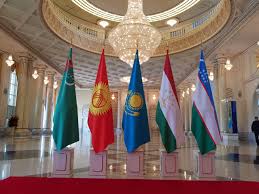
Historically, Central Asia has been a region where the interests of world powers clashed. Today, as independent nations, the countries of the region are seeking their own paths of cooperation. The Consultative Meetings of the Heads of State of Central Asia have recently become an important tool of regional diplomacy. Thanks to this informal format, the leaders of the countries can directly discuss important issues of security, economics, energy, and humanitarian cooperation without external pressure.
On March 15, 2018, the first meeting in the new format was held in Astana, proposed by the President of Uzbekistan, Shavkat Mirziyoyev. Since his election in 2016, Mirziyoyev has consistently advocated for openness and the strengthening of regional ties. As the region already had experience in creating integration organizations, such as the Central Asian Economic Community and the Organization for Central Asian Cooperation, his proposal was warmly received. Unfortunately, these organizations were unable to overcome internal economic and political differences, and in 2006, they became part of the Eurasian Economic Community.
The first summit in 2018 focused on a comprehensive solution to regional problems. The main focus was on security issues, such as stabilizing the situation in Afghanistan, combating drug trafficking, and countering religious extremist activities. Alongside this, contemporary environmental challenges were discussed, such as the ecological disaster of the Aral Sea, as well as opportunities for the development of cultural and humanitarian cooperation. The statement by the First President of Kazakhstan, Nursultan Nazarbayev, which said: “To resolve the issues of the countries of Central Asia, we do not invite third parties”, became a vivid expression of the region’s desire for autonomy in addressing internal problems.
In November 2019, the second meeting was held in Tashkent, where issues of expanding economic cooperation, building transport corridors, and creating an investment forum were discussed. At this meeting, Kazakhstan proposed concluding a comprehensive treaty on good neighborliness. Kyrgyzstan, in turn, emphasized the importance of ensuring the free movement of labor, capital, and goods. Turkmenistan proposed cooperation on international platforms such as the UN and OSCE.
Due to the COVID-19 pandemic, the third meeting, which was supposed to take place earlier, was postponed and eventually held in August 2021 in Turkmenbashi. The restoration of transport links, food security, and digital transformation were the main topics of discussion. Uzbekistan proposed creating, under the auspices of the UN, a regional center for the development of transport and communication connectivity and the expansion of business cooperation. At the same time, Kazakhstan and Uzbekistan began implementing joint projects, including the construction of the Turkestan–Shymkent–Tashkent railway line and the International Center for Trade and Economic Cooperation “Central Asia”.
In the summer of 2022, the fourth meeting was held in Cholpon-Ata, Kyrgyzstan. The main result of this meeting was the signing of the Agreement on Friendship, Good Neighborliness, and Cooperation for the Development of Central Asia in the 21st Century. Although this agreement guaranteed mutual support and non-aggression between the countries, Tajikistan and Turkmenistan refrained from signing it due to the need for internal approval processes. A “Green Agenda” was also developed to address the region’s environmental issues.
A year later, in December 2023, the fifth jubilee meeting was held in Dushanbe. It gathered not only the heads of the five Central Asian states but also the President of Azerbaijan, Ilham Aliyev. The main topics of discussion were the growth of trade, industrial cooperation, the energy sector, and youth policy issues. Kyrgyzstan focused on water management problems and climate change. Uzbekistan proposed creating a free trade zone and an online platform for transportation. Turkmenistan suggested holding an energy dialogue and using innovative technologies. A key innovation was the creation of the Council of National Coordinators, which will be responsible for implementing the decisions made at the meetings.
The summit concluded with the signing of five important documents, among which were an agreement on improving transport connectivity and a Roadmap aimed at improving the health and well-being of the region’s population. Numerous parallel events, such as forums of rectors and scientists, meetings of transport ministers, and youth organizations, gave the meeting significant institutional weight.
Astana hosted the sixth Consultative Meeting of the Heads of State of Central Asia on August 9, 2024. The key document adopted at the summit was the concept for the development of regional cooperation “Central Asia – 2040,” described as having “conceptual significance for the region.” Its main goal is to combine efforts for regional rapprochement, expand the interaction of five-party organizations, and strengthen the international subjectivity of Central Asia. Special attention was given to the economic aspect, as a strong foundation is necessary for effective cooperation. Intra-regional trade has grown by more than 80% over the past five years, reaching $11 billion, with potential growth to $15 billion. President Mirziyoyev proposed a strategic goal of creating a single regional market. To achieve this, it is necessary to establish an Economic Council that will regularly convene with the deputy heads of governments. The summit also discussed tourism integration; President Mirziyoyev suggested creating comprehensive tourism products under the slogan “one tour – the whole region” and introducing mutual recognition of national ID cards.
Preparations for the seventh meeting, to be held in Tashkent in 2025, are in full swing. Additional platforms for discussion, such as forums for entrepreneurs, youth, and scientists, will be included in the event. The development of humanitarian ties, the introduction of “green” technologies, and energy will be the main topics for discussion. Tashkent views this meeting as an important means of strengthening regional cooperation and promoting digital transformation and innovation programs.
The Consultative Meetings have significant potential for fostering integration. The institutionalization process is demonstrated by the creation of the Council of National Coordinators and the adoption of strategic documents. The involvement of the academic community and youth in addressing regional problems is crucial, as it creates long-term prospects for cooperation.
Deepening economic cooperation can greatly contribute to the integration of the region’s countries. Striking examples of already implemented major initiatives include the construction of a high-speed railway linking Turkestan, Shymkent, and Tashkent; the development of the Trans-Caspian transport route; and joint hydropower projects in Kyrgyzstan. Uzbekistan and Kazakhstan are leading the promotion of ideas to create common industrial zones and digital trade platforms.
Security remains a key factor contributing to closer ties between states. Due to the complex situation in Afghanistan and the increasing risk of extremism, countries around the world are cooperating more closely in their security and defense operations. At the latest meeting, discussions focused on creating a program to strengthen borders between different countries and implementing an early warning system for potential emergencies.
Humanitarian cooperation is also actively developing. Cultural programs are organized, joint television initiatives are launched, and projects to preserve and promote the cultural heritage of the region are being advanced. Particular attention is paid to youth policies, including education and employment issues.
Thus, over the past six years, the Consultative Meetings of the Heads of State of Central Asia have evolved from a symbolic gesture into an effective tool of regional policy. They not only contribute to building trust among countries but also form the foundation for further integration. Although the creation of a fully-fledged regional union remains a complex and long-term task, the accumulated experience and growing institutionalization provide grounds to believe that Central Asia has a promising path toward integration.
Author:Sanjar Saidov is the Head of the Department of Political Science at the Uzbekistan State University of World Languages,Tashkent, Uzbekistan