

By Raza Syed
In the boundless silence of Xinjiang’s arid plains, where the sky presses down like a lid on a sealed tomb, walls rise—high, unyielding, guarded—and behind them, thousands of Uyghur lives are caught in an invisible net of surveillance, erasure, and dread. We call them “imprisoned souls” not only because their bodies are held in concrete cells, but because their very being is under siege: their language outlawed, their faith forbidden, their ancient traditions systematically dismantled. Human rights investigators have laid bare the machinery of this cruelty—vast internment camps that swallow entire communities, forced labour that turns human hands into tools of the state, and so-called “re-education” programmes engineered to strip away the core of who a people are.

For those inside, the bars are far more than iron. They mark the slow death of a mother tongue, the fading of ancestral songs, the suffocation of the spirit’s quiet longing for God and freedom. This is no mere injustice; it is a deliberate campaign to unmake a people, to render them invisible in their own land.
Into this abyss of suffering, Aziz Isa Elkun has dared to speak. With the courage of one who has carried the weight of exile and witness, he has gathered the broken words of the detained, the silenced laments of families torn apart, and woven them into poetry that refuses to let the world forget. His voice is a lifeline thrown into the darkness, a refusal to let the cries of the oppressed dissolve into silence.
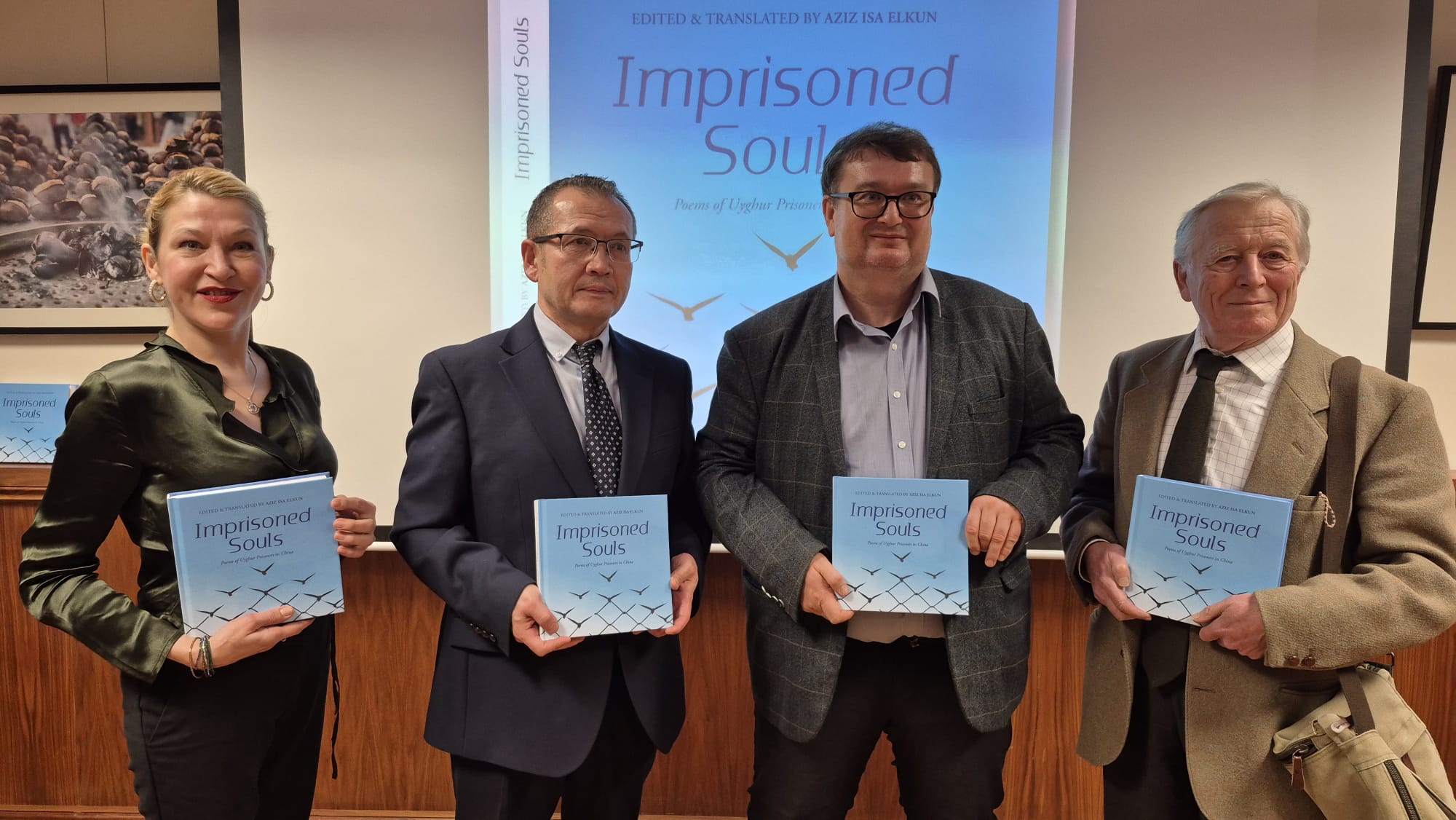
In the heart of London, where the city’s ancient stones echo with stories of freedom won and lost, a quiet revolution unfolded on December 16, 2025. At the Yunus Emre Enstitüsü—a cultural haven bridging Turkish heritage with the world’s diverse voices—Hertfordshire Press unveiled Imprisoned Souls: Poems of Uyghur Prisoners in China. The book launch was no ordinary event; it was a defiant act of remembrance, a gathering of poets, activists, scholars, and allies who came together to amplify the cries of a people on the brink of erasure.
Soft lamplight casting long shadows across the intimate room, filled with over 50 attendees—friends from the Uyghur diaspora, fellow writers, and human rights champions. At the center stood Aziz Isa Elkun, the London-based Uyghur poet and scholar whose hands have carried the weight of exile for over two decades. With a voice steady yet laced with sorrow, Elkun introduced his anthology, a 280-page testament to 25 Uyghur poets detained, sentenced, or vanished into China’s vast network of internment camps. “These are not just words on paper,” he said, his eyes reflecting the fire of unresolved grief. “They are the last breaths of souls fighting to be heard. The simple act of writing poetry has become a crime in my homeland—yet here, in this book, their voices rise again.”
Elkun’s journey to this moment is one of profound personal sacrifice. Born in Shayar County amid the golden sands of the Tarim Basin, he fled to the UK in 2001 after years of harassment for his activism. Since 2017, he has been severed from his family, witnessing the disappearances of colleagues and kin in what human rights organizations decry as a genocidal campaign to dismantle Uyghur identity. For five arduous years, Elkun pieced together these poems from smuggled digital archives, family whispers, and forbidden publications—translations that demand not just linguistic skill, but a heart willing to bear the pain.
The anthology itself is a mosaic of resilience: lyrical odes to blooming mulberry trees that symbolize fleeting hope; haunting elegies for lost loved ones; defiant verses that weave longing for freedom with the rhythms of ancient Uyghur traditions. Poets like Gülnisa Imin, imprisoned for her words, speak through lines that pierce the soul: fears of arrest, the ache of separation from children, the unyielding pride in a heritage under siege. “Their poetry captures the soul of the Uyghur people,” Elkun reflected during the launch, “our sorrow and resilience, our love and longing, our unbroken hope for dignity, peace, and freedom.”
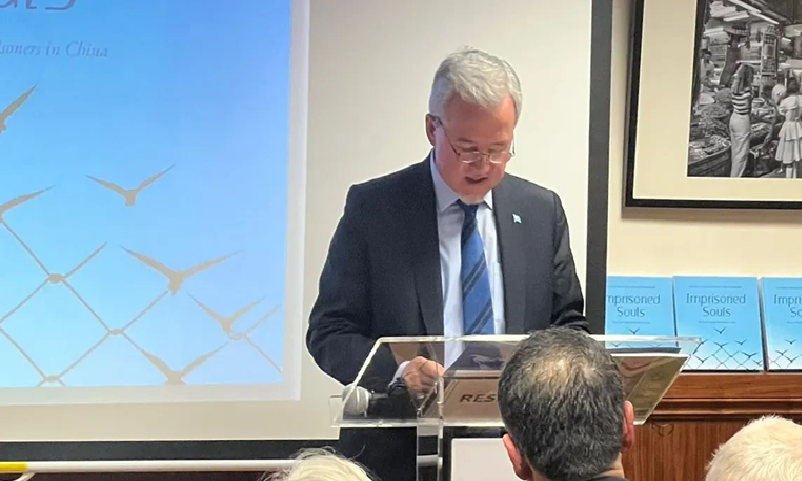
As president of the Uyghur PEN Centre since April 2025, Elkun’s work extends far beyond this book. He has already gifted the world Uyghur Poems (Penguin Random House, 2023), a sweeping anthology of two millennia of verse. Now, with Imprisoned Souls, he calls on humanity to act: “The world must not turn away. These poets must be freed from their cold cells. Their words are our shared humanity’s plea for justice.”
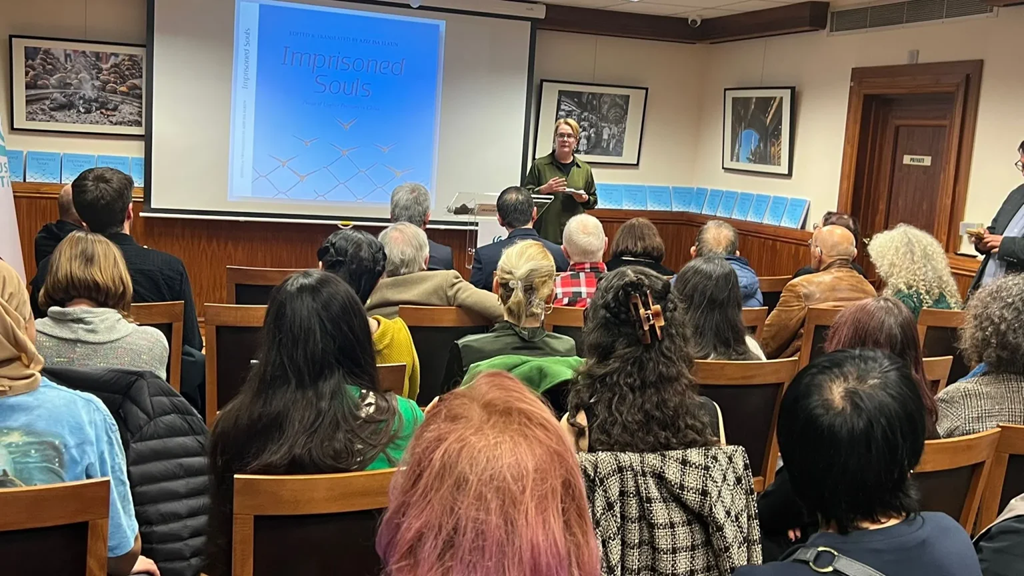
Hertfordshire Press, the UK’s beacon for post-Soviet literature, has been Elkun’s steadfast partner in this mission. For over two decades, the press has championed voices from Central Asia, publishing more than 250 works across 15 countries. “This book is more than literature—it’s a lifeline,” said publisher Marat Akhmedjanov at the event. “In an era of silence, we publish to preserve and to protest.”

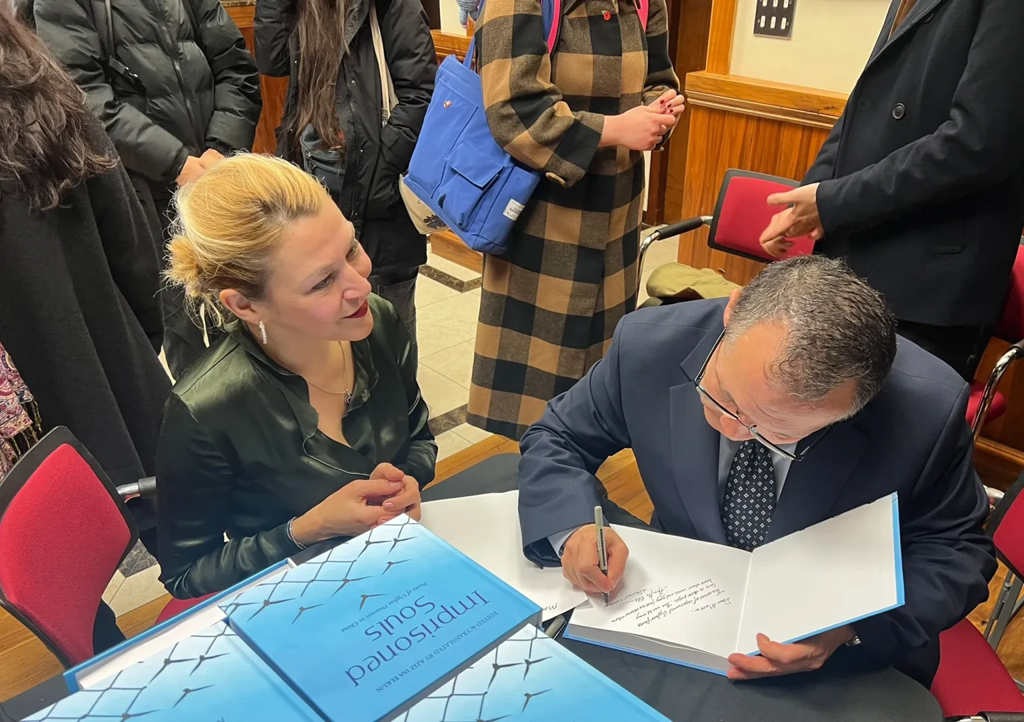
The evening closed with readings that hung in the air like prayers—poems recited in Uyghur and English, stirring tears and resolve. Attendees left with signed copies, but more importantly, with a charge: to share these stories, to advocate for the release of the imprisoned, to ensure that Uyghur culture endures.

In a world where walls divide and regimes seek to forget, Imprisoned Souls reminds us that poetry is unbreakable. It is the fire that lights the path to justice, the voice that refuses to be silenced. As Elkun urged, “Let these words echo until every imprisoned soul is free.” For more on Elkun’s work, visit www.azizisa.org/en or explore the book at Hertfordshire Press. The fight continues—and now, the world is listening.

Hertfordshire Press (SRM Group) is the only British publishing house dedicated to translated literature from the post-Soviet region, with a strong focus on Central Asia. Since 2002, the Press has introduced readers on four continents to more than 250 works from 15 countries. With over one million books in circulation and publications in 12 languages, Hertfordshire Press is committed not only to publishing but to actively promoting its authors through international festivals, global forums, and cultural partnerships.