

Q1: Could you begin by introducing yourself?
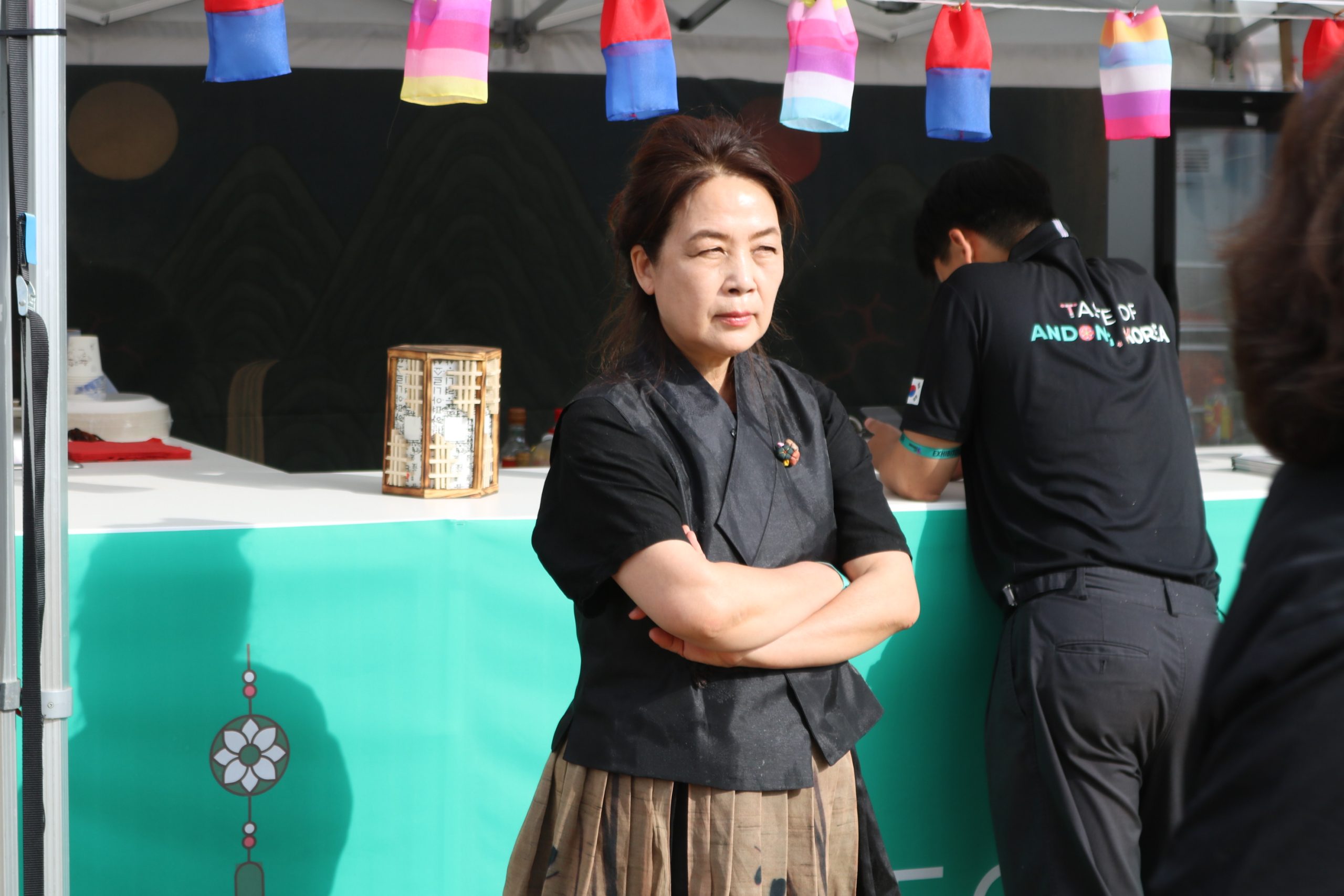
Ans:I come from Andong, a city in the Republic of Korea renowned for its Confucian traditions. As the matron of the Gwangsan Kim clan, I carry the responsibility of preserving and transmitting cultural heritage. Central to this mission is the dissemination of Suun Japbang, a culinary manuscript written by my ancestor some five centuries ago. Through this work, I endeavour to connect past and present by reintroducing traditional recipes to the global stage.
Q2. Could you elaborate on the dishes and recipes contained in this 500-year-old text?
Ans: Although the manuscript was committed to writing five centuries ago, many of its recipes had already existed for nearly a millennium. The act of codification simply occurred in the 16th century. In essence, there is little fundamental difference between food consumed a thousand years ago, five hundred years ago, and the food of today. The principal distinction lies in the increasing reliance on artificial additives in modern cuisine, whereas earlier generations drew exclusively upon the natural integrity of ingredients. Suun Japbang is distinguished by its strict adherence to purity of materials and methods, preserving the original essence of food.
Q3. How is the Andong Cultural Tourism Foundation promoting Suun Japbang?
Ans: No matter how accomplished a chef may be, individual efforts alone cannot sufficiently promote such a legacy. This is why the Andong Cultural Tourism Foundation has taken a central role. We have placed particular emphasis on promotion in the United Kingdom, where receptivity to foreign cuisines is marked by respect and genuine curiosity. This cultural disposition has encouraged us to approach our efforts with sincerity and conviction. At present, the Foundation actively publicises Suun Japbang across both Korea and Europe, employing a combination of online and offline platforms.
Q3. How would you compare the reception in the United Kingdom with that in other countries?
Ans: We conduct promotional activities in multiple countries every year. For example, in September 2025, events are planned in Italy, followed by France in October. While each nation exhibits distinct attitudes, the British response has been particularly noteworthy for its courtesy and openness. Unlike France or Italy, where culinary close mind often prevails, the British demonstrate a willingness to engage with traditional Korean food in a spirit of respect. This quality has drawn us repeatedly back to the United Kingdom.
Q4. Given the global concerns about junk food, what message would you like to share with younger generations as a scholar of traditional cuisine?
Ans: Junk food, in my view, is devoid of identity. Humanity is not a species bred merely for consumption; it is defined by culture, philosophy, and art. It is therefore inconceivable that all societies should subsist on a homogenised global diet. Rather, each community must prepare its food in harmony with the natural produce of its own environment, thereby safeguarding both physical and spiritual well-being. Indeed, numerous academic studies have suggested a correlation between the consumption of junk food and the rise of aggressive behaviours among the young.
Suun Japbang is more than a recipe book; it is a philosophical text that reveals the principles by which our ancestors approached food and life itself. In the end, food is a medium of education: it instructs us to live with humility and courtesy.