

Korean Lily Dance Company Graces the Stage of Oman’s Salalah Festival
— A Cultural Diplomacy Report Framed by the History of Oman, Salalah, and the Khareef Festival
By MD.Moon hyung suk
The Korean Lily Dance Company participated in one of the main programmes of the Salalah Khareef Festival (Salalah Tourism Festival), held from 15 to 22 August 2025 in Salalah, the capital city of Dhofar Province in southern Oman. During the Khareef season—when the land is transformed into verdant landscapes by the monsoon winds—the troupe introduced traditional Korean dance and music repertoires to the vibrant festival ecosystem, thereby opening a new chapter in Korea–Oman cultural exchange.

- Oman and Salalah: Layers of History Forged by “Incense and the Sea”
Oman’s Historical Strata. From antiquity, Oman was famed for its frankincense and metalcraft, serving as a strategic crossroads linking the Arabian Sea and the Indian Ocean. Although the Portuguese seized Muscat in the 16th century, they were expelled in 1650, paving the way for the establishment of the Āl Bū Saʿīd dynasty in the 18th century, which expanded Oman’s maritime networks. Today’s Oman harmonises tradition and modernisation within a constitutional monarchy led by the Sultan.
Salalah and the “Land of Frankincense.” Dhofar, where Salalah is situated, prospered for centuries through the frankincense trade. The UNESCO World Heritage Site “Land of Frankincense”—comprising the Wadi Dawkah frankincense groves, the port ruins of Al-Baleed and Sumhuram, and the lost city of Ubar—testifies to this millennia-old commercial legacy. The Frankincense Museum and archaeological park in Salalah now serve as centres of cultural storytelling.
- The Salalah Festival: A Seasonal Celebration Shaped by the Khareef
The Khareef Season and Festival Framework. The Dhofar Municipality designated the 2025 Khareef period from 21 June to 20 September, with the festival’s main programmes concentrated between 15 July and 31 August. The Lily Dance Company’s performances (15–22 August) coincided precisely with the festival’s peak.
The Beating Heart of the Festival—Attin Square. The festival grounds at Attin Square hosted nightly spectacles, from large-scale performances and circus-style shows to dance carnivals and “shadow fantasy” productions. Drone displays and eco-friendly fireworks illuminated the skies, while the newly launched “Literary Cultural Street” broadened the festival’s artistic reach.
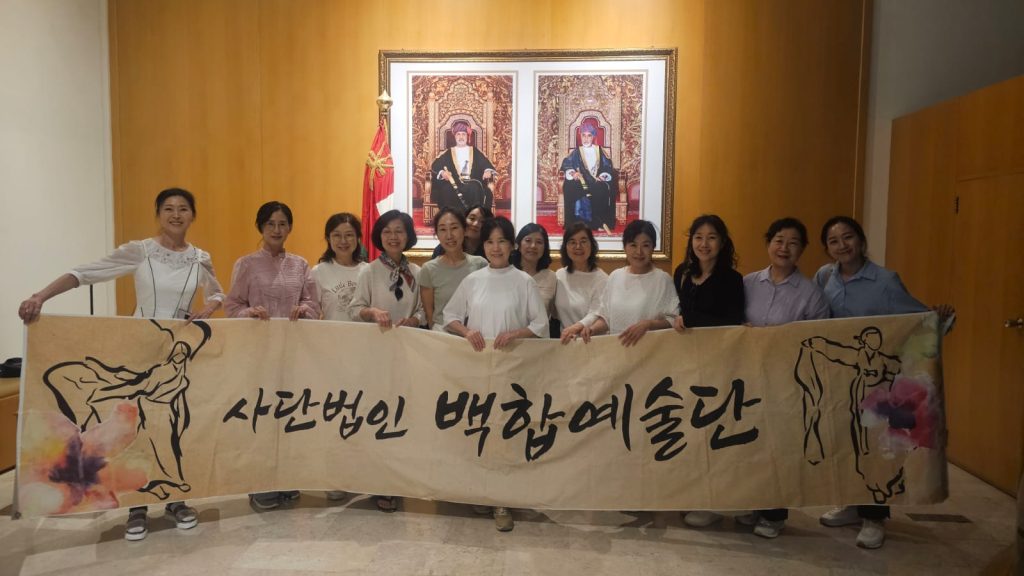
Contemporary Keywords of the Festival.
- Scale-up: Expanded across multiple sites (Salalah, Mirbat, Taqah, and Meeklaf), with over 180 programmes.
- Identity: A synthesis of Omani tradition, family leisure, night-time performances, gastronomy, and market culture.
- Philosophy: Balancing heritage with innovation by projecting local identity through drones, light installations, and interactive technologies.
- The Lily Dance Company: Infusing the Khareef Nights with Korean Rhythm and Form
The Lily Dance Company, led by artistic director Jeong Myoungsook, has long sought to broaden the creative spectrum of Korean traditional dance and music. Jeong, a holder of the national intangible cultural heritage title for the Jinju Sword Dance, has championed the modern transmission of tradition through education, performance, and international exchange. The troupe’s record includes appearances in Kyrgyzstan, Japan, and Australia, as well as wide-ranging domestic repertoires such as the Fan Dance, Taepyeongseongdae, Janggu Dance, and Jindo Drum Dance.
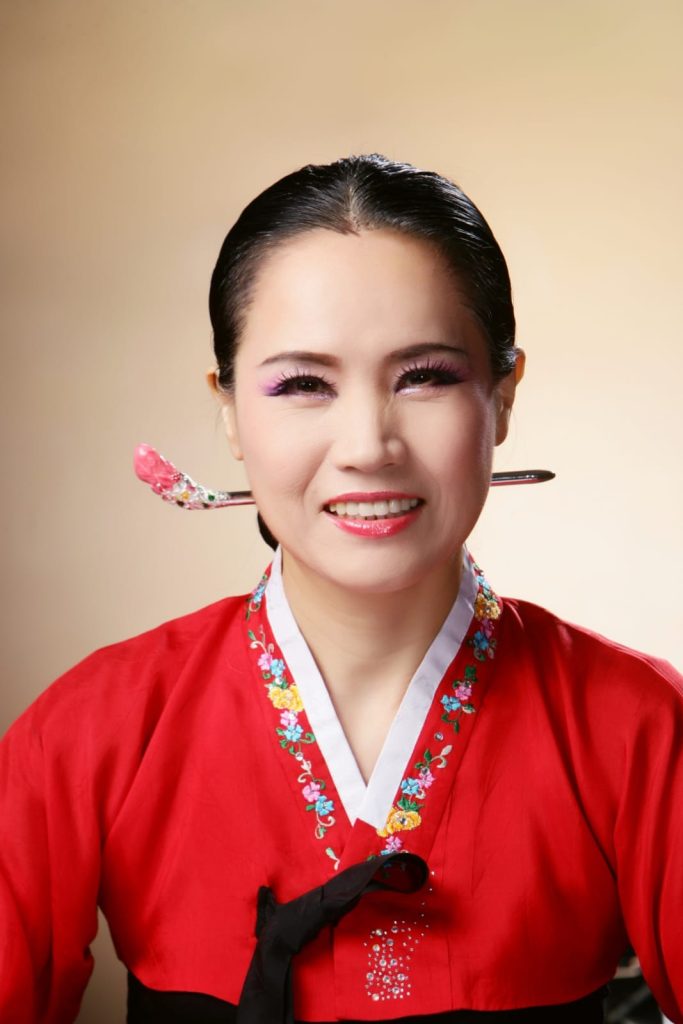
At Salalah, Jeong and 13 performers presented a programme centred on the Janggu Dance, Jindo Drum Dance, Taepyeongseongdae, and Fan Dance, accompanied by Gayageum Sanjo and percussion works. Their performances offered both the intensity of Korean rhythm and the expansiveness of ensemble choreography, designed to resonate with the festival’s prime evening slots. The artistry was further enhanced by the participation of Professor Kang Jiyun of Joongbu University, who contributed professional make-up design.
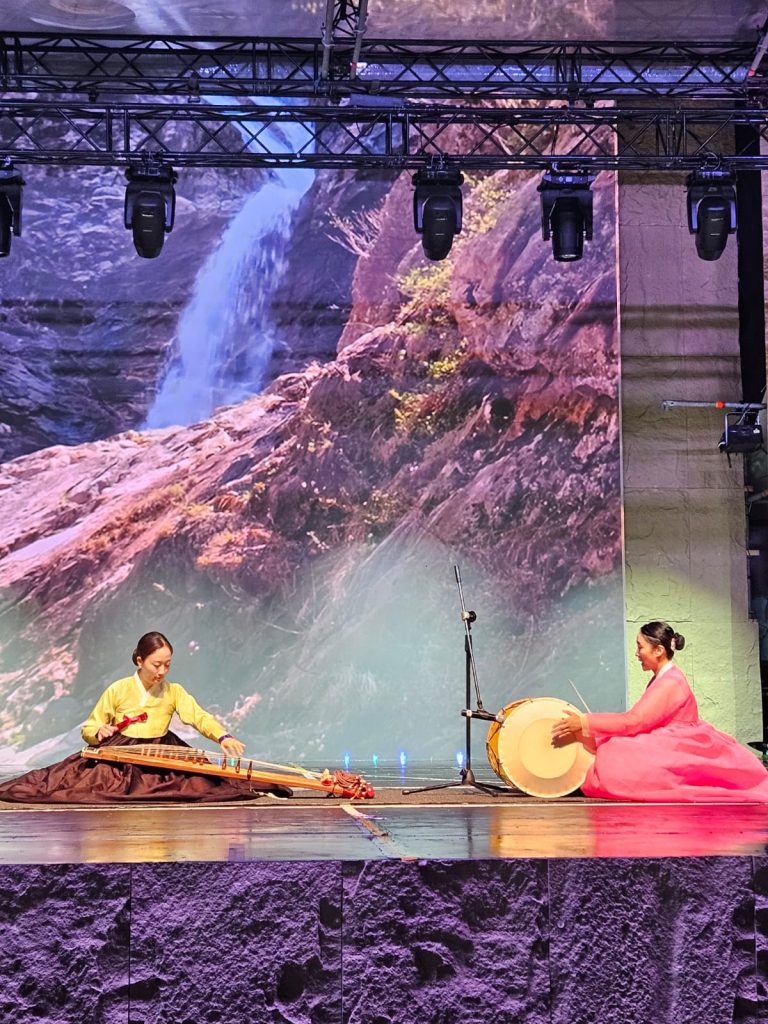
Highlights of the repertoire included:
- Fan Dance: Visualising waves, lotus blossoms, and phoenixes through formations and the opening and closing of fans.
- Flower Crown Dance: Reviving courtly aesthetics through circular formations and hierarchical movement.
- Janggu and Jindo Drum Dances: Embodying the visualisation of rhythm, uniting auditory and visual experience.
- Taepyeongseongdae: Conveying themes of prosperity and well-being, echoing the festival’s spirit of collective joy.
- Unpyeongmu (Fan Sanjo Dance): Interweaving the melodic beauty of Sanjo with the refined lines of the fan.
- Why Salalah? Contextual Resonances of the Korean Performance
Climate and Landscape as Audience. During the Khareef, Salalah’s mist, drizzle, and greenery create an extraordinary Arabian summer landscape. The cool climate and nocturnal settings serve as natural lighting, heightening the subtle gestures and breathing techniques of traditional Korean dance and deepening audience immersion.
World Heritage Narratives and Choreographic Imagination. The UNESCO heritage of frankincense evokes maritime trade, desert caravans, and the memory of incense—paralleling the ceremonial, auspicious, and symbolic dimensions of Korean dance. As incense binds time, so does dance bind cultures.
The Festival as a Contemporary Platform. The 2025 festival lineup combined circus, dance carnivals, drones, and fireworks—yet the Korean repertoire defied stereotypes of tradition as static, instead demonstrating rhythm, ensemble, and formal aesthetics as a living, contemporary art form.
- Programme Sketch: A Three-Act Structure of Melody, Rhythm, and Form
- Act I: Melody—Gayageum and Janggu Concerto. Opening with the lyrical tension between string and drum, building a “shared language of rhythm” across cultures.
- Act II: Rhythm—Drum and Janggu Dances. The dynamic interplay of stillness and movement (jeongjungdong) captivated audiences, the drum timbres resonating with the desert’s winds and sands.
- Act III: Form—Fan Dance, Flower Crown Dance, and Taepyeongseongdae. A festival of symbolism and aesthetic layering, where the lines of tradition fused with the illuminated skyline of Salalah.
- Dance as Cultural Diplomacy
- Continuity: The Lily Dance Company pursues the contemporisation of tradition through international engagements, with the Salalah stage marking another milestone in building audience-friendly, participatory exchange models.
- Reciprocity: Oman emphasises national identity and family-centred festival values. The Korean repertoire, steeped in courtesy and blessing, offered an eloquent response.
- Scalability: As Dhofar seeks to expand its status as an international tourism hub, the fusion of Korean tradition and K-content packages (dance, music, participatory experiences) presents a sustainable model for ongoing exchange.
- Conclusion: Korean Dance on the “Incense Road”
The Khareef of Salalah transforms landscapes through wind, while the festival inscribes human stories upon them. The Lily Dance Company’s stage wove together the precision of tradition with the vibrancy of celebration. Just as the ancient frankincense routes once connected worlds, Korean dance today bridges global sensibilities. In Salalah’s summer garden, the rhythms and lines of Korean performance reminded us once more of the timeless art of rejoicing together.