

By Dr.Majid(Melbourne)
Australia is grappling with a rising epidemic of skin cancer, with recent research revealing a sharp increase in mortality rates from non-melanoma skin cancers. As the most frequently diagnosed cancer in the country, skin cancer presents a growing public health concern. While Australia has gained global recognition for its advanced melanoma treatments, a recent study has highlighted that deaths from a high-risk form of non-melanoma skin cancer have doubled over the past two decades.
Melanoma, a cancer originating in melanocytes, the pigment-producing cells in the skin, remains one of the most aggressive forms of skin cancer. Despite being less common than other types, it accounts for the majority of skin cancer-related fatalities. Australia continues to record some of the highest global rates of melanoma, making it crucial to implement effective prevention and treatment strategies.
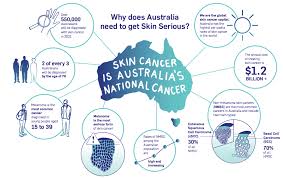
According to the World Cancer Research Fund International (WCRF), Australia and New Zealand rank first worldwide for melanoma and non-melanoma skin cancers. Data suggests that two in three Australians will develop some form of skin cancer in their lifetime.
The numbers continue to rise at an alarming rate. In 2019, 15,628 new melanoma cases were recorded, compared to 3,538 cases in 1982. The age-standardized incidence rate has surged from 29.6 per 100,000 people in 1982 to 65 per 100,000 in 2019. Though advancements in early detection and treatment have improved the five-year survival rate from 90% in the early 1990s to 93.6% in 2015–2019, the sheer number of diagnoses remains a critical issue.
A combination of environmental, genetic, and cultural factors contribute to Australia’s elevated skin cancer rates. Due to its geographic position, Australia is exposed to intense ultraviolet (UV) radiation throughout the year. UV exposure is the primary cause of skin cancer, responsible for approximately 95% of melanoma cases.
Many Australians, particularly those of European ancestry, have fair skin, which lacks the protective melanin needed to shield against UV damage. This significantly heightens their risk of developing skin cancer. Australians tend to engage in a culture that embraces outdoor activities, such as beach outings, sports, and recreational events, which results in prolonged sun exposure.
Studies suggest that older Australians, especially men, face a higher risk of skin cancer due to past sun exposure behaviours when awareness about sun protection was low. In contrast, younger generations with more ethnically diverse backgrounds and darker skin tones have shown lower melanoma incidence rates.
Skin cancer rates are significantly higher in rural and remote communities, where diagnoses often occur at later stages, leading to delayed treatment and poorer survival outcomes. Researchers in Queensland and South Australia are working to find ways to improve early detection and reduce skin cancer mortality in these regions, with a particular focus on high-risk male populations. For many Australians, the effects of excessive sun exposure are only realized decades later.
Despite increasing awareness, melanoma remains the most common cancer among Australians aged 15 to 39. Every year, over 14,000 new cases are diagnosed, and two out of three Australians will develop skin cancer at some point in their lives.
John Thompson, Emeritus Professor of Melanoma and Surgical Oncology at The University of Sydney, notes: “There’s an epidemic of melanoma in older males, which reflects past attitudes towards sun protection.”
Australia has been at the forefront of public health initiatives aimed at reducing skin cancer rates. Sun safety education begins early, with primary schools enforcing hat-wearing policies and designing shaded playgrounds. Workplaces, particularly those employing outdoor workers, are legally required to provide sun protection measures, including sunscreen, protective clothing, and shaded rest areas.
Public health campaigns have played a crucial role in increasing awareness. Despite efforts, tanning culture remains deeply ingrained in Australian society. Some individuals continue to pursue sun-kissed skin, disregarding long-term health risks.
Allen, the founder of the Australian Skin Cancer Foundation, is working to change this mindset. His organization provides mobile skin cancer screenings, checking up to 200 people a day. In the past year alone, over 7,000 people were screened, resulting in the identification of over 32 melanomas, 600 basal cell carcinomas, and 700 squamous cell carcinomas.
Experts stress the importance of continued education and vigilance. Encouraging self-examinations and routine skin checks can significantly improve early diagnosis. Campaigns should be intensified, especially for high-risk groups, including young adults and rural populations. Sun safety measures should extend beyond childhood to teenagers, adults, and the elderly. Many outdoor workers have taken legal action against employers for failing to provide adequate sun protection, highlighting the need for stronger enforcement of workplace regulations.
Australia leads the world in skin cancer research and treatment, yet melanoma and non-melanoma skin cancers continue to pose a significant public health challenge. While survival rates have improved, prevention remains key to controlling this epidemic. Addressing UV exposure, raising awareness in at-risk communities, and reinforcing comprehensive sun protection strategies are essential to reducing diagnoses and fatalities.
By prioritizing early intervention, public education, and preventive measures, Australia can work towards a future with fewer cases of skin cancer, ultimately saving thousands of lives.