

By Dr Majid Khan (Melbourne):
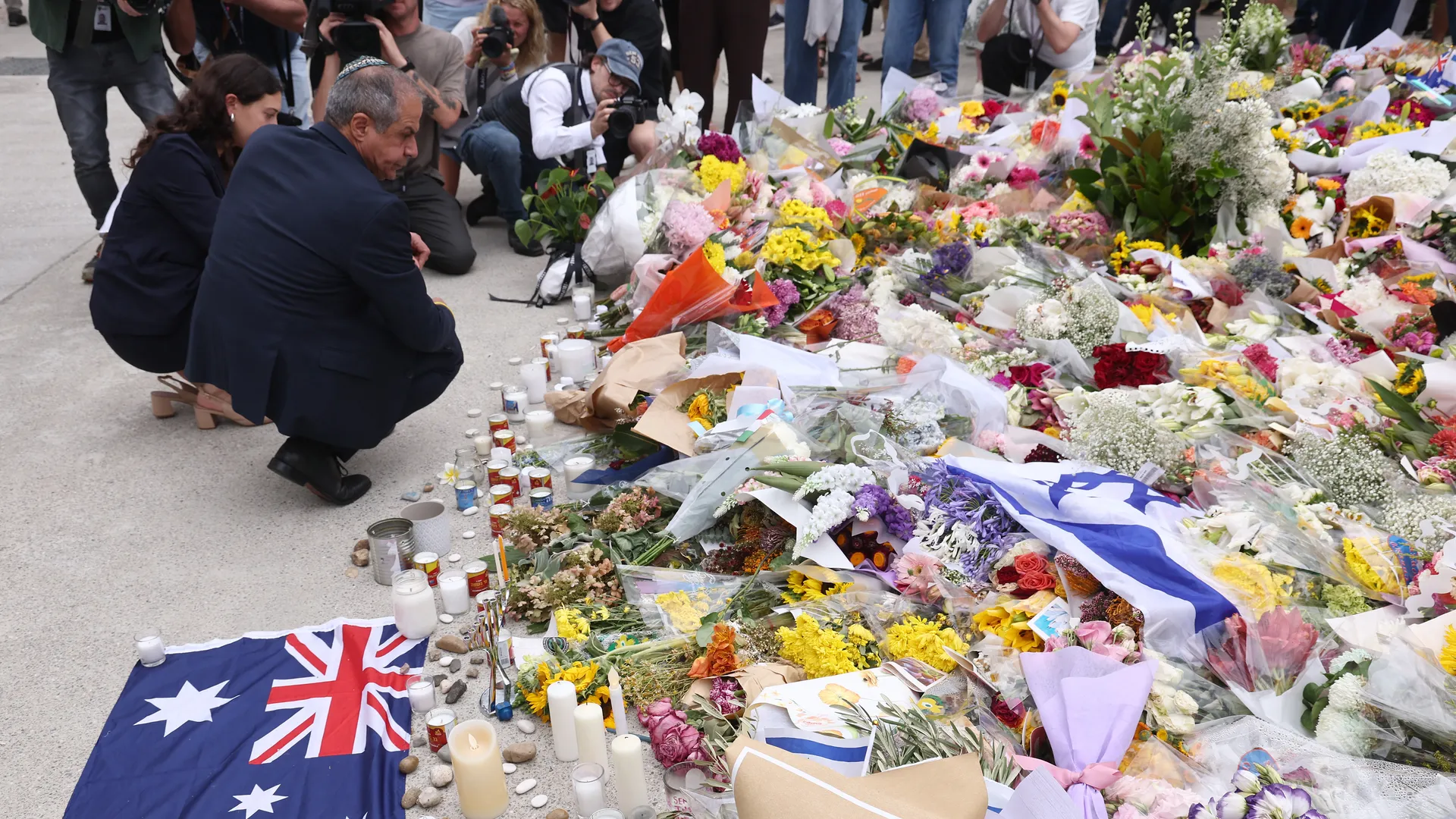
On a warm Sunday evening that was supposed to represent the triumph of light over darkness, the golden sands of Bondi Beach became the site of Australia’s darkest day in modern memory. The shooting on December 14, 2025, during the “Hanukah by the Sea” celebration, did more than claim 15 innocent lives; it punctured the long-held Australian belief that our shores were a sanctuary from the world’s most violent ideologies. As we reach the Christmas period, the usual festive cheer in Sydney and Melbourne is tempered by a profound, collective grief.
The event was a hallmark of Sydney’s multicultural calendar. Roughly a thousand people had gathered at Archer Park, adjacent to the Bondi Pavilion, to mark the first night of Hanukkah. Witnesses describe an atmosphere of “unadulterated joy” before the first shots rang out at 6:40 pm.
The attackers identified as 50-year-old Sajid Akram and his 24-year-old son, Naveed positioned themselves on a pedestrian bridge overlooking the festivities. Armed with high-powered straight-pull rifles and shotguns, they turned a community celebration into a killing field.
The tragedy was deepened by the discovery of four homemade pipe bombs thrown into the crowd. While these failed to detonate, the intent was clear: maximum carnage. Sajid Akram was killed at the scene by NSW Police, while his son remains in custody, facing 59 charges, including murder and engaging in a terrorist act.
Amidst the horror, stories of extraordinary bravery have emerged. Ahmed al Ahmed, a 43-year-old fruit shop owner, has been hailed as a national hero. Vision from a bystander’s phone showed Al Ahmed charging toward one of the gunmen on the footbridge, wrestling the weapon from his hands before being shot himself.
Al Ahmed, who is currently recovering in the hospital, told investigators he “didn’t think, just ran.” His intervention is credited with preventing the gunmen from moving into the more crowded areas of the beach pavilion.
“It wasn’t just an attack on a faith; it was an attack on the very idea of a public square,” says Dr. Elena Rossi, a social psychologist based in Melbourne. “For Melburnians and Sydney siders alike, the beach and the park are our cathedrals. That safety has been violated.”
The most immediate and controversial consequence of the attack centers on Australia’s gun laws. Despite the strict reforms following the 1996 Port Arthur Massacre, the Bondi attackers used legally acquired weapons.
Sajid Akram was a licensed firearm owner with six registered guns. He exploited a specific legal category: straight-pull bolt-action rifles. These weapons can be fired with a speed that nears semi-automatic levels but remain legal under current state classifications. In response, the NSW Government held an emergency sitting this week to pass the Terrorism and Other Legislation Amendment Bill. The new laws will:
- Cap individual licenses: Limiting most owners to four firearms.
- Reclassify straight-pull weapons: Moving them to restricted categories similar to semi-automatics.
- Ban terrorist symbols: Strengthening the existing prohibition on extremist iconography.
The impact has been felt acutely in Melbourne, home to Australia’s largest Jewish population outside of Sydney. In the days following the attack, Victorian Premier Jacinta Allan announced a significant increase in police presence around religious schools and community centers in suburbs like Caulfield and St Kilda.
Victoria is also moving to align its mental health and security frameworks with the “Bondi Model.” New regulations starting this month make psychological health a priority in workplaces, but the government is now under pressure to expand this to “community psychosocial safety,” ensuring that public events have standardized high-level security protocols.
The Australian Federal Police (AFP) has officially linked the attack to Islamic State-inspired extremism, fueled by a rise in online radicalization. This has triggered Operation Shelter, a massive police task force that has already conducted over 2,600 “proactive taskings” since the shooting.
However, the consequences aren’t just policing-based. There is a growing debate over the limits of free speech. Prime Minister Anthony Albanese recently announced a crackdown on “hate preachers,” proposing laws that would lower the threshold for what constitutes illegal hate speech.
The consequences of the Bondi Beach attack are structural new laws, tighter borders, and more police. But they are also deeply personal. For the families of the 15 victims, and the 40 survivors still in hospitals across Sydney, the world has changed forever.
As 2025 draws to a close, Australians are seeing a “new normal” in public security. “Operation Shelter,” the AFP-led task force, has increased its “proactive taskings” by 400% in the last week. Travelers at Sydney and Melbourne airports, and commuters at major train hubs, now see a much more visible presence of tactical police.
Bondi Beach has reopened, but the silence on the sand is heavy. The massacre of December 14 has forced Australia to look in the mirror. We are a nation that prides itself on being “one and free,” yet the ease with which a father and son turned a family festival into a war zone suggests that freedom requires more vigilant protection than previously thought.
The legacy of this tragedy will not just be the names etched on the upcoming memorial at Waverley Council, but the laws and social pacts we forge in its aftermath. For the people of Sydney and Melbourne, the sun may still shine on our beaches, but the shadows of December 14 will linger for a generation.