


By Utkir Alimov (Deputy Editor-in-Chief of International Department of the Uzbekistan National News Agency (UzA)
Although many are familiar with this organization, some do not have a full understanding of its true functions and global impact. In reality, UNESCO is an influential international organization that aims to unite the peoples of the world through knowledge, culture, and science. Its main mission is to preserve cultural heritage, develop education systems, and strengthen peace and harmony in society. Below, we provide brief information about the organization’s activities, its relations with Uzbekistan, and the upcoming 43rd session to be held in Samarkand.
What kind of organization is UNESCO?
The United Nations Educational, Scientific and Cultural Organization (UNESCO) was founded on November 16, 1945, after the Second World War, and its Constitution came into force on November 4, 1946. This date is celebrated worldwide as the day UNESCO was established.
UNESCO’s primary goal is to contribute to strengthening peace and security by developing cooperation in the fields of education, science, culture, communications, and tourism. This international organization has also made significant contributions to resolving wide-ranging issues such as combating widespread illiteracy, developing education systems, studying national cultures, and protecting the environment and cultural monuments.
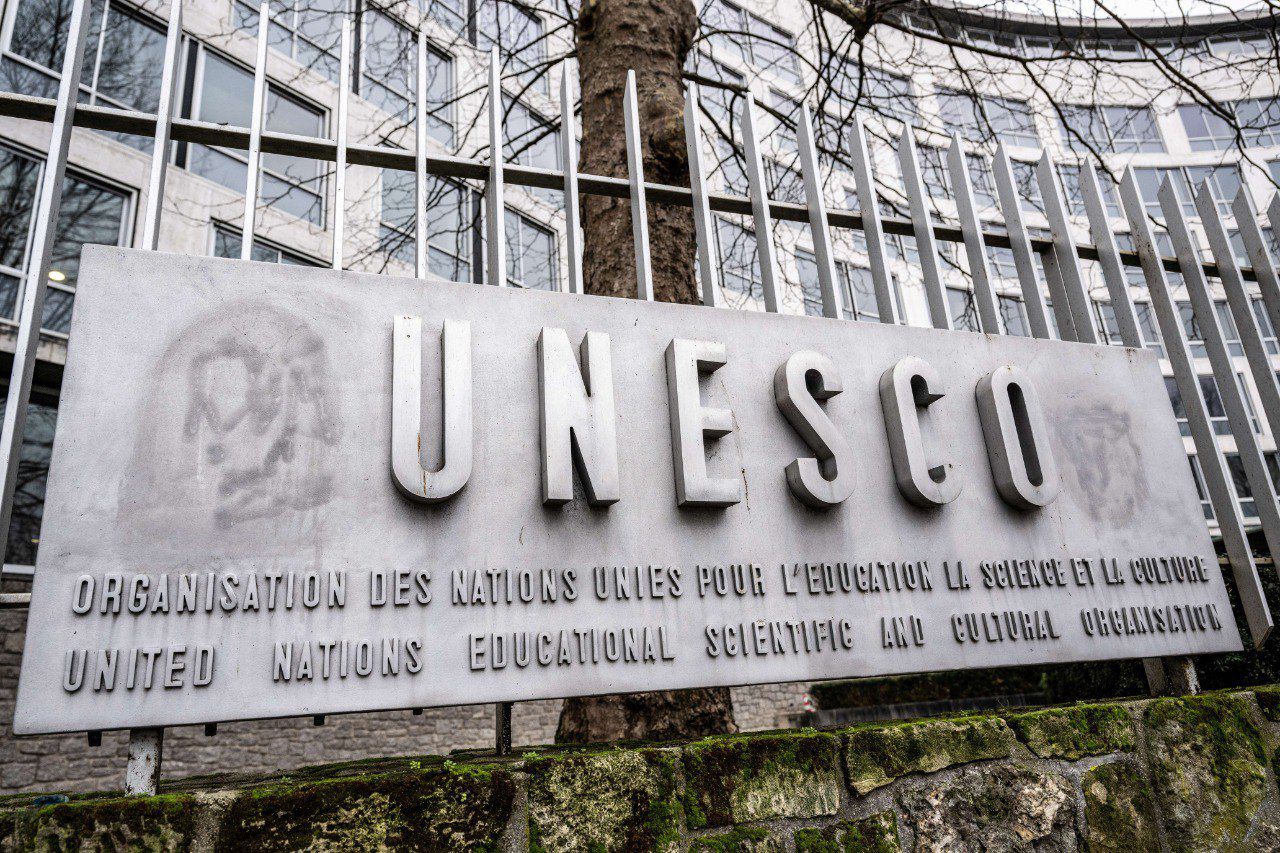
UNESCO’s Headquarters in Paris was opened on November 3, 1958. This building is located on the left bank of the Seine River in Paris.
Audrey Azoulay of France had been serving as Director-General of UNESCO since 2017, but according to a recent election held within the organization, Khalid El-Enany of Egypt was elected as the new Director-General.
Cooperation between Uzbekistan and UNESCO
Our country became a member of UNESCO on October 26, 1993. The organization’s office has been operating in Tashkent since 1996. Member states are required to establish a National Commission for UNESCO Affairs and coordinate their relations through this commission. Accordingly, the National Commission of the Republic of Uzbekistan for UNESCO was established on December 29, 1994.
To date, seven sites in Uzbekistan have been inscribed on the UNESCO World Heritage List: the Ichan Kala complex in Khiva, the Historic Centre of Bukhara, the Historic Centre of Shakhrisabz, Samarkand – Crossroad of Cultures, Western Tien-Shan, the Silk Roads: Zarafshan-Karakum Corridor, and the Cold Winter Deserts of Turan.
Another UNESCO list is the Representative List of the Intangible Cultural Heritage of Humanity. Sixteen elements of the Uzbek people’s intangible cultural heritage have been inscribed on this list, 11 of which were added after 2016. These include Shashmaqom, the Boysun cultural space, Katta Ashula, the art of wit Askiya, the culture and traditions of Palov, Navruz celebration traditions, the Margilan Crafts Development Centre (preservation of traditional technologies for making atlas and adras), Lazgi, the art of miniature, Bakhshi art, traditional silk production, traditional tales of Khoja Nasreddin, pottery, decorative art, Iftar and its socio-cultural traditions, and the art of crafting and performing on the Rubab.
Currently, new elements such as “the art of embroidery,” “practical knowledge and skills in making Karakalpak yurts,” “the art of making and playing the kobyz,” “traditional felt making,” and “Uzbek Kurash” have been submitted to UNESCO for inscription on the Representative List of the Intangible Cultural Heritage of Humanity.
In 1995, as part of UNESCO’s “Silk Road – Roads of Dialogue” program, the International Institute for Central Asian Studies was opened in Samarkand to study the history of our region’s civilizations.
Another important area is UNESCO’s World Network of Biosphere Reserves, which includes two sites from Uzbekistan: the Chatkal State Biosphere Reserve (1978) and the Lower Amudarya State Biosphere Reserve (2021).
Innovation is also a vital part of the cooperation. In 2019-20, after the COVID-19 pandemic, relations in this area developed significantly. In particular, a document mapping scientific research and innovation, prepared in collaboration with UNESCO and the Agency for Innovative Development under the Ministry of Higher Education, Science, and Innovation of Uzbekistan, is stored on the international platform of the organization’s electronic library.
In 2022, for the first time in its history, Uzbekistan was elected as a member of UNESCO’s Intergovernmental Committee for the Safeguarding of the Intangible Cultural Heritage for the 2022-2026 term.
On November 14-16, 2022, the second UNESCO World Conference on Early Childhood Care and Education was held in Tashkent, attended by representatives from nearly 150 countries and officials from international organizations.
Numerous initiatives have been implemented in Uzbekistan under the auspices of UNESCO. Specifically, the 1050th anniversary of the birth of Abu Rayhan Beruniy (2023), the 1000th anniversary of the birth of Abu Ali ibn Sino (1980), the 600th anniversary of the birth of Mirzo Ulughbek (1994), and the 660th anniversary of the birth of Amir Timur (1996) were widely celebrated. Major events were organized within special programs for the 2500th anniversaries of the cities of Khiva (1997), Bukhara (1997), and Termiz (2002), and the 2700th anniversary of Shakhrisabz (2002). The major birth anniversaries of numerous figures such as Imam Bukhari, Ahmad Fergani, Burhaniddin Marginani, Imam Motrudi, Imam Termizi, and Bahauddin Naqshband were widely celebrated in Uzbekistan under the patronage of UNESCO.
To deeply study and attract the world’s best practices, the network of UNESCO Chairs is expanding in our country. At Uzbekistan’s leading higher education institutions, chairs such as “Study of World Religions,” “Water Resources Management and Environmental Protection,” “Cultural Tourism,” and “Sustainable Historical Tourism on the Silk Road” have been established.
Special attention is being paid to further activating cooperation in preserving the unique cultural and historical heritage of our people. With UNESCO’s support, several major international events are organized in our country, such as the “Sharq Taronalari” music festival, the Bakhshi art festival, craftsmanship festivals, and the “Maqom Art” festival.
Until 2023, Uzbekistan’s inscriptions on the UNESCO “Memory of the World” Register included the Holy Usman Qur’an stored in Tashkent, the collection of manuscripts at the Beruni Institute of Oriental Studies, and the documents from the Khiva Khanate Chancellery. In 2023-2024, a collection of documents on Uzbekistan’s history—the Kulliyat of Mawlana and the archives of the Qushbegi administration of the Emirate of Bukhara, the photographic collection of Khudoibergan Devonov, and the Turkestan Album—were added to this register.
In 2024, Uzbekistan became a full member of the International Centre for the Study of the Preservation and Restoration of Cultural Property (ICCROM), a consultative body of UNESCO.
On April 1, 2024, an event titled “Uzbekistan at the Crossroads of the Great Silk Road” was held at UNESCO Headquarters, dedicated to Uzbekistan’s rich cultural heritage and the Samarkand General Conference.
In cooperation with UNESCO, a number of technical assistance and grant projects are being implemented in various fields in Uzbekistan. These include projects such as “Developing Employability Skills in Rural Areas,” “Expanding the Use of Information and Communication Technologies and Digital Education in Higher Education,” “Improving Education Services and Quality in Uzbekistan,” “Strengthening Access to Information, Institutional Accountability, and Media Literacy,” and “Reducing Vulnerability to Glacial Lake Outburst Floods.”
To date, Uzbekistan has joined 10 of UNESCO’s international conventions. One of the other important developments was the establishment in 2023 of the UNESCO-Uzbekistan Abu Rayhan Beruniy International Prize for the Promotion of Scientific Dialogue through Ethics in Artificial Intelligence, in partnership with UNESCO.
The historical 43rd session in Samarkand
At the conclusion of the 42nd session of the UNESCO General Conference in Paris in November 2023, a historic decision was made to hold its next 43rd session in Samarkand in 2025. This decision was supported by all 194 member states of the organization. This is a high appraisal of the systemic reforms implemented in our country in recent years.
This initiative was also a major diplomatic achievement for Uzbekistan, as UNESCO announced that it would hold its session on the territory of another state for the first time in 40 years.
The selection of Samarkand as the venue for this global event is also a clear recognition of our country’s achievements in the fields of culture, science, education, communication, and information, as well as its rich historical and cultural heritage.
It should be noted that the President of Uzbekistan, Shavkat Mirziyoyev, expressed his gratitude to all our foreign friends and partners for supporting the historic decision to hold the 43rd session of the UNESCO General Conference in ancient Samarkand in 2025.
“On behalf of the multinational people of Uzbekistan and on my own behalf, I express my sincere gratitude to all our foreign friends and partners for supporting the historic decision to hold the 43rd session of the UNESCO General Conference in ancient Samarkand in 2025,” said the head of our state. “I believe that this important global event, which will be held in our region for the first time, will serve to once again demonstrate to the international community the vast civilizational potential of Uzbekistan and the countries of Central Asia. In turn, Uzbekistan will mobilize all its efforts to organize and conduct the upcoming session at the highest level.”
On March 16, 2024, the President of Uzbekistan adopted a resolution “On measures to prepare for the 43rd session of the UNESCO General Conference in Samarkand in 2025.” According to the resolution, an organizing committee has been established to prepare for this event, and the necessary measures are being implemented.
According to reports, more than 5,000 participants from 194 countries are expected to attend the 43rd session and its related events. Within the framework of the General Conference, Uzbekistan plans to hold a number of joint events in cooperation with UNESCO. These events will be dedicated to pressing issues such as the role of artificial intelligence technologies in museum activities, gender equality, and the empowerment of women.
Additionally, on the eve of the General Conference, the 14th UNESCO Youth Forum and the 12th Interregional Meeting of National Commissions for UNESCO will also be held in Samarkand.
“This year, for the first time in 40 years, the UNESCO General Conference will be held not in Paris, but in Uzbekistan, at the initiative of President Shavkat Mirziyoyev,” said Sara Noshadi, UNESCO Representative in Uzbekistan. “This may be one of many important events for Uzbekistan, but for UNESCO, it is a very significant event. Today, the whole world is talking about this, and Uzbekistan is in the spotlight. UNESCO has been working closely with the government of Uzbekistan for almost 30 years. And of course, as an international organization, we were very sensitive to the reforms that began in 2016-2017. This is because our activities cover culture, education, communication and information, as well as the social and natural sciences. I would like to specifically highlight the reforms being implemented in the field of education, from preschool to higher education. These changes are always welcomed by UNESCO and actively supported by the government of Uzbekistan.”
In conclusion, holding the UNESCO General Conference in Samarkand is not only a recognition of Uzbekistan’s contribution to global cultural and educational development but also a convenient opportunity to once again emphasize the importance of preserving historical and cultural heritage. This conference will serve as a unique platform for discussing cultural exchange at the international level and the prospects for sustainable development. Uzbekistan will once again confirm its role as an important center of world culture and science.