


By MD.Moon, Paris — 9 October 2025
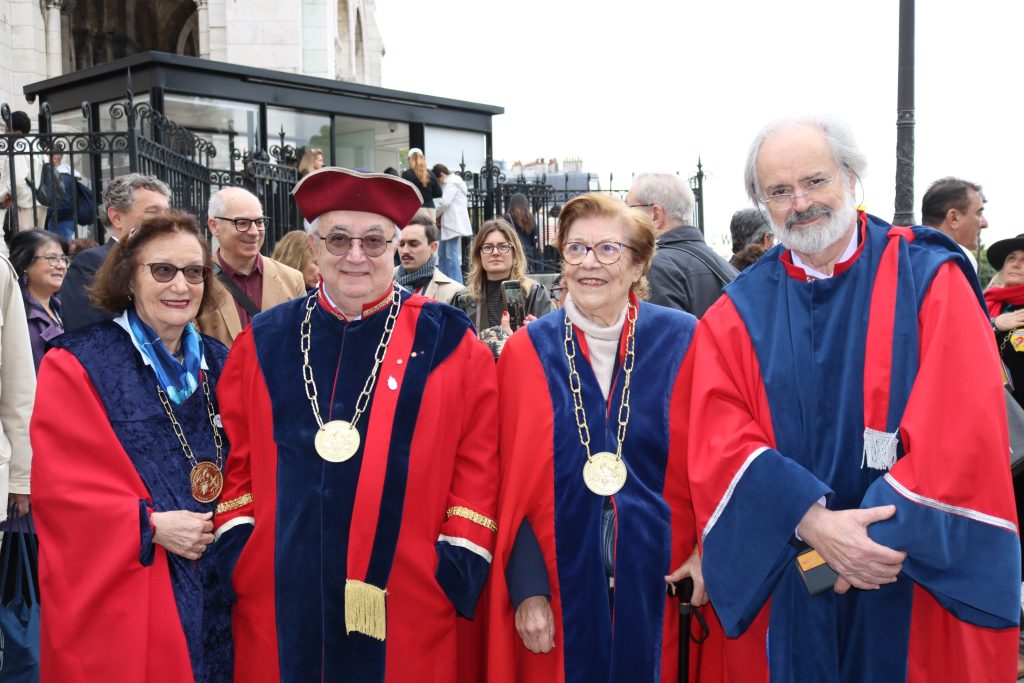
Yesterday marked the opening night of the 92nd Fête des Vendanges de Montmartre, which officially launched at 7 pm at the mairie of the 18ᵉ arrondissement, setting alight Paris’s beloved harvest festival once more. In the crisp autumn air, Montmartre’s narrow streets brimmed with music, the scent of crushed grapes, and—this year in a particularly novel gesture—the subtle aroma of centuries-old Korean culinary tradition.
While Montmartre’s vineyard, Clos Montmartre, has long lent historical gravitas to this festival of wine, gastronomy, and conviviality, the 2025 edition is distinguished by a pronounced theme of “youthful spirit”, celebrating intergenerational dialogue and renewal. The “Parcours du Goût”, central to the festival, will run from 10 to 12 October, bringing food and beverage stands, tastings, and culinary demonstrations around the Sacré-Cœur precinct.
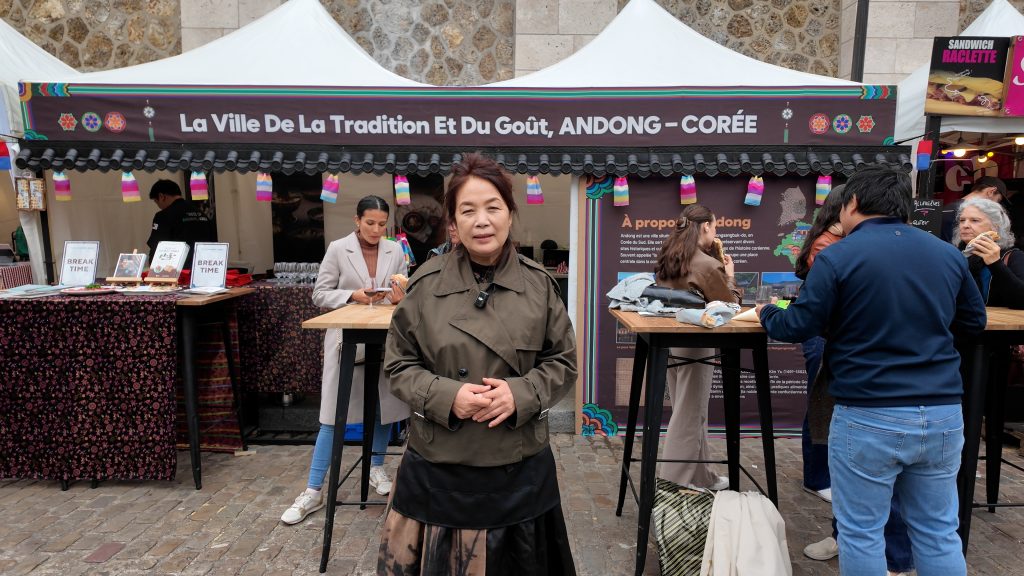
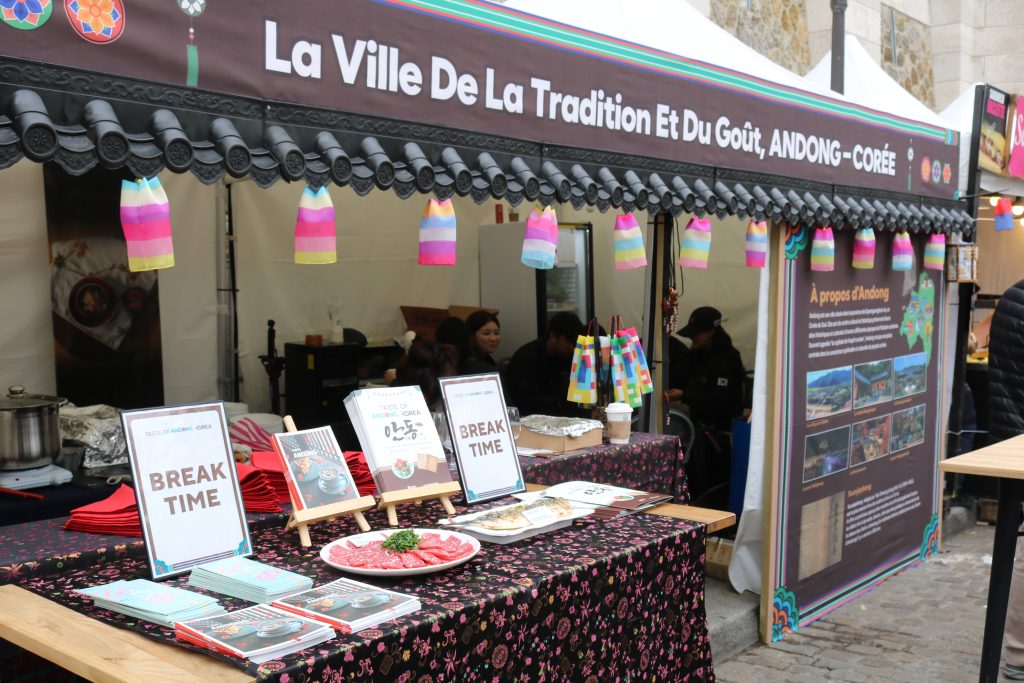
Among the many regional French and international pavilions, the Andong booth, organised under the auspices of the Korean Foundation for Cultural Exchange (KFCE), stood out not merely for its exotic allure but for its deep cultural resonance and carefully curated exchange programme. Over the past five years, KFCE has cultivated a sustained presence at Montmartre, evolving from initial field studies to full participation. On this inaugural evening, the fruits of this long-term investment were on full display.
Distinctive Features of the 2025 Festival & Andong’s Booth
This year, several features set the festival apart:
- Youth as Theme – The festival’s guiding motif of “jeunesse” (youth) invites all generations to engage with heritage anew, not as relics but as living culture.
- Expanded Culinary Trail – The Parcours du Goût has increased its hours and density of stands, pushing deeper into Montmartre’s side alleys, and promoting more cross-cultural pairings.
- Concert and Parade Integration – The grand parade, scheduled for Saturday (11 October) from 11:45 to 13:30 through the vineyard streets, and the Decibels Vendanges free concerts from 20:30 nightly, provide sustained draw beyond purely gastronomic appeal.
- Emphasis on Local Viticulture Heritage – The Clos Montmartre vineyard is not only open for guided visits but is increasingly woven into narratives of terroir, history, and urban renewal.
Within that frame, the Andong booth distinguished itself by depth and exchange rather than mere spectacle. Rather than offering simplified “K-food” stalls, the booth presented carefully staged ancestral table settings, with explanations of ritual etiquette, lineage households (jongga), and the philosophy behind Korean ancestral cuisine. In short: visitors were invited to taste not just flavour, but memory.
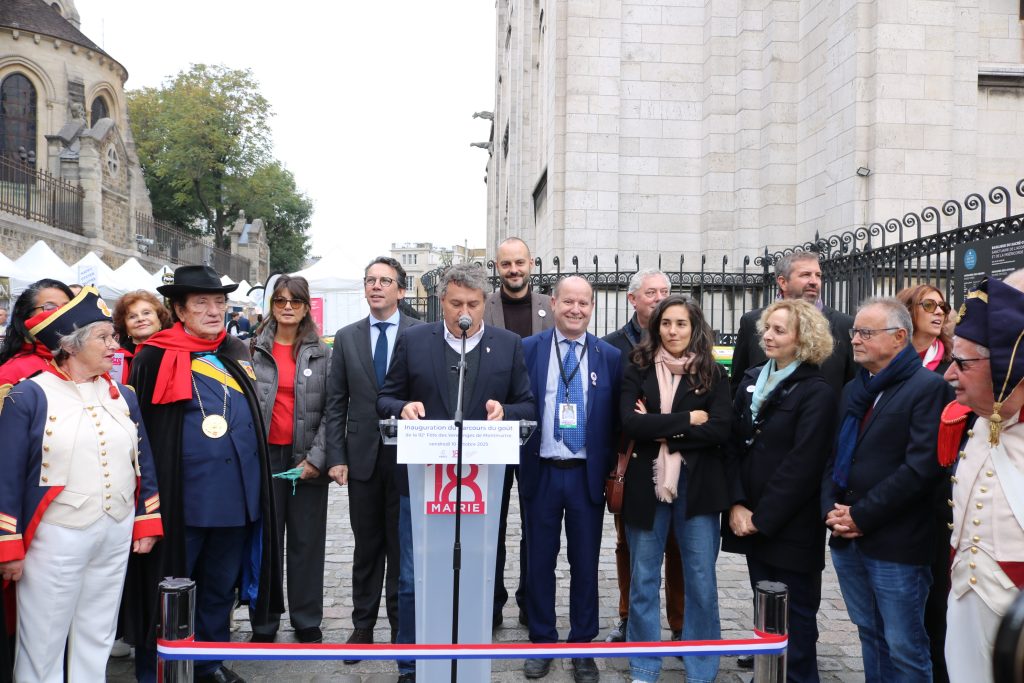
On the opening day, a simple yet symbolic gift exchange took place. The Andong City delegation presented Mr. Eric Lejoindre, Mayor of the 18th District, with a mask frame, a world-renowned intangible cultural asset representing Andong. In return, the Parisian organizers presented a limited-edition 2024 Clos Montmartre Cru wine, engraved with the festival emblem. This exchange emphasized not only the menu but also the connection between continents.
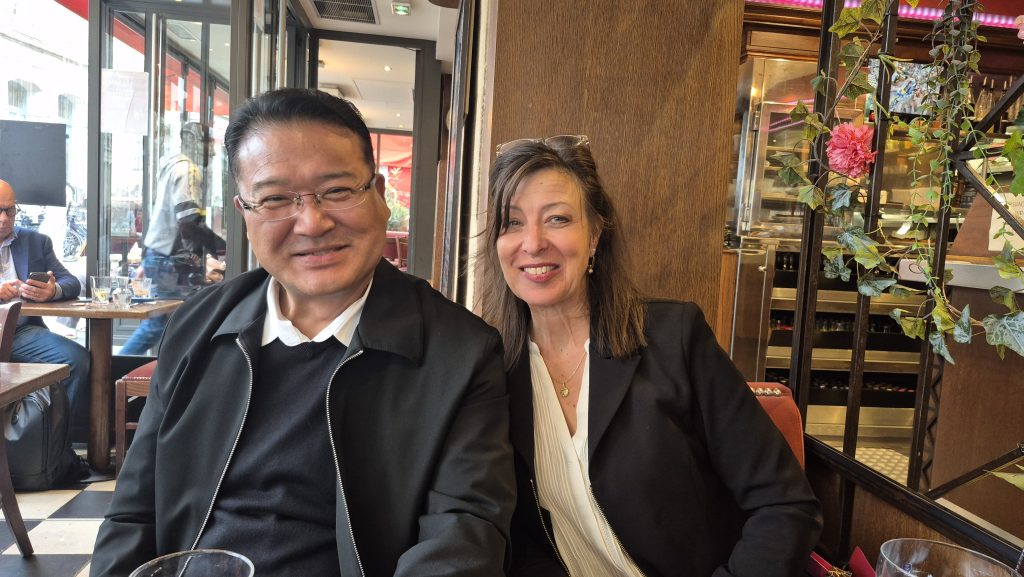
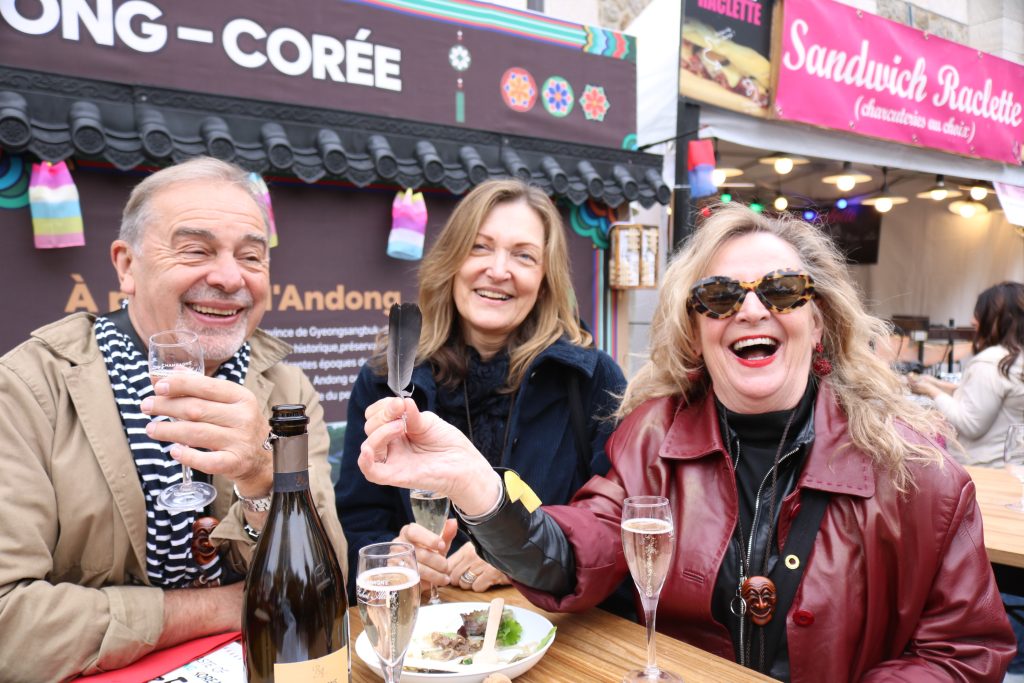
Throughout the evening, festival-goers sampled bulgogi and vegetables from Suun Japbang, secret liquors brewed with centuries-old recipes, and delicately seasoned pancakes made with Suun Japbang recipes. Participants described the flavors as “gentle yet deeply penetrating,” “whispering rather than shouting, inviting rather than demanding.” One French gourmet remarked, “It’s remarkable how so many generations have infused such restrained flavors into their dishes.”
In conversations behind the booth, Korean and French cultural managers spoke of extending the exchange: a plan to host Korean food and ritual workshops in Paris next spring, invitations for Parisian chefs to visit Andong, and even a proposal to include a “Montmartre-Andong cultural route” in upcoming UNESCO culinary itineraries.

Prospective Paths: Cooperation and Projection
From this opening night, one may infer several promising trajectories for collaboration between Andong and Paris, or more broadly between Korean heritage cities and European cultural circuits:
- Reciprocal Culinary Residencies: Paris’s culinary institutes might host Korean traditional food artists for residencies to foster new fusion works that remain respectful of lineage, while Andong could similarly host European chefs keen to study fermentation, herbal traditions, or ritual cuisine.
- Cultural Tourism Co-Promotion: The KFCE–Andong partnership could coordinate with Parisian networks to include Andong in European tour circuits — for example, as an “East Asian heritage waypoint” — thereby linking Montmartre’s wine narrative to Korean ancestral culture.
- Academic Exchange & Publications: Joint symposia on food heritage, ritual gastronomy, intangible cultural archives (such as Suwun Japbang), co-publications in European gastronomy, anthropology, and heritage journals.
- Festival Integration & Franchise: One can imagine a Korean “village” embedded permanently in future Montmartre festivals, or a mini “Fête des Vendanges Korea” held in Andong featuring French wine and culture, creating a twinned festival model.
- UNESCO and Heritage Branding: Given Suwun Japbang’s nomination, promotional synergy with UNESCO heritage branding could elevate both Andong’s visibility and the festival’s prestige, forging a narrative of East–West culinary heritage diplomacy.
Reflections & Final Thoughts

Last night’s opening was more than a ceremonial gesture — it marked a maturation of cultural diplomacy through slow, sustained engagement. The Andong booth did not seek to surprise by flamboyance, but to invite reflection: on time, lineage, and the act of sharing memory through food.
Montmartre’s harvest celebration offered the right stage: a festival rooted in tradition yet alive with experimentation. As visitors stroll under vine leaves and lantern lights, they can taste not just French terroir but, this year, a taste of Korea’s ancestral table.
If yesterday was the overture, the coming days and projected exchanges suggest this is not a fleeting moment but an opening chord. Europe’s appetite for heritage is insatiable — and Andong has served a whisper that may grow into an enduring conversation across continents.