

Mohammad Raashid (Islamabad):
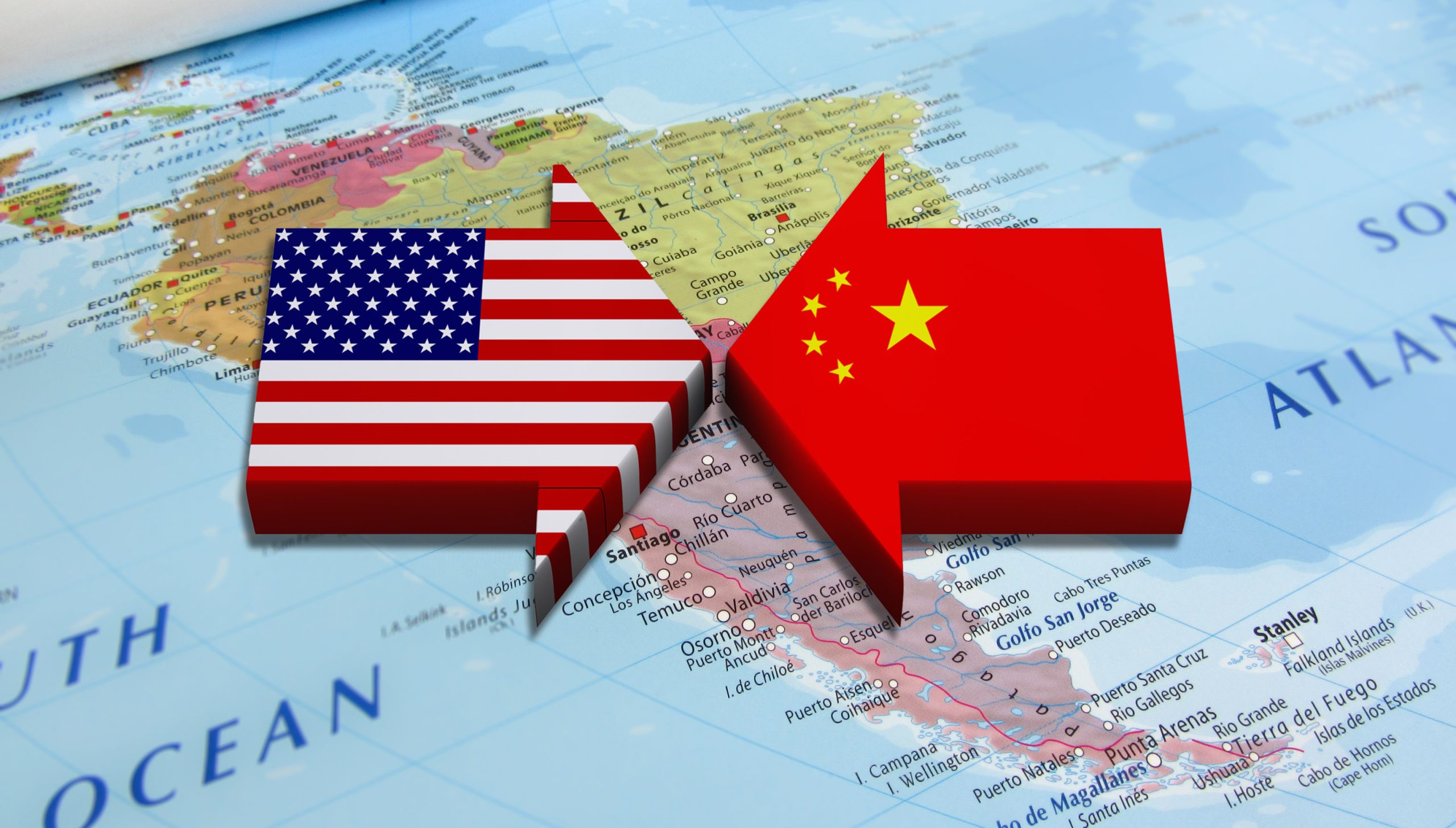
In the post-Cold War era, China has increasingly emerged as the primary strategic competitor to the United States, stepping into a geopolitical role once dominated by the Soviet Union and later modern Russia. While Washington continues to rely heavily on military alliances and interventions to secure its interests, Beijing has largely focused on expanding its economic influence and avoiding direct military confrontations.
Recent developments in the Middle East have underscored the complexity of this rivalry. The ongoing conflict involving the United States, Israel, and Iran escalated in early 2026 after airstrikes targeted several Iranian military facilities. The strikes have drawn global attention not only for their immediate impact but also for their potential implications for global energy markets and great-power competition.
A focal point of the tension is Kharg Island, Iran’s most critical oil export hub located off its southern coast. The island handles approximately 90 percent of Iran’s crude oil shipments to international markets.
According to statements from President Donald Trump and U.S. military officials, recent strikes targeted military installations on the island but avoided damaging key oil infrastructure. Despite the attacks, Kharg Island has remained largely operational, though Washington has warned that further action could follow if Iran disrupts maritime traffic through the strategically vital Strait of Hormuz. Energy security adds another layer to the geopolitical stakes.
China has been one of the largest importers of Iranian crude oil, relying on Iran for an estimated 25 to 30 percent of its oil imports in recent years. Although Beijing has attempted to diversify its energy supplies by increasing imports from Russia and building strategic reserves, Iranian oil remains a significant component of its energy mix. The ongoing conflict has prompted China to accelerate purchases and expand stockpiles to cushion potential supply disruptions.
Some analysts argue that U.S. actions in the region, including Israel’s involvement in strikes against Iran, may be partly aimed at constraining China’s energy access. By placing pressure on Iran’s oil exports, particularly those routed through Kharg Island, Washington could potentially weaken Beijing’s energy security.
Critics describe such tactics as a high-stakes strategic gamble aimed at slowing China’s rise on the global stage. Beyond the Middle East, strategic competition is also unfolding in South and Central Asia. President Trump has recently expressed interest in re-establishing a U.S. presence at Bagram Airfield in Afghanistan. He has described the base as strategically important for monitoring China’s nuclear and military activities, particularly in western regions such as Xinjiang. Although Bagram lies more than 1,200 miles from major Chinese nuclear facilities, proponents argue that the location could enhance U.S. intelligence, surveillance, and reconnaissance capabilities. The Taliban government, however, has firmly rejected any proposal allowing foreign forces to return to Afghan territory.
Meanwhile, China continues to pursue a cautious and calculated foreign policy, rather than becoming directly involved in military conflicts involving the United States and its allies, Beijing has prioritized economic expansion and diplomatic engagement. Over the past two decades, China has grown into the world’s second-largest economy and has expanded its global footprint through trade partnerships and major infrastructure initiatives such as the Belt and Road Initiative.
In East Asia, tensions remain high in the South China Sea and around Taiwan. The United States has strengthened military deployments and alliances across the region to counter China’s growing power. However, Beijing has largely avoided direct confrontation, preferring to treat military escalation as a last resort.
China’s cautious approach may also reflect lessons drawn from Russia’s experience in Ukraine. Under President Vladimir Putin, Russia attempted to reassert itself as a major power but became deeply entangled in the prolonged Ukraine war. Some observers believe the conflict has weakened Moscow strategically, a scenario Beijing appears keen to avoid.
At the regional level, China has also taken on a diplomatic role in South Asia. Beijing is currently mediating tensions between Pakistan and Afghanistan, where cross-border security concerns and militant activity, particularly involving the Tehreek-e-Taliban Pakistan (TTP) have led to escalating clashes in early 2026. China’s special envoy has been actively shuttling between Islamabad and Kabul, urging dialogue and cease-fires to maintain regional stability.
China’s mediation efforts are closely tied to its economic interests in the region, especially the stability of the China-Pakistan Economic Corridor, a key component of its broader Belt and Road Initiative. While Pakistan has maintained a firm stance on counterterrorism operations, Beijing has encouraged de-escalation while avoiding direct alignment with either side.
As geopolitical flashpoints continue to emerge across the Middle East, Eastern Europe, and Asia, China’s long-term strategy appears increasingly clear, maintain economic momentum, promote diplomatic engagement where beneficial, and avoid becoming entangled in wars that could derail its broader ambitions in its strategic competition with the United States.