


By Bela Kogan, Special Mining & Investment Correspondent
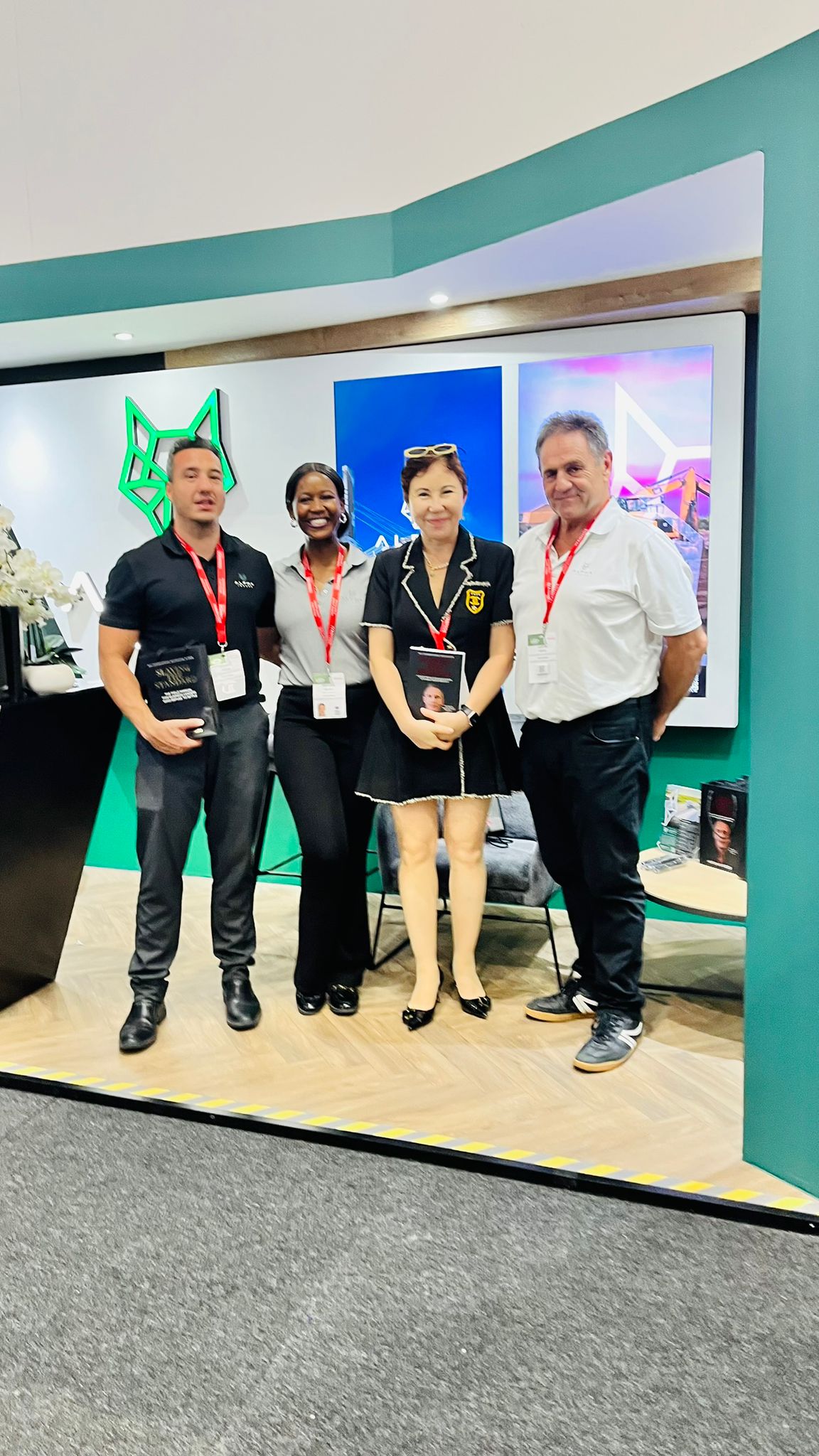
CAPE TOWN — I have spent years trading physical metals and analysing listed mining companies, and I can tell you honestly: insurance is the part of the business most people skip over until something goes wrong. At this year’s Mining Indaba, I had a long conversation with Christo Botha, Senior Corporate Property Underwriter at South African insurer Alpha, and it got me thinking about the basics — not about one company, but about how insurance actually works in African mining, why it matters for anyone in the supply chain, and where the real gaps are.
So here is a practical guide — the kind of thing I wish someone had explained to me when I first started looking at African mining deals.
What mining insurance actually covers — and what it does not
At its simplest, mining insurance protects the operator against physical damage to assets (equipment, buildings, processing plants) and business interruption — the revenue you lose while the mine is not producing. That second part is what traders should care about most, because business interruption is what turns a local problem into a supply disruption that moves spot prices.
Beyond property and interruption, there is a whole stack of additional coverage: public liability, environmental liability, political violence, expropriation risk, and directors’ and officers’ insurance. Each of these is a separate policy, a separate negotiation, and often a separate insurer. The global mining insurance market is valued at roughly 6.2 billion dollars and is expected to grow to about 9 billion dollars by 2033, according to recent market research. It is a sizeable but surprisingly concentrated industry, and the vast majority of premiums flow through a handful of major brokers — Marsh, Aon, and Willis Towers Watson — who place the risk with underwriters at Lloyd’s of London, the big European reinsurers, and increasingly with regional players.
The African twist is that the continent accounts for a small share of global mining insurance premiums despite hosting enormous mineral wealth. The African mining market is estimated at over 500 billion dollars in value, yet insurance penetration is low, coverage gaps are wide, and many smaller operations run partially or entirely uninsured.
The regulatory patchwork
One thing that surprises many European and Chinese investors new to Africa is that insurance rules differ drastically from country to country. There is no unified African insurance framework.
Tanzania, for example, now requires mining companies to obtain insurance from Tanzanian providers under its Mining (Local Content) Regulations. South Africa has its own sophisticated insurance market but imposes Black Economic Empowerment requirements on mining licence holders. The DRC’s 2018 mining code revision changed taxation and local participation rules. Burkina Faso, Guinea, and Madagascar have all recently revised or are revising their mining codes with stronger local content provisions.
In practice, a producer operating across multiple African jurisdictions may need separate insurance arrangements in each country, using local insurers or at least locally registered fronting companies, even if the ultimate risk is reinsured back to London or Zurich. This adds cost, complexity, and sometimes uncertainty about whether a claim will actually be paid.
Political risk insurance — covering expropriation, forced renegotiation of mining rights, or currency inconvertibility — is available but expensive and narrow in scope. Recent events in Mali and Burkina Faso have pushed political risk in some jurisdictions beyond the appetite of most commercial insurers. Resource nationalism, the revocation of mining licences, and forced joint ventures with state entities are real risks that standard property policies simply do not cover.
Who are the main players?
The major global brokers — Marsh, Aon, and Willis — dominate the placement of African mining risks. On the underwriting side, Lloyd’s syndicates remain important, alongside Munich Re, Swiss Re, and specialist insurers like Chubb and AIG.
But there is a growing layer of African-domiciled insurers building capacity. Alpha Insure, the company I spoke with at Indaba, is perhaps the most illustrative example of this trend — a Johannesburg-based firm that currently writes only South African risks but has grown its per-event capacity from 300 million rand (approximately 14 million pounds) to 2.5 billion rand (116 million pounds) in less than eight years, backed by Swiss Re, Munich Re, PartnerRe, and African Re. For underground mining, where they are still building their track record, capacity sits at 500–750 million rand (23–35 million pounds) per event, but that ceiling rises annually as loss ratios improve.
The company’s story is itself characteristic of South African business. Alpha Insure’s founder started working at sixteen, unable to finish school after his father died, and later opened a tiny brokerage of about four people in 2004. Today, the company employs close to four hundred people. The CEO personally puts down the first 100 million rand (4.6 million pounds) of retention on every risk, meaning management is literally betting its own money on the quality of its underwriting. Alpha Insure’s client list includes Transnet, the City of Johannesburg, and major players in South Africa’s hospitality and corporate sectors.
Buerta gave a concrete example: a large hotel client facing water supply problems — a common issue in South Africa — received an external quote of six million rand (278,000 pounds) for pumps and tanks. Through Alpha Insure’s own procurement department, the same solution at the same quality came in at five hundred thousand rand (23,000 pounds). That is not a claims payout — it is added value the insurer brings beyond risk coverage.
This was Alpha Insure’s second year at Indaba, and Buerta estimated a three-to-five-year horizon for expanding beyond South Africa into the continental market. They are not the only ones. Across the continent, local insurers are slowly developing mining expertise, partly driven by local content requirements that force producers to buy at least some coverage domestically.
For Chinese investors and operators, who now have a massive presence in African mining — over sixty Chinese-owned mining projects across the continent — the insurance picture adds another layer. Chinese state-owned enterprises often benefit from political risk insurance provided by China’s own export credit agencies, which gives them a structural advantage over smaller private operators who must source coverage commercially.
Does insurance actually help?
This is the question I hear most from smaller producers and from traders who model operational risk. The honest answer is: it depends.
For major operations with high-value assets, comprehensive insurance is not optional — it is a requirement for project financing. No bank will lend against a mine without adequate coverage. In that sense, insurance is simply the cost of doing business.
Where it gets more interesting is in risk engineering — the pre-loss work that better insurers do to prevent claims from happening. Buerta at Alpha Insure described their approach: deploying drones, thermal imaging, and geo-mapping to identify potential failure points before they cause shutdowns. Lockton’s 2025 mining market update makes a similar point, noting that real-time monitoring, third-party engineering reviews, and scenario modelling are becoming expected elements of mining insurance programmes. When an insurer’s surveyor spots an electrical fault that would have caused a fire and a three-day shutdown, that has direct value — not just to the mine operator, but to everyone downstream in the supply chain who depends on that mine shipping on time.
The flip side is that claims can be slow, contested, and insufficient. Sovereign risk insurance in particular is notorious for coverage disputes. Parametric insurance — where a payout is triggered by a measurable event like a flood or earthquake rather than by assessed damage — is still relatively new in mining and not widely available across Africa.
What traders and producers should take away
For metal traders pricing African supply risk, the key takeaway is not about any single insurer. It is that African mining insurance is getting more sophisticated but remains uneven. Coverage gaps in political risk, transit, and cross-border equipment movement are real. Local content rules are fragmenting the market and adding cost. But capacity is growing, rates are softening in some lines, and better insurers are doing genuinely useful risk-prevention work.
For producers, the practical advice is straightforward: engage your broker early, understand local insurance requirements before you commit to a jurisdiction, and do not treat insurance as a box-ticking exercise. The difference between a policy that pays a claim quickly and one that buries you in disputes can be the difference between a mine that recovers from a setback and one that does not.
The African mining story is a growth story — the continent holds over half the world’s cobalt reserves and enormous deposits of gold, platinum, copper, and lithium. Insurance is not the most exciting part of that story. But as anyone who has ever watched a mine go dark unexpectedly will tell you, it is one of the parts that matters most.
This article draws on an interview conducted at Mining Indaba 2026 in Cape Town with Christo Botha of Alpha, as well as market reports from Lockton, Marsh, Willis, and other industry sources.