By Dr Majid Khan (Melbourne):
The recent U.S.–Iran peace agreement, brokered by Pakistan and Qatar and reinforced by negotiations in Switzerland, has not only altered the trajectory of Middle Eastern geopolitics but has cast a spotlight on the political fate of Israel’s longest-serving prime minister, Benjamin Netanyahu. For decades, Netanyahu’s leadership has been defined by a mix of security hardline policies, strategic pragmatism, and electoral mastery. Yet in the wake of the interim peace deal, he faces a profoundly changed landscape in which his political calculations, domestic support, and regional leverage are under unprecedented pressure.
The peace framework, agreed in June 2026, followed months of escalating hostilities. U.S. and Iranian forces engaged in repeated clashes across the Persian Gulf, while tensions in the wider Middle East threatened to draw multiple states into direct confrontation. The agreement temporarily reopened shipping routes through the Strait of Hormuz, allowed for the return of UN nuclear inspectors to Iran, and established a framework for de-escalation in neighboring Lebanon, where Iranian proxies have long posed a security challenge for Israel. Pakistan and Qatar played central mediation roles, leveraging regional influence to facilitate dialogue, while Switzerland hosted follow-up meetings that further solidified the ceasefire mechanisms. These diplomatic interventions, while designed to stabilize the region, have introduced strategic constraints that directly affect Israel’s security posture and, by extension, Netanyahu’s core political platform.
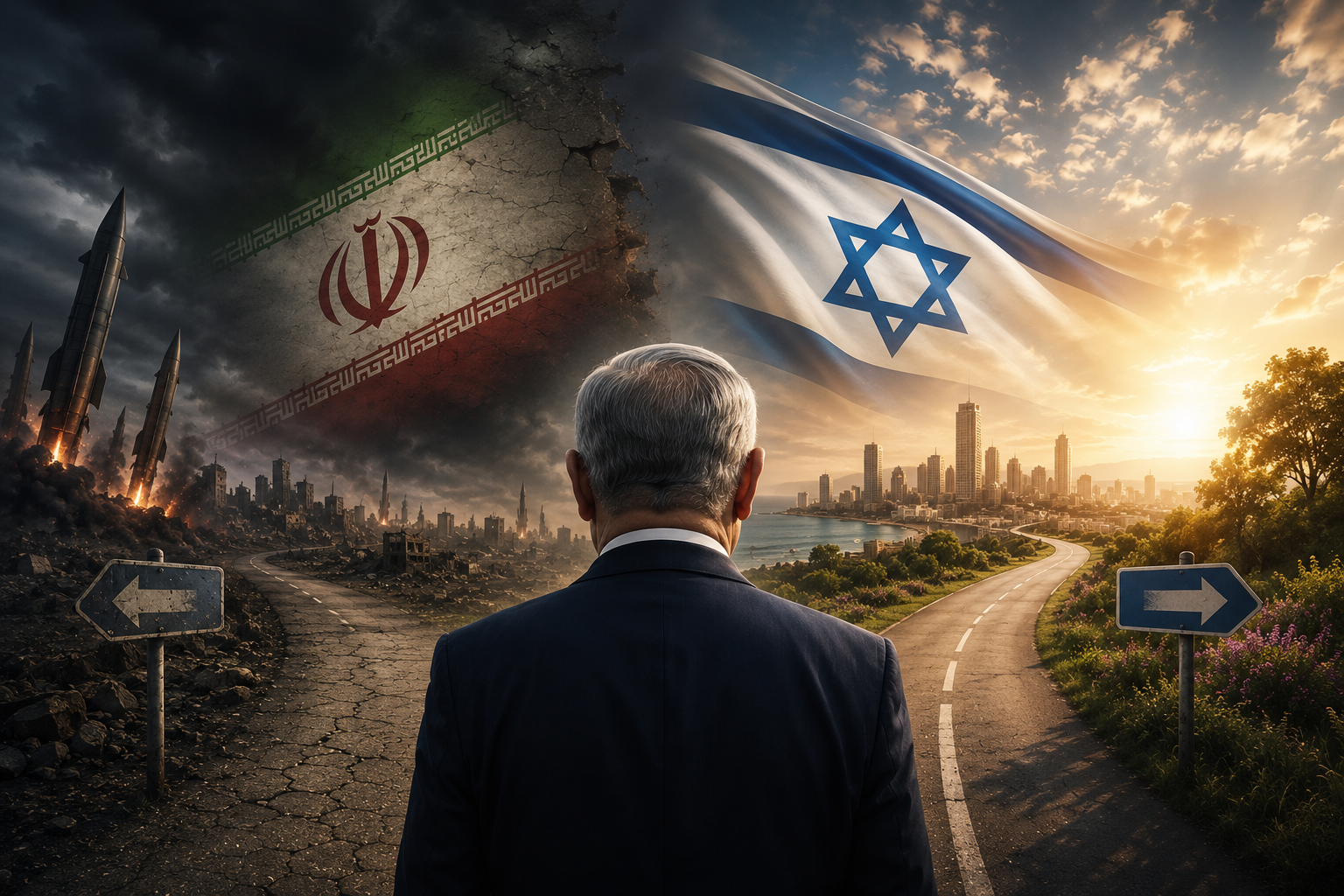
For Netanyahu, the peace deal presents a dual challenge: externally, it limits Israel’s ability to act unilaterally against Iran; internally, it reshapes the electorate’s perception of his leadership. Netanyahu has long built his political identity around a narrative of existential threat. From Iran’s nuclear ambitions to regional proxies such as Hezbollah, his rhetoric has emphasized that Israel’s survival requires unwavering vigilance, preemptive capabilities, and close alignment with the United States. The peace agreement, by slowing the immediate threat and creating a diplomatic avenue for engagement, risks undermining the existential urgency that has been central to his political appeal.
Domestically, the implications are stark. In the past week, polls indicate growing public ambivalence regarding Netanyahu’s handling of the conflict. While his supporters continue to value his security credentials, a significant segment of voters exhausted by years of conflict and repeated flare-ups is questioning whether the prime minister’s approach has delivered tangible gains. The perception that Israel’s strategic influence may have been sidelined in the Pakistan‑ and Qatar-mediated deal contributes to a narrative of diminished political leverage, a vulnerability that opposition leaders are eager to exploit. Figures from centrist and left-leaning factions, including Yair Lapid and Benny Gantz, have framed the deal as proof that a more balanced approach, combining diplomacy and security, could better safeguard Israel’s interests. They argue that Netanyahu’s reliance on military deterrence alone has exposed the country to isolation in critical negotiations.
Netanyahu’s coalition faces its own internal tensions. Ministers such as Bezalel Smotrich and Israel Katz have publicly criticized aspects of the agreement, particularly the concessions related to Iranian inspections and the lack of enforceable guarantees regarding proxy forces. These criticisms, while intended to project strength, highlight fractures within his governing bloc and create a political climate in which Netanyahu must navigate competing expectations from both hawkish and moderate elements. Balancing these pressures will be critical as Israel approaches elections later in 2026, where the peace deal is likely to dominate debate and influence voter alignment.
The Switzerland talks added another layer of complexity. Although intended to refine the implementation of the peace deal and establish operational deconfliction mechanisms, the negotiations underscored Israel’s diplomatic isolation. Despite Israel’s security concerns being central to regional dynamics, Israeli representatives were notably absent from the direct discussions, with Pakistan and Qatar mediating primarily between Washington and Tehran. This perceived marginalization has given Netanyahu’s critics fodder to question whether his foreign policy strategy has left Israel dependent on U.S. leadership rather than able to assert independent influence.
Netanyahu’s political calculations now revolve around reconciling these external constraints with domestic legitimacy. Historically, his electoral success has been rooted in framing Israel as perpetually under threat and presenting himself as the statesman capable of defending it. With Iran’s immediate military threat temporarily subdued by a combination of diplomacy and third-party mediation, the existential urgency that underpinned his security narrative is less tangible. Voters may now weigh economic issues, social policies, and governance effectiveness more heavily than Netanyahu’s security credentials, altering the political landscape in ways that could threaten his dominance.
Furthermore, Netanyahu must contend with the international legal and reputational dimensions of his tenure. Past operations in Gaza and engagements with Iran’s regional proxies have attracted scrutiny from international courts and human rights organizations. While he has consistently dismissed these inquiries as politically motivated, the combination of legal pressures and public scrutiny can influence both domestic perception and international bargaining leverage. The peace deal, by embedding diplomatic oversight mechanisms and multilateral monitoring, adds a layer of accountability that may limit unilateral Israeli operations and constrain Netanyahu’s ability to demonstrate decisiveness in the field, historically a key pillar of his leadership image.
Economic considerations also play a role in shaping Netanyahu’s political calculus. The temporary stabilization of oil routes and the partial easing of tensions in the Gulf region could reduce Israel’s immediate security expenditures, shifting public attention to domestic economic performance, cost of living, and social services. Netanyahu, whose political capital has often been tied to security accomplishments, will need to pivot toward demonstrating effective governance on broader issues to maintain support. Failure to adapt could provide the opposition with opportunities to frame him as a leader whose relevance is narrowly confined to a security paradigm that is no longer the dominant voter concern.
Analysts suggest that Netanyahu’s survival strategy may involve recalibrating his rhetoric while preserving core security priorities. By emphasizing the importance of Israel’s preparedness, intelligence capabilities, and regional partnerships, he can maintain the perception of strong leadership while appearing cooperative with the new diplomatic frameworks established through the peace deal. Successful navigation of this balance will be crucial, particularly given the electorate’s sensitivity to both perceived national vulnerability and governance competence.
The regional context amplifies the stakes. Iran’s political gains through the peace deal, combined with strengthened diplomatic influence via Pakistan and Qatar, may embolden Tehran’s regional allies, indirectly challenging Israel’s strategic dominance. Netanyahu’s ability to respond effectively to these shifts through diplomacy, military readiness, or coalition management will influence not only his political future but also Israel’s broader security posture. Failure to adapt could accelerate the erosion of his political authority, particularly if opposition parties successfully frame the prime minister as out of step with the realities of a post-conflict Middle East.
In conclusion, Benjamin Netanyahu faces a pivotal moment in his political career. The peace deal with Iran, mediated by Pakistan and Qatar and advanced through Switzerland negotiations, has created both opportunities and vulnerabilities. While the reduction in immediate hostilities provides a measure of stability and potential for regional engagement, it also undermines the existential threat narrative that has long been central to his political identity. Netanyahu must navigate domestic coalition tensions, shifting public priorities, and regional power recalibrations to maintain his leadership. His ability to redefine his political brand in a post-conflict environment will likely determine whether he remains Israel’s dominant political figure or cedes influence to a new generation of leaders who can address the complexities of diplomacy, security, and governance in a rapidly evolving Middle East.