

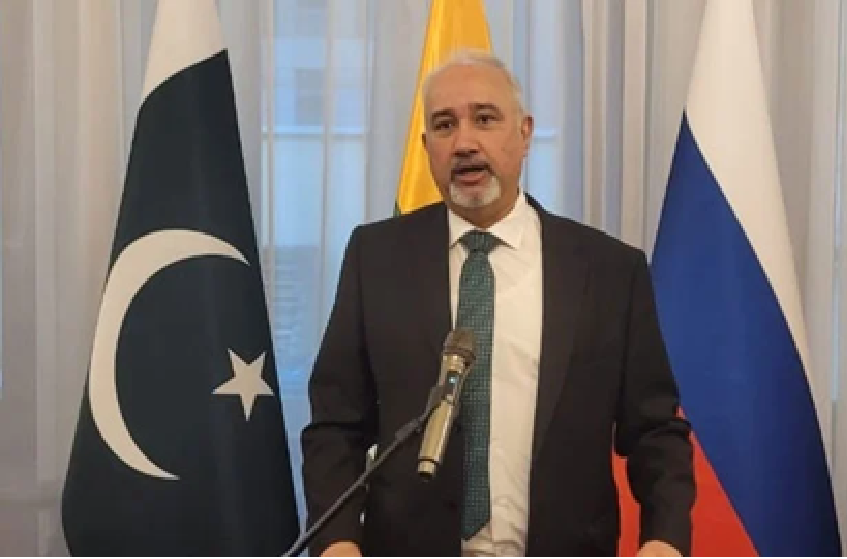
Pakistan’s ambassador to the Russian Federation, Faisal Niaz Tirmizi, believes that shifting global dynamics, particularly economic disruptions and instability in the Middle East, are reshaping international tourism and business patterns, creating new opportunities for Pakistan.
He noted that countries in Eastern Europe and Russia are increasingly looking toward alternative travel markets, and this scenario is positioning Pakistan as a promising and attractive destination.
Highlighting the strong potential of the Russian tourism market, Ambassador Tirmizi said millions of Russian tourists are now seeking new, safe, and affordable destinations due to restrictions in Europe and instability in traditional travel regions. With its natural beauty, cultural diversity, and improving infrastructure, Pakistan could attract a significant share of this market, potentially generating up to $1 billion annually if targeted efforts to engage Russian tour operators and visitors are successfully implemented.
Ambassador Tirmizi, while highlighting the Green Tourism Initiative of the government of Pakistan, said under this initiative, Green Pak Hotels and Resorts has completed 17 projects over the past two years. We also plan to launch 10 additional hotels and resorts during 2026–27 in locations such as Gadani, Sonmiani, and Hunza.
Here under is a detailed interview of Ambassador Faisal Niaz Tirmizi:
Q1: How do you view the changing global landscape, particularly in the context of Middle Eastern economic and geopolitical unrest?
Ambassador: The evolving global realities, especially amid economic disruptions and instability in parts of the Middle East, are reshaping international business and travel patterns. These changes are opening significant opportunities for countries like Pakistan across multiple sectors, most notably tourism. We are witnessing a shift in global attention toward alternative destinations, and Pakistan is increasingly being recognized as a promising option, particularly in emerging markets such as Eastern Europe and Russia.
Q2: Do you see Russia and Eastern Europe as potential tourism markets for Pakistan?
Ambassador: Absolutely. The Russian market, along with Eastern Europe, holds strong potential for Pakistan’s tourism sector. There is growing curiosity and interest among Russian travelers in exploring new and less conventional destinations. Pakistan, with its natural beauty, cultural diversity, and improving tourism infrastructure, is well-positioned to attract this segment.
In my meeting with Dr. Andrey Ignatyev, Vice President of the Russian Union of the Travel Industry, he informed me that Pakistan can be the next tourist destination for Russian tourists. Before 2022, twenty-four million Russian tourists used to travel across the world, mainly to Türkiye, the Middle East, the Far East, Europe, and some countries in North America. With the imposition of travel restrictions by North America and Europe, coupled with security issues in the Middle East, the number of Russian tourists has declined to 15 million per year.
Russian tourists mainly travel during the winter season and look for warm destinations where they can find security, a pleasant climate, and good boarding, lodging, and hotel facilities, along with clean beaches, natural beauty, and cultural attractions.
Dr. Andrey Ignatyev told me that Russian tourists, on average, spend between US$1,000 and US$5,000 per person for vacations lasting from one to two weeks. He said that countries such as Turkey, Egypt, Thailand, Malaysia, and India earn between US$1 billion and US$7 billion annually from Russian tourists. President Vladimir Putin considers Pakistan a friendly country with which Russia needs to increase people-to-people, business-to-business, educational, cultural, and, most importantly, tourism linkages. I proposed that to begin with, Russian tour operators would take small groups to Pakistan, which could gradually increase to at least 50,000 tourists per year.
If this initiative proves successful, Pakistan could potentially earn up to US$1 billion annually from the Russian tourism industry alone.
Q3: How has Pakistan’s tourism sector evolved recently?
Ambassador: Pakistan’s tourism sector has made remarkable progress, particularly under the Green Pakistan Initiative. Green Tourism Private Limited has played a pivotal role in promoting tourism development and investment. A comprehensive strategy and policy framework have been established to ensure sustainable growth.
The results are evident—Pakistan welcomed over one million international tourists in 2025, marking an extraordinary 820% increase compared to previous years. Additionally, globally recognized platforms such as BBC and CNN have included Gilgit-Baltistan among the world’s top 25 tourist destinations, which is a testament to Pakistan’s rising profile.
Q4: What measures has Pakistan taken to facilitate international tourists at the diplomatic horizon?
Ambassador: We have significantly simplified visa procedures. Pakistan now offers a “Visa Prior to Arrival” facility to citizens of 126 countries, making travel much more convenient. Furthermore, the introduction of the “Tourism on the Palm” e-portal has modernized and streamlined the tourist experience, ensuring ease of access to information and services.
Could you elaborate on the infrastructure development needed to attract Russian tourists to Pakistan?
Ambassador: Infrastructure development is a key priority. Under Green Tourism initiatives, Green Pak Hotels and Resorts has completed 17 projects over the past two years. We also plan to launch 10 additional hotels and resorts during 2026–27 in locations such as Gadani, Sonmiani, and Hunza. These developments are aligned with our broader goal of promoting Pakistan as a sustainable tourism destination through world-class infrastructure while preserving cultural heritage and encouraging adventure tourism.
Q6: How is Middle Eastern unrest reshaping global tourism trends?
Ambassador: Tourism is highly sensitive to perceptions of safety. Even localized conflicts can significantly alter travel flows, investment decisions, and destination branding. Instability in key Middle Eastern destinations disrupts a major global tourism corridor.
We are seeing several trends emerge. First, there is a diversion of tourists toward safer destinations in regions like Southeast Asia, Central Asia, and parts of Europe. Second, aviation and transit disruptions are affecting global connectivity, as the Middle East serves as a major hub. Third, investment patterns are shifting, with global investors seeking more stable and emerging markets. Lastly, even religious tourism—though relatively resilient—can be influenced by geopolitical tensions.
Q7: What opportunities does this situation create for Pakistan?
Ambassador: Pakistan is uniquely positioned to benefit, provided we act strategically.
Firstly, we can present ourselves as an alternative destination for adventure and cultural tourism. Our northern regions, Hazara Division, Gilgit-Baltistan, Hunza, and Skardu, offer unparalleled natural beauty and hospitable people, while our historical and religious sites add depth to the visitor experience.
Pakistan can develop its role as a transit hub, given its geographic location connecting Asia, Europe, and Africa. Strengthening aviation infrastructure will be crucial here. We can attract investment spillover from Gulf countries looking to diversify their portfolios amid regional uncertainties. Pakistan also offers a strong cost advantage, making it an attractive destination for budget-conscious travelers seeking high-value experiences.
Q8: What challenges must Pakistan address to fully capitalize on these opportunities?
Ambassador: While the opportunities are real, they are not automatic. The biggest challenge remains the perception of security, which has improved but still needs a little more time for global perceptions to change. I am happy bicycling tourism in Pakistan is reemerging and foreigners are traveling alone from Khunjrab to Karachi and appreciating the hospitality and love of Pakistani people towards tourists. We also need to work on branding with more aggressive and consistent moves. Pakistan must adopt a proactive and coordinated strategy. This includes launching a strong global branding campaign highlighting safety and uniqueness.
We should also encourage international airlines, including low-cost carriers, to operate in Pakistan and leverage digital platforms, film tourism, and influencers to enhance our global image. Strengthening regional connectivity with Central Asia, Eastern Europe, and China will further boost our position.
Q10: Your concluding thoughts on Pakistan’s role in the evolving global tourism landscape?
Ambassador: The ongoing shifts in global tourism present a rare window of opportunity. Pakistan stands at a strategic crossroads. It can either remain on the periphery or emerge as a key player in the global tourism market.
The potential is undeniable, but timely action is critical. Countries that move swiftly with the right mix of policy reforms, infrastructure development, and effective branding will shape the future of global tourism. Pakistan has all the ingredients to succeed.