


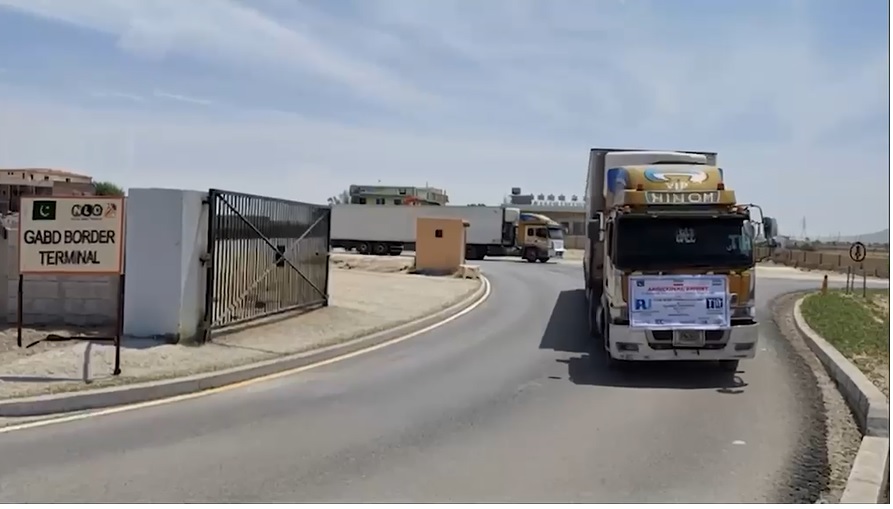
ISLAMABAD: Pakistan is steadily consolidating its position as a vital hub for regional trade, as new transit corridors and logistics initiatives spearheaded by the National Logistics Cell (NLC) begin to deliver tangible results. Recent developments, including the operationalization of a trade route connecting Pakistan to Central Asia through Iran, have further strengthened the country’s strategic economic footprint across the region.
According to officials and trade experts, an important milestone has been achieved under a transit agreement that enabled the first trade consignment of an NLC partner company to reach Pakistan from Kyrgyzstan via China. This development underscores the effectiveness of Pakistan’s evolving connectivity strategy, which aims to integrate regional markets through efficient and secure trade routes.
NLC’s sustained efforts have encouraged several Central Asian states—including Kyrgyzstan, Tajikistan, Turkmenistan, Kazakhstan, and Uzbekistan—to adopt Pakistan’s Khunjerab Pass and Sost Dry Port as a reliable and consistent trade corridor. These routes are increasingly viewed as fast, secure, and cost-effective alternatives for landlocked countries seeking access to international markets.
Under the new connectivity framework, these Central Asian republics now enjoy direct access to Karachi Port, significantly reducing transit time and logistical bottlenecks. Since 2024, NLC has also been successfully transporting goods from Karachi to multiple cities in Kyrgyzstan using the modern Transports Internationaux Routiers (TIR) system, which ensures streamlined customs procedures and enhanced cargo security.
In parallel, a newly operational trade route through Iran—recently launched by NLC—has added a critical dimension to Pakistan’s regional trade architecture. This corridor connects Pakistan’s Gwadar and Karachi ports to Iran and onward to Central Asia, offering an alternative pathway that complements the China-Pakistan Economic Corridor (CPEC) and northern routes via Khunjerab. A detailed report published by DND News Agency Islamabad highlighted this development as a “game changer” for regional connectivity, noting its potential to enhance trade volumes and diversify transit options for Central Asian economies.
Trade analysts believe the Iran route not only strengthens Pakistan’s connectivity portfolio but also provides redundancy and resilience in regional supply chains, particularly in light of geopolitical uncertainties. By offering multiple corridors, Pakistan is positioning itself as a dependable partner for regional commerce.
Experts also point out that, for the first time in such a major connectivity initiative, Afghanistan has been bypassed due to concerns over security and infrastructure reliability. Instead, stakeholders have prioritized routes that ensure uninterrupted and predictable trade flows.
Meanwhile, the Sost Dry Port (often referred to as Sust Port) continues to play a crucial role in maintaining year-round trade continuity with China and Central Asian states. Its consistent operations, even during challenging weather conditions, have reinforced confidence among regional partners in Pakistan’s logistics capabilities.
With these developments, Pakistan is not only enhancing its role as a transit state but also emerging as a central node in the broader vision of regional economic integration. Policymakers and experts agree that continued investment in infrastructure, border management, and diplomatic engagement will be essential to sustain this momentum and unlock the full potential of trans-regional trade.