


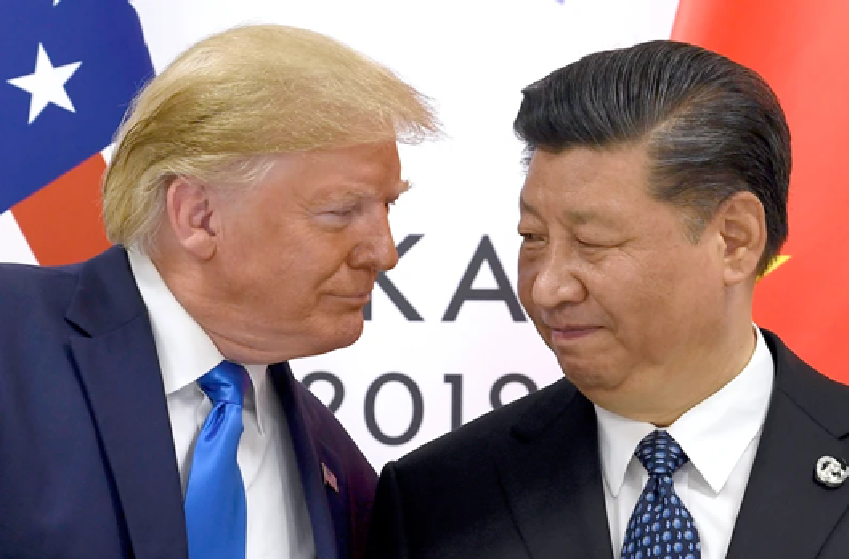
WASHINGTON (AP) — A ruling by the U.S. Supreme Court blocking sweeping tariffs proposed by Donald Trump has added fresh complexity to already strained U.S.–China relations. Both Washington and Beijing are now navigating uncertain ground, seeking to avoid a full-scale trade war that could disrupt the global economy while still preserving leverage in negotiations.
Analysts say the decision could modestly strengthen Beijing’s negotiating position, though China is expected to act cautiously, aware that Trump retains alternative legal tools to impose tariffs. Both sides also appear interested in maintaining a fragile trade truce ahead of Trump’s anticipated visit to China, where he is expected to meet Xi Jinping.
Sun Yun of the Stimson Center noted that the ruling may offer China a psychological boost but is unlikely to significantly change practical realities, as U.S. trade policy options remain broad.
Reacting angrily to the ruling, Trump announced plans for a temporary global tariff of 10%, potentially rising to 15%, while exploring alternative mechanisms to levy import duties. He again justified tariffs by citing China’s trade surplus and broader strategic competition with the United States.
The White House confirmed that Trump will travel to Beijing from March 31 to April 2 for talks with Xi, a visit widely viewed as critical for stabilising relations.
China’s cautious response
Experts suggest Xi is unlikely to emphasise the court ruling publicly during the summit. Instead, he may prioritise personal rapport with Trump to reinforce the existing trade pause. Ali Wyne of the International Crisis Group said stronger personal diplomacy could help sustain the truce and potentially open space for limited security concessions in Asia.
China’s embassy in Washington reiterated that tariff disputes serve neither country’s interests and called for greater stability in bilateral economic ties.
The ruling has also introduced uncertainty for other U.S. trading partners that previously negotiated arrangements to mitigate tariff tensions. Dan Kritenbrink of The Asia Group said many Asian governments are likely to proceed cautiously while assessing the legal and policy implications.
Attention is also focused on Japan ahead of Prime Minister Sanae Takaichi’s planned visit to Washington, particularly as Tokyo’s relations with Beijing have recently cooled.
Alternative tariff paths remain
Since returning to office, Trump has relied on emergency powers to impose tariffs on Chinese imports, including measures linked to the fentanyl supply chain. Retaliatory steps from Beijing previously pushed tariff levels sharply higher before both sides agreed to scale back tensions following a bilateral summit in South Korea.
Under the current truce, a 10% baseline tariff remains in place, accompanied by limited cooperation from China on export controls related to fentanyl precursors.
Wendy Cutler of the Asia Society Policy Institute suggested the administration could quickly pursue alternative trade enforcement tools, including ongoing investigations into China’s compliance with earlier agreements.
Meanwhile, Representative Ro Khanna called for a tougher, coordinated strategy with allies to address China’s trade practices.
Gabriel Wildau of consultancy Teneo noted that Beijing likely assumes U.S. tariffs could be reinstated through other legal authorities with relative ease. However, he added that Chinese officials may still hope to negotiate tariff reductions in exchange for purchase commitments or other concessions.