

By Raza Syed (London,United Kingdom)
As an Journalist in international security and Central Asian geopolitics, viewing the issue through Kazakhstan’s lens—a nation scarred by Soviet-era nuclear testing at Semipalatinsk and the voluntary relinquishment of the world’s fourth-largest nuclear arsenal in the 1990s, I assess President Kassym-Jomart Tokayev’s warnings on escalating nuclear dangers as profoundly justified. Kazakhstan’s history, marked by over 450 nuclear detonations that inflicted enduring environmental devastation, health crises, and social trauma, underpins a moral authority in advocating non-proliferation.
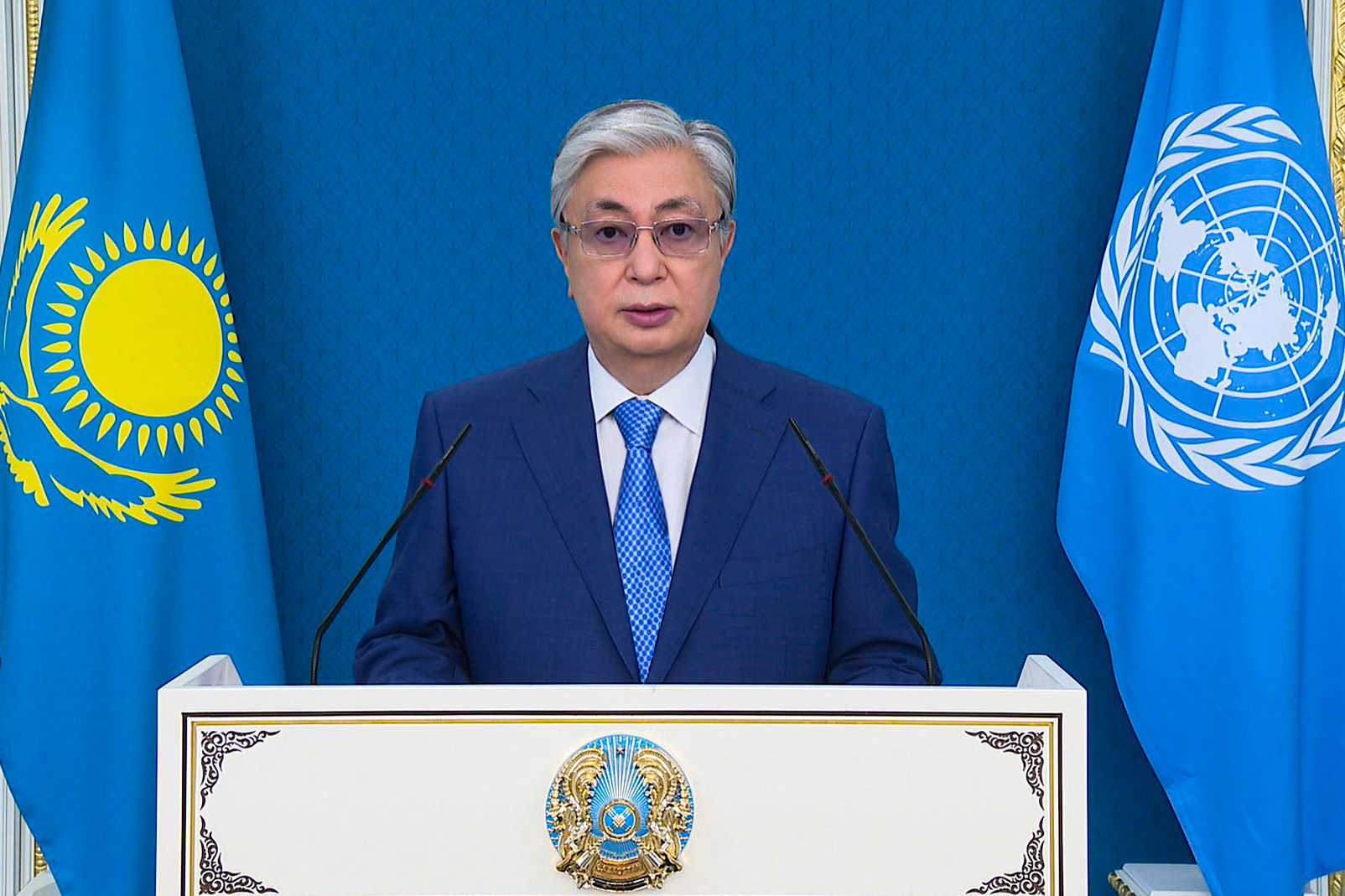
Tokayev has consistently highlighted these risks, notably in his September 2025 address to the UN General Assembly, where he decried collapsing arms control treaties and called for high-level dialogue among nuclear powers to avert catastrophe. In December 2025, at the United Nations University in Tokyo, he reiterated that global security cannot rely on nuclear deterrence, emphasizing Kazakhstan’s shared trauma with Japan and urging multilateral action to reduce nuclear threats. From Astana’s perspective, these concerns are not alarmist but rooted in proximity to nuclear giants like Russia and China, economic interdependence, and a commitment to treaties such as the Non-Proliferation Treaty (NPT) and the Central Asian Nuclear-Weapon-Free Zone.
The global nuclear landscape validates Tokayev’s alarms, with tangible escalations in 2025 amplifying risks of miscalculation or deliberate use. The Stockholm International Peace Research Institute’s (SIPRI) 2025 Yearbook reports nine nuclear-armed states possessing approximately 12,241 warheads, of which 9,614 are in military stockpiles, all undergoing modernization amid weakened arms control. This inventory, coupled with rising geopolitical tensions, underscores a shift from post-Cold War reductions to a new arms race. The Bulletin of the Atomic Scientists advanced its Doomsday Clock to 85 seconds to midnight in January 2026—the closest ever—citing nuclear risks, including veiled threats in ongoing conflicts like Ukraine. For Kazakhstan, situated as a bridge between East and West, this trajectory threatens regional stability, echoing the Semipalatinsk legacy where radiation poisoned land and people for generations. Tokayev’s advocacy, including proposals for an International Agency for Biological Safety and Security, reflects a pragmatic response to these verifiable trends, prioritizing trust-building over brinkmanship.
A primary justification lies in the collapse of the arms control architecture, exemplified by the impending expiration of the New Strategic Arms Reduction Treaty (New START) on February 5, 2026—the last binding limit on U.S. and Russian strategic arsenals. Russia suspended participation in 2023, halting inspections and data exchanges, while the U.S. countered similarly; Putin’s September 2025 offer for a one-year voluntary extension of limits remains unaddressed, leaving no framework for verification. This erosion, following the 2019 demise of the Intermediate-Range Nuclear Forces Treaty and the Open Skies Treaty, fosters opacity and heightens escalation risks. Logically, without transparency, mutual suspicions drive modernization: SIPRI notes all nuclear states are upgrading arsenals, with Russia and the U.S. holding nearly 90 percent of global warheads.
From Kazakhstan’s vantage, this disintegration revives Cold War instabilities in its neighborhood, undermining the security assurances that prompted its disarmament. Tokayev’s call for renewed dialogue, as voiced at the Astana International Forum in 2025, addresses this void, warning that over 13,000 warheads pose risks of accidental or escalatory use amid strained superpower relations. Kazakhstan’s experience as a post-Soviet state reliant on multilateral norms makes this breakdown acutely threatening, potentially exposing Central Asia to fallout from proxy conflicts or nuclear posturing.
Russia’s nuclear coercion in the Ukraine war provides a stark, fact-based example of justified concern. Entering its fourth year in 2026, the conflict has featured persistent nuclear signaling, with Putin invoking tactical weapons to deter Western aid and deploying nonstrategic warheads to Belarus—a NPT non-nuclear state—in 2023, expanding Russia’s nuclear perimeter. In 2025, rhetoric intensified: Russia tested a nuclear-powered cruise missile in October, discussed resuming nuclear testing at Novaya Zemlya, and revised its doctrine to lower the threshold for nuclear use against conventional threats supported by nuclear powers. Drone incursions into NATO territory heightened European alerts, while U.S. assessments note Russia’s aim to inflict “unacceptable damage” amid perceived existential threats.
Logically, this normalizes nuclear intimidation, eroding the taboo against use—scholar Nina Tannenwald argues the war has “severely damaged” normative constraints. For Kazakhstan, sharing a 7,600-kilometer border with Russia and tied through the Collective Security Treaty Organization, this is existential: any escalation could trigger radiological fallout reminiscent of Semipalatinsk, disrupting energy partnerships and neutral diplomacy. Tokayev’s warnings, including at the 8th Congress of Leaders of World and Traditional Religions, align with expert views that nuclear conflict probability is at decades-high levels, justifying Kazakhstan’s push for de-escalation.
China’s rapid nuclear expansion offers a second compelling illustration. By mid-2024, China’s arsenal exceeded 600 warheads, up from around 300 in 2019, with projections surpassing 1,000 by 2030 and continued growth to 2035, including a full triad of delivery systems and new silos at sites like Lop Nur. This buildup, per Pentagon reports, diversifies capabilities amid great-power competition, potentially accelerating a triangular arms race with the U.S. and Russia. Logically, enhancements provoke countermeasures, raising accidental escalation odds—evident in 2025 Asia-Pacific tensions and India-Pakistan frictions. Kazakhstan, bordering China over 1,700 kilometers, views this as a direct peril: Sino-U.S. or Sino-Russian strains could spill over, complicating its multi-vector foreign policy and uranium exports. Tokayev’s emphasis on complete disarmament, as in his Tokyo lecture, counters this, advocating steps like the Comprehensive Nuclear-Test-Ban Treaty’s entry into force to halt testing preparations. China’s proliferation activities, including missile tech exports to Iran and North Korea, further amplify regional instability, validating Kazakhstan’s zero-tolerance stance forged from its nuclear past.
Kazakhstan’s dual role as a disarmament advocate and peaceful nuclear energy developer bolsters the credibility of Tokayev’s position. Hosting the IAEA Low-Enriched Uranium Bank and promoting nuclear-free zones, it exemplifies security through cooperation, not deterrence. Yet, domestic plans for nuclear power plants demand robust safeguards, reflecting a balanced approach amid global militarization. This perspective—victim-turned-vanguard—positions Kazakhstan to warn that ignoring these trends risks a return to the brinkmanship that once ravaged its land.
In sum, Tokayev’s concerns are not only justified but urgent, grounded in historical scars, empirical data, and strategic vulnerabilities. The erosion of treaties, Russia’s coercive tactics in Ukraine, and China’s arsenal surge provide concrete evidence of rising threats, demanding multilateral revival. As a middle power in a fracturing world, Kazakhstan urges rationality: resuscitate dialogue, reinforce the NPT, and invest in peace over arms. Dismissing these warnings as mere diplomacy overlooks the headlines of 2025 and the ticking Doomsday Clock—humanity’s obligation is to heed and act, lest the perils Tokayev foresees become irreversible.
Note:This article is produced to you by London Post, in collaboration with INPS Japan and Soka Gakkai International, in consultative status with UN ECOSOC.