

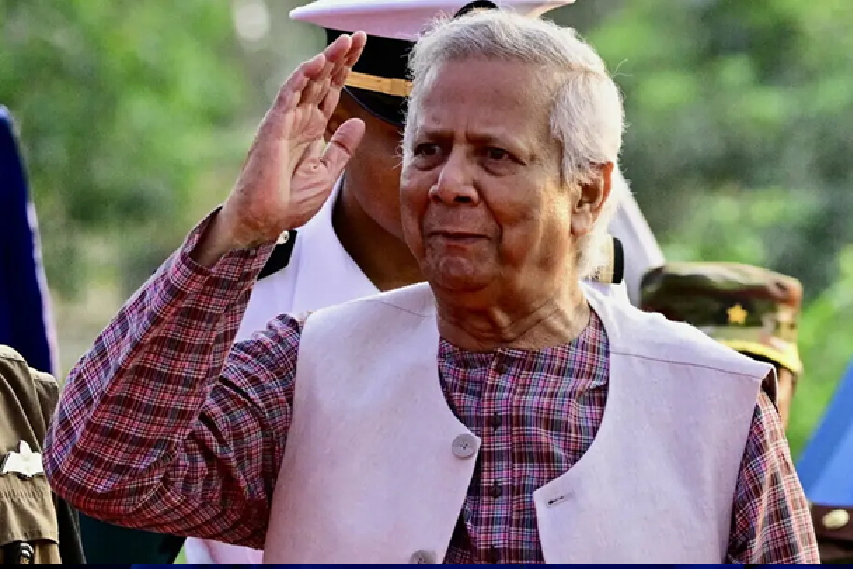
DHAKA: Bangladesh’s interim leader Muhammad Yunus stepped down on Monday, formally transferring authority to the newly elected government following last week’s parliamentary elections.
In a televised farewell address to the nation, the 85-year-old Nobel Peace Prize laureate announced, “Today, the interim government is stepping down,” while urging that the democratic progress achieved during the transition period be preserved.
“Let the practice of democracy, freedom of speech, and fundamental rights that has begun not be halted,” Yunus said.
Yunus returned from self-imposed exile in August 2024, shortly after former Prime Minister Sheikh Hasina was ousted in a student-led uprising and fled to India. Reflecting on those events, Yunus described the day of her departure as “a day of great liberation,” recalling scenes of celebration among Bangladeshis at home and abroad.
Serving as “Chief Adviser,” Yunus has led the country through a transitional period marked by institutional reforms and preparations for national elections. He congratulated the Bangladesh Nationalist Party (BNP) and its leader, Tarique Rahman, on what he described as a “landslide victory.”
“The people, voters, political parties, and stakeholder institutions linked to the election have set a commendable example,” Yunus said, adding that the vote had established a benchmark for future elections.
According to the Election Commission, the BNP-led alliance secured 212 seats, while the Jamaat-e-Islami-led alliance won 77 seats. Rahman, 60, now stands poised to lead the nation of 170 million as prime minister once lawmakers are sworn in.
On the same day as the parliamentary vote, Bangladeshis also endorsed a sweeping package of democratic reforms in a national referendum. The proposed reforms, outlined in the “July Charter” — named after the month the uprising began — include term limits for prime ministers, the creation of an upper house of parliament, expanded presidential powers, and enhanced judicial independence.
“We did not start from zero — we started from a deficit,” Yunus said, emphasizing efforts to rebuild state institutions and lay the groundwork for reform. The charter is expected to be binding on election winners, though formal ratification by the new parliament remains necessary.
While the campaign period was marked by political clashes that left five people dead and more than 600 injured, election day itself passed without major unrest. Observers have noted that, despite weeks of tension, the country has largely responded to the results with calm.
The swearing-in of newly elected lawmakers is expected Tuesday, marking the beginning of a new political chapter for Bangladesh.