

By Raza Syed
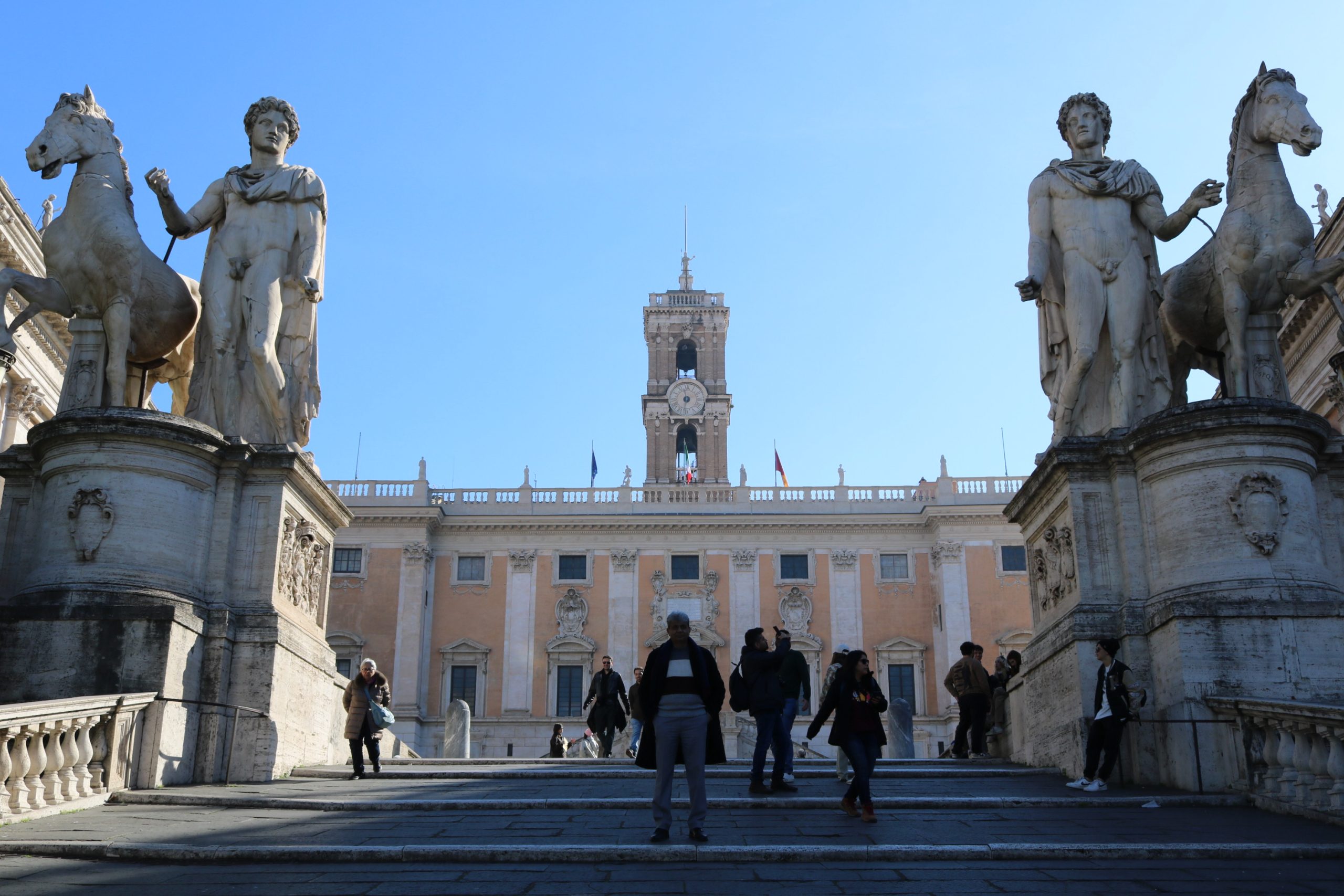
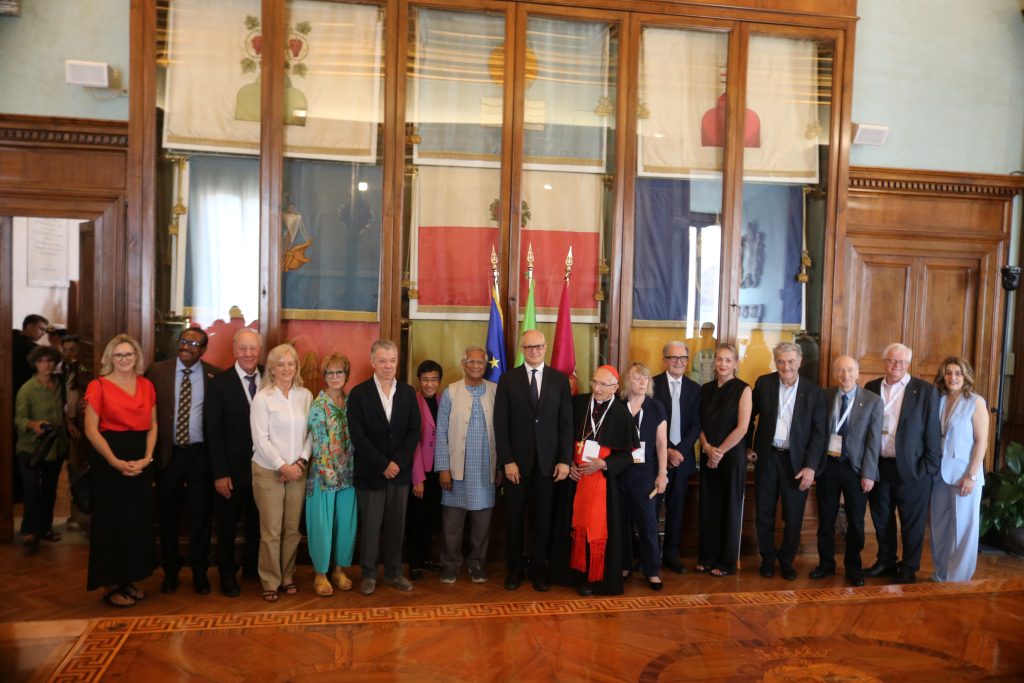
ROME, Italy – The signing of the Rome Declaration on July 16 on the Capitoline Hill brought together an extraordinary coalition of Nobel laureates, scientists, religious leaders, former heads of state, innovators, academics and civil society representatives. In the Giulio Cesare Hall of the Palazzo Senatorio, they adopted the Rome Declaration for an Unarmed and Disarming Peace in the Age of Artificial Intelligence, Nuclear and Autonomous Weapons, New Digital Protocols and Emerging Models of Digital Development. The declaration addresses the intertwined dangers of artificial intelligence, nuclear weapons, autonomous systems and rapidly evolving digital technologies, urging global cooperation to ensure that decisions concerning life and death remain firmly in human hands. As the document states, “We must disarm the next arms race, both AI and nuclear, before they define the next century as well.”
The declaration concluded the Global Nobel Laureates Assembly on Artificial Intelligence and Nuclear War, held from July 14 to 16 at Borgo Laudato Si in the Pontifical Gardens of Castel Gandolfo. More than two hundred participants from research institutions, international organisations and civil society attended the Vatican hosted event, which was inspired by Pope Leo the Fourteenth’s encyclical Magnifica Humanitas. The Pope has used the encyclical to call humanity toward shared values across religious traditions and an unarmed and disarming peace.
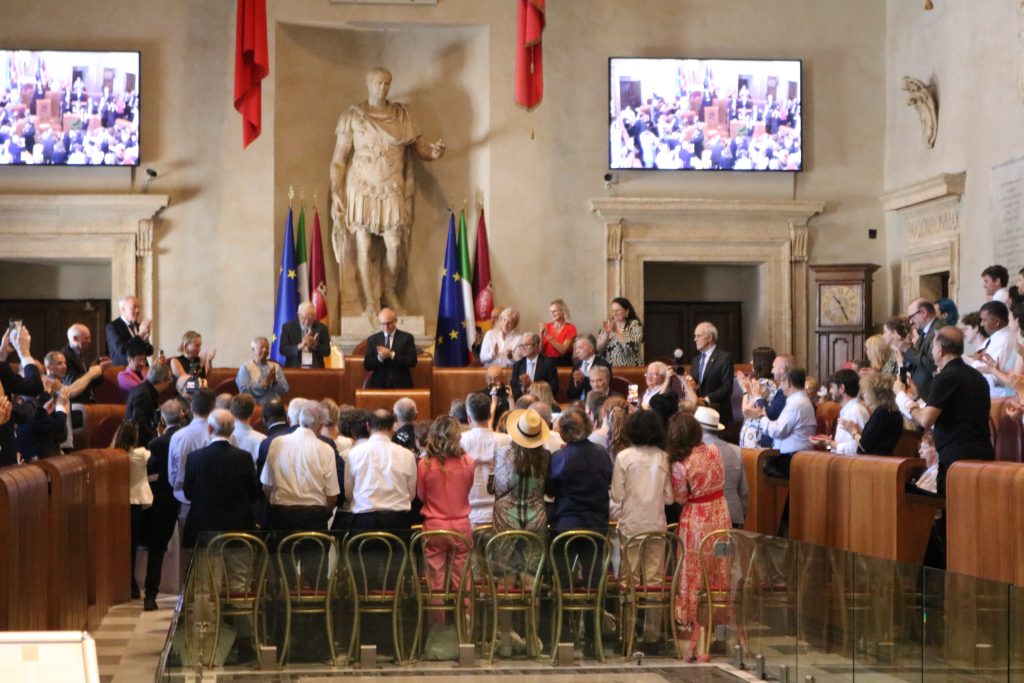
Speakers at the signing ceremony emphasised the urgency of the moment. Cardinal Baldassare Reina warned that no machine, algorithm or autonomous system should ever control decisions upon which humanity’s survival depends, stating that decisions concerning life and death, peace and war and the future of peoples must remain under full, responsible and meaningful human control. Sharon Stone, attending as a peace ambassador, reminded the audience that human dignity is not an algorithm. Mayor Roberto Gualtieri offered institutional greetings as the city of Rome hosted the solemn session.
The declaration calls on governments, corporations and international organisations to slow the development of frontier artificial intelligence systems and halt the expansion of nuclear arsenals. It urges urgent and sustained negotiations aimed at the verifiable and irreversible elimination of nuclear weapons within a clear time-bound framework. Professor David Gross, Nobel laureate in physics, warned that the world is in the middle of an accelerated arms race far more dangerous than it was three decades ago. He lamented the collapse of arms control treaties and the proliferation of nuclear powers, urging nations to adopt policies that reduce the risk of war and annihilation.
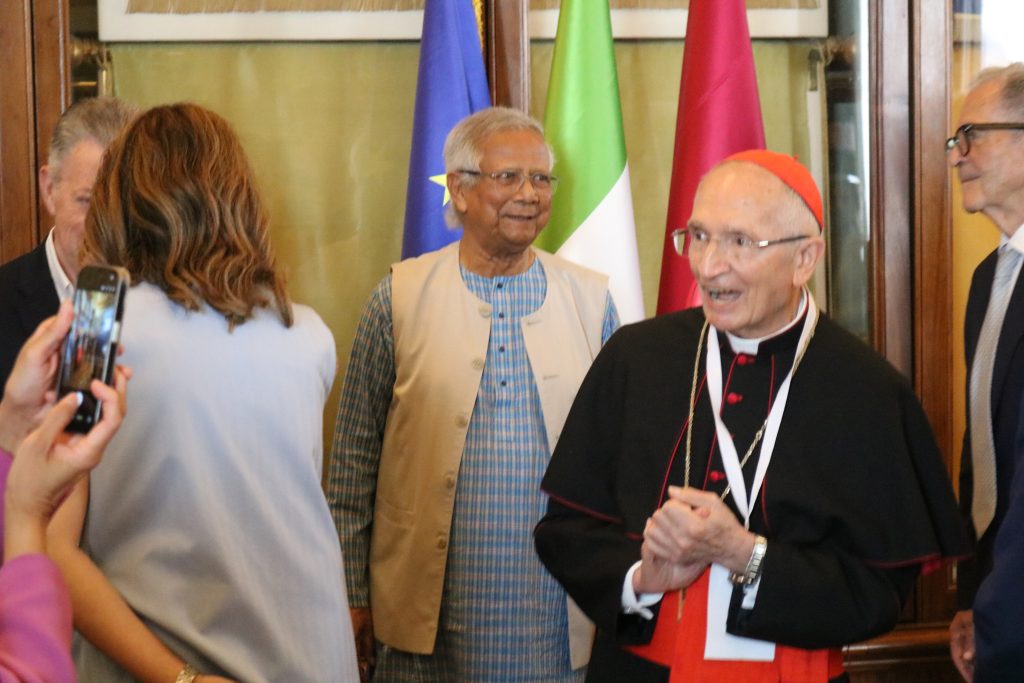
Other voices added depth to the discussion. Father Andrea Ciucci of the Pontifical Academy for Life observed that human ingenuity can create masterpieces or cause devastation, and artificial intelligence and nuclear technology are no exceptions. Cardinal Silvano Maria Tomasi and Nobel Peace Prize laureate Maria Ressa spoke about the need for a moral compass amid rapid technological change and geopolitical instability. Professor Daniel Holz of the University of Chicago acknowledged unprecedented dangers but stressed that practical steps remain available to make the world safer if governments choose cooperation over confrontation.
The initiative reflects a broader international push to govern transformative technologies alongside nuclear risks. For decades, nuclear weapons and artificial intelligence have been debated in separate policy circles. The Rome Declaration argues that they are now inseparable because both technologies raise the same fundamental question: who should ultimately control decisions that determine the survival of humanity. The gathering itself reflected an unusual coalition, with religious leaders standing alongside physicists, AI researchers and policymakers. The presence of Nobel laureates and global experts underscored the seriousness of the moment.
Speakers repeatedly warned that humanity is entering a period unlike any previous technological revolution. Artificial intelligence promises enormous advances in medicine, education, environmental protection and scientific research, yet the same technology could accelerate military competition, increase misinformation, reduce accountability in warfare and weaken human oversight over critical decisions. Rather than rejecting innovation, the declaration argues for responsible governance that ensures technological progress serves humanity instead of threatening it.
The declaration goes beyond nuclear disarmament. It calls for coordinated responsibility in frontier artificial intelligence development and negotiations aimed at eliminating nuclear weapons. The inclusion of corporations alongside governments reflects the reality that much of today’s most advanced AI research takes place within multinational technology companies. Any meaningful attempt to regulate frontier AI will require cooperation between states and private industry.
Yet the declaration also raises difficult questions. International declarations have historically succeeded in shaping public debate but often struggled to influence geopolitical realities. Nuclear armed states continue to modernise their arsenals, and global governance of artificial intelligence remains fragmented across competing regulatory models. The declaration offers ethical principles but relatively little guidance on how governments should balance national security interests with calls for slowing frontier AI development. Convincing nations to voluntarily limit development will require incentives far stronger than moral persuasion alone.
Despite these limitations, dismissing the declaration would be mistaken. Transformative international norms often begin with moral appeals before influencing formal diplomacy. The Rome Declaration may ultimately be judged less by immediate policy outcomes than by its ability to reshape global conversation around artificial intelligence and nuclear security. It reframes the debate by placing both technologies within a broader discussion about human dignity, ethics and civilisation. It reminds policymakers that technological capability alone cannot determine humanity’s future. Scientific progress without ethical responsibility risks creating unprecedented dangers rather than unprecedented prosperity.
As nations accelerate investment in artificial intelligence while modernising nuclear arsenals, the warning delivered from Rome carries unusual urgency. The declaration may not immediately alter strategic calculations in major capitals, but it succeeds in placing an uncomfortable question before world leaders. In an age increasingly shaped by algorithms and autonomous systems, who should ultimately decide humanity’s future. The answer offered in Rome is clear. Technology should amplify human wisdom, not replace it. Whether political leadership is prepared to embrace that principle remains the defining question of our time.
Note:This article is produced by London Post, in collaboration with INPS Japan and Soka Gakkai International, in consultative status with UN ECOSOC.