

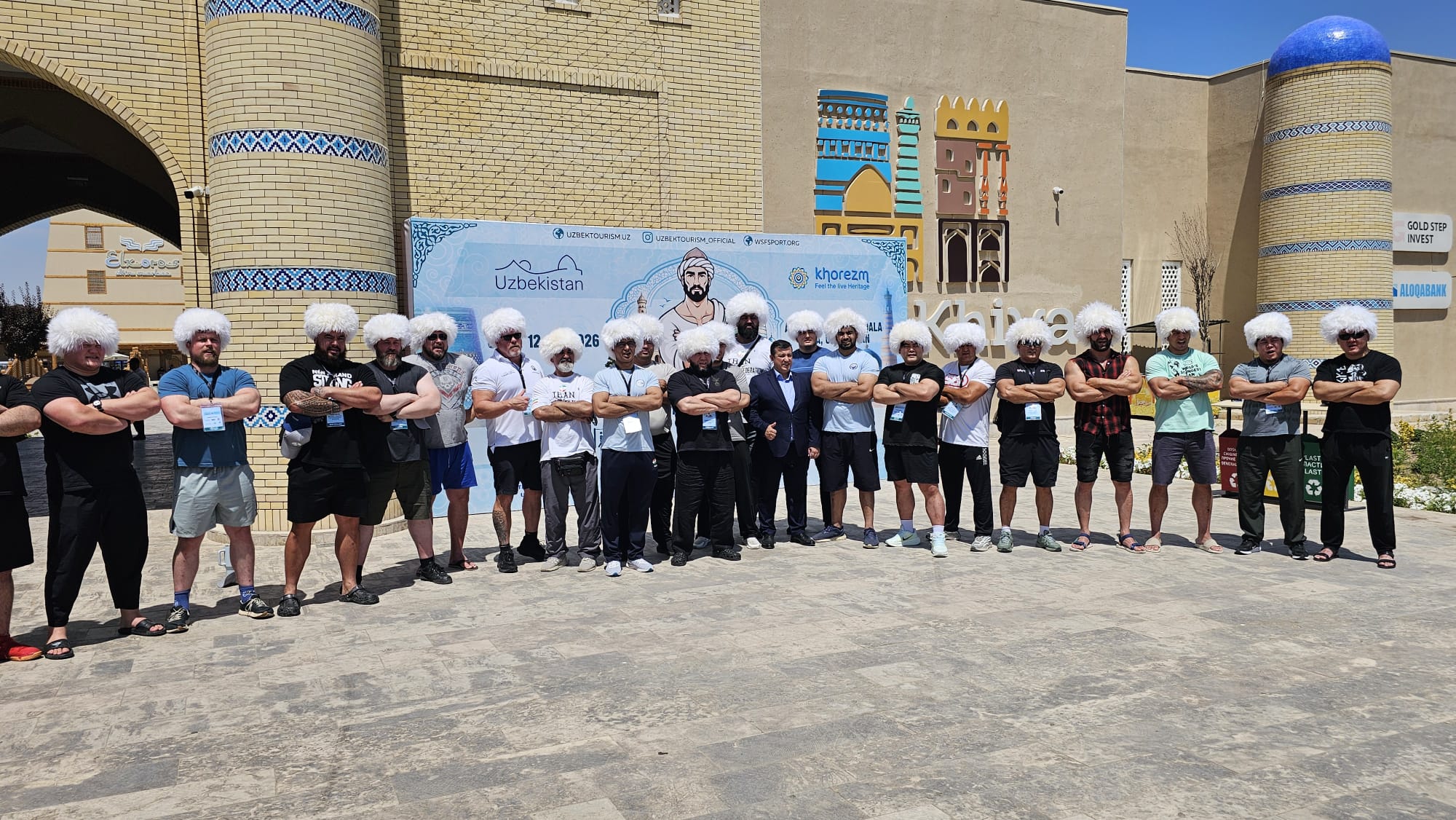
By Dr.MD.Moon Hyungsuk
- Korean strength sports enter a New Era as the Nation Eyes Hosting the 2027 World Strongman Games
(KHIVA, UZBEKISTAN / SEOUL, SOUTH KOREA)
A significant milestone in the evolution of South Korean strength sports is about to unfold on the international stage.
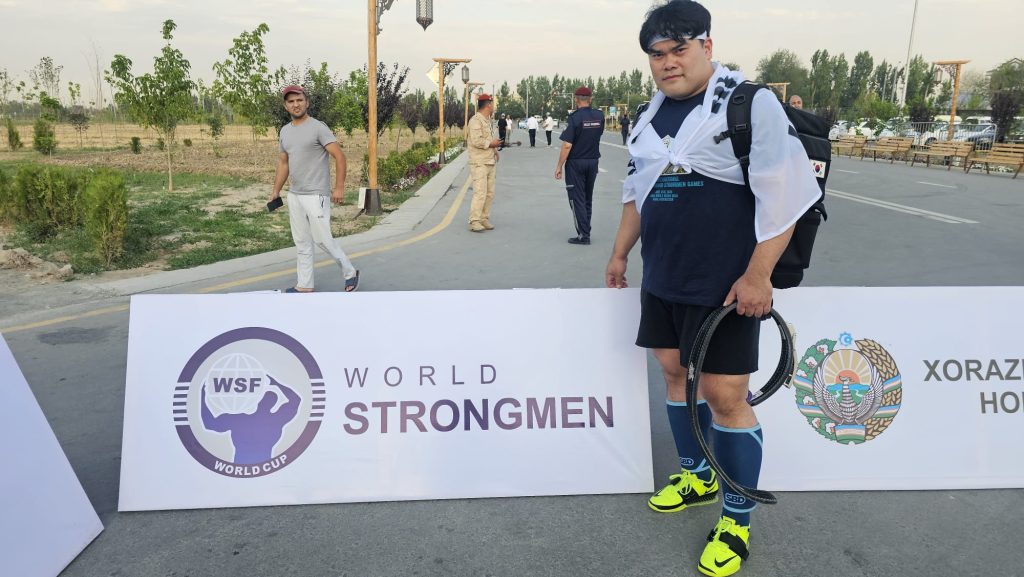
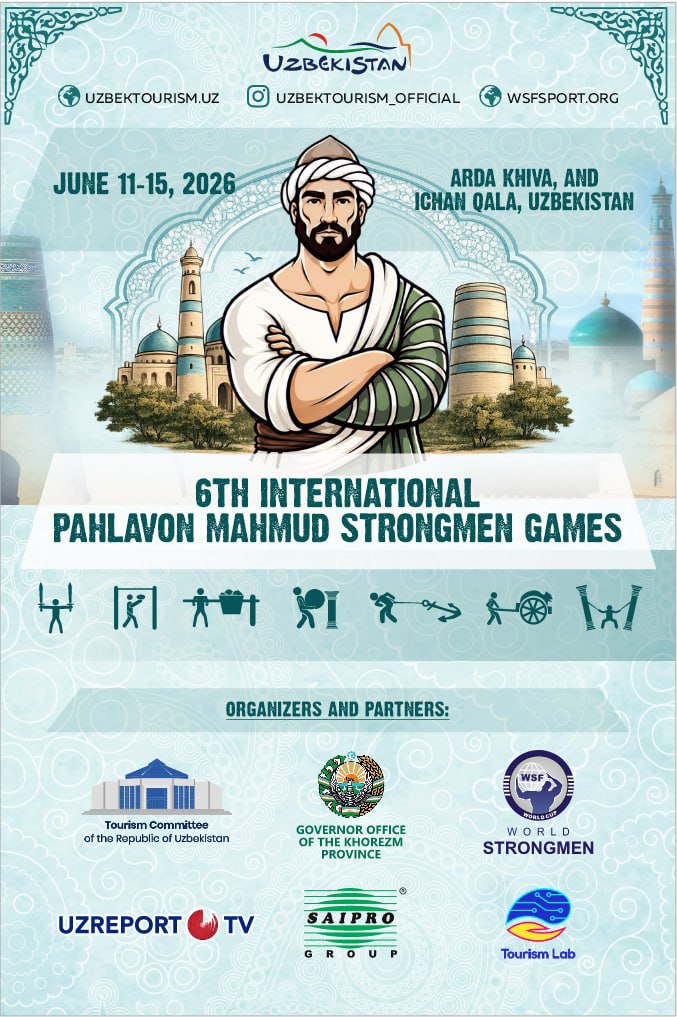
Yoo Useong, one of South Korea’s most accomplished heavyweight powerlifters and strength athletes, has received an official invitation to compete at two of the World Strongman Federation’s premier international events in 2026: the VI International Pahlavon Mahmud Strongmen Games and the Farhad Challenge 2026. Both competitions are organized under the auspices of the World Strongman Federation (WSF) in cooperation with the Government of Uzbekistan and are widely regarded as among the most prestigious strongman contests in Central Asia.
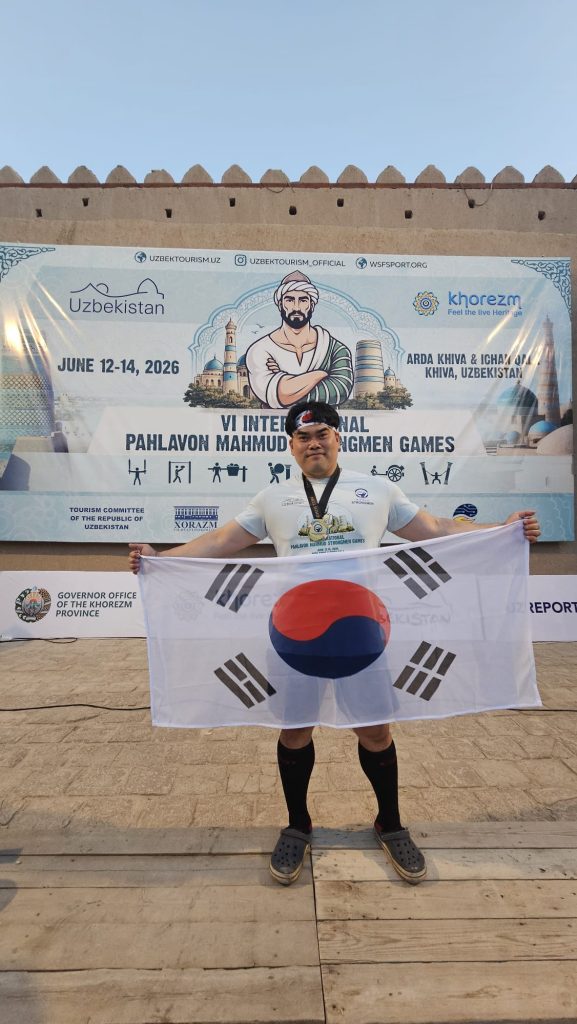
The invitation marks more than another international appearance for the veteran Korean athlete. It represents South Korea’s growing emergence within the global strongman community and signals a new era for a nation traditionally known for excellence in Olympic weightlifting, martial arts, and precision sports rather than professional strength athletics.
For Yoo, participation in these elite competitions serves as his formal entry into the World Strongman Federation’s professional athlete system, placing him alongside many of the world’s most recognized strength competitors and opening the door to future appearances on the international professional circuit.
Uzbekistan: A Rising Center of International Strength Sports
The 2026 events will be staged in two of Uzbekistan’s most iconic locations.
The historic city of Khiva, a UNESCO-recognized Silk Road destination renowned for its ancient architecture and cultural heritage, will host the VI International Pahlavon Mahmud Strongmen Games. Meanwhile, the Farhad Challenge will take place in Oqtosh, a mountainous resort region that has rapidly become a favored venue for international strength and combat sports competitions.
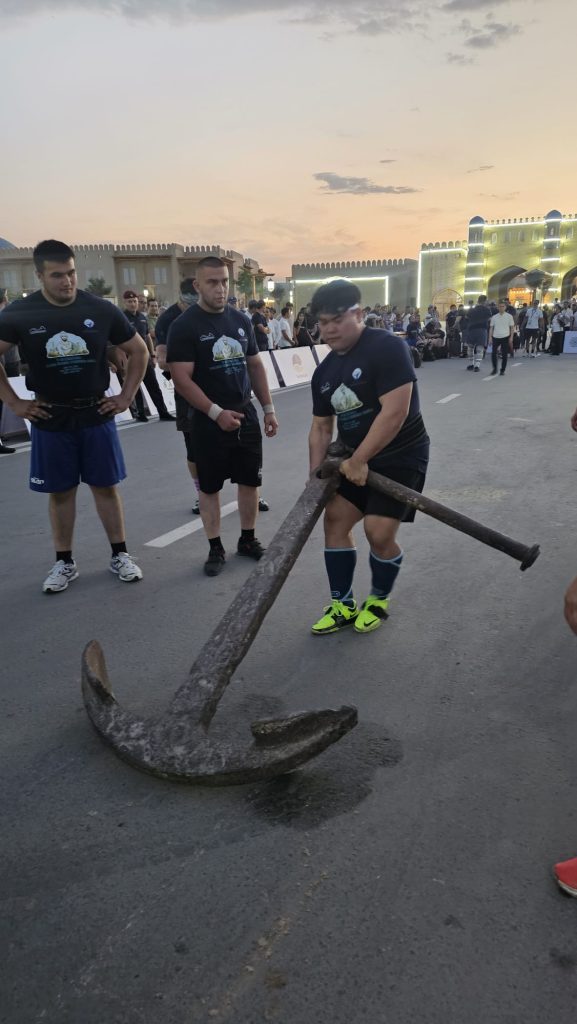
Over the past decade, Uzbekistan has invested heavily in sports development and international event hosting. Through partnerships with organizations such as the World Strongman Federation, the country has positioned itself as one of the emerging hubs for strength sports in Asia.
The competitions are expected to attract elite athletes, coaches, officials, and media representatives from across Europe, Asia, the Middle East, and Oceania, further enhancing their status within the global strongman calendar.
A World-Class Field of Competitors
The 2026 edition boasts one of the strongest international lineups assembled in recent years, featuring competitors from more than fifteen nations.
Among the favorites is Iran’s Reza Gheitasi, widely considered one of Asia’s premier strongmen. Known for his extraordinary pulling strength, massive frame, and consistent performances at international competitions, Gheitasi has become one of the most respected figures in Middle Eastern strength sports. His experience and proven record make him one of the athletes to beat.
Pakistan’s Muhammad Nooh Dastgir Butt enters the competition with an impressive resume that includes Commonwealth Games gold and numerous international accolades. Regarded as one of Pakistan’s greatest strength athletes, Butt has successfully competed across multiple professional strongman organizations and remains a formidable force in every event requiring explosive power and athletic versatility.
Ukraine’s Ivan Myskovets brings extensive experience from the European Strongman Series, where he has established himself as a consistent performer in traditional strongman disciplines such as truck pulls, Atlas Stones, log lifts, and frame carries. His technical proficiency and competitive toughness have earned him recognition among Europe’s elite competitors.
Representing Iceland is Gudnason Birgir Mar, carrying the legacy of a nation that has produced some of the greatest strongmen in history. Iceland’s contribution to the sport includes legendary figures such as Hafþór Björnsson, Magnús Ver Magnússon, Jón Páll Sigmarsson, and other icons who helped define modern strongman competition. Expectations are always high for Icelandic athletes, and Gudnason arrives with the responsibility of continuing that proud tradition.
The field also includes elite competitors from Turkey, Mongolia, Georgia, Lithuania, the Czech Republic, Kazakhstan, New Zealand, and several other nations, creating one of the most internationally diverse strongman contests of the year.
Yoo Useong: Korea’s Standard-Bearer of Strength
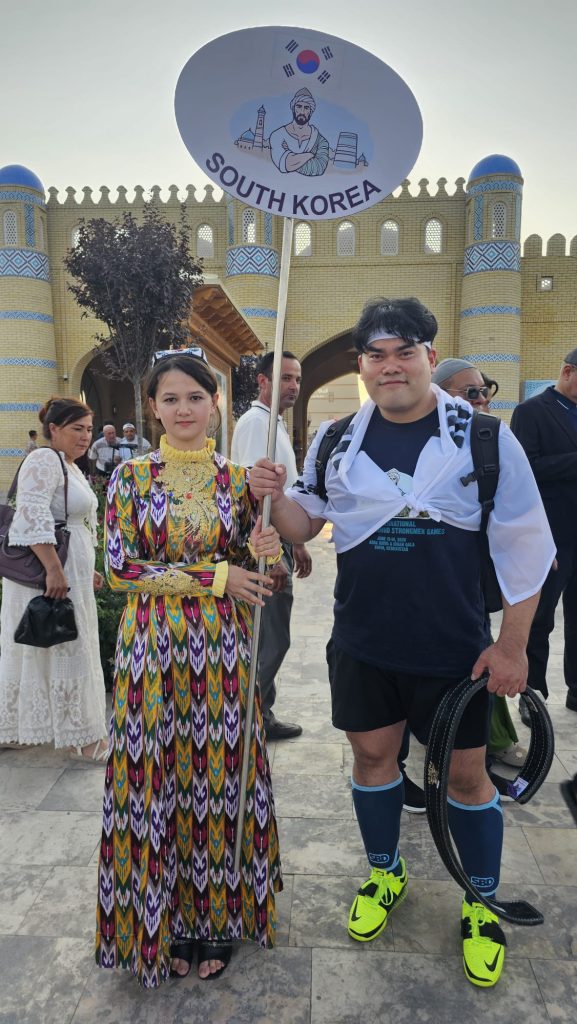
Standing among these internationally renowned athletes is South Korea’s Yoo Useong, whose own achievements place him among the strongest athletes the nation has produced.
A former representative weightlifter for Jeollanam-do Province, Yoo has devoted more than twenty years to competitive strength sports. Over that time, he has built a reputation as one of Korea’s most accomplished heavyweight competitors, excelling across multiple disciplines including weightlifting, powerlifting, and strength athletics.
His competitive achievements include championships and podium finishes under several major federations, including the International Powerlifting Federation (IPF), World Powerlifting Congress (WPC), and Amateur World Powerlifting Congress (AWPC).
Yoo’s personal records demonstrate the exceptional level of strength he brings to international competition:
- Squat: 302.5 kg
- Deadlift: 307.5 kg
- Competition Total: 850 kg
These performances rank among the strongest officially recorded results in Korean powerlifting history and reflect years of elite-level preparation and technical mastery.
Beyond competition, Yoo has played an influential role in developing Korean strength sports through his work as a certified referee, coach, educator, and mentor to younger athletes. His contributions have helped elevate standards within the domestic powerlifting community while inspiring a new generation of Korean lifters.
Why Strongman Is Different
While Yoo’s powerlifting accomplishments are extraordinary, success in strongman competition requires far more than maximal strength alone.
Modern strongman is arguably one of the most demanding athletic disciplines in the world. Athletes must combine world-class strength with endurance, speed, mobility, grip power, cardiovascular fitness, and mental resilience.
Unlike powerlifting, where athletes perform highly standardized movements, strongman events vary significantly from competition to competition. Competitors may be required to pull trucks, carry massive yokes, load Atlas Stones, press oversized logs overhead, drag weighted sleds, throw kegs, or support enormous static loads.
Performance often depends on strategic decision-making, pacing, and adaptability under extreme physical stress.
This versatility may be one of Yoo’s greatest advantages.
Observers familiar with his training note that he possesses not only elite squatting and deadlifting strength but also the mobility, conditioning, and athletic movement patterns necessary to transition effectively into professional strongman competition.
Many international analysts therefore view him as a potential dark horse capable of surprising more established strongman specialists.
Support from Korea’s Strength Sports Leadership
Yoo’s appearance in Uzbekistan has received strong backing from influential figures within Korean powerlifting and strength sports administration.
Among the key supporters is Lee Yong-soo, President of the Korea Powerlifting Association, who has consistently advocated for broader international opportunities for Korean athletes.
According to officials familiar with the selection process, Lee actively promoted Yoo’s candidacy to international organizers, believing his experience, professionalism, and achievements make him an ideal representative of Korean strength sports on the world stage.
The support reflects a broader strategic vision within Korean strength athletics—one that seeks to expand beyond domestic competition and establish a stronger presence within the international professional landscape.
South Korea’s Ambition to Host the 2027 World Strongman Games
Perhaps the most significant development surrounding the Uzbekistan events extends beyond competition itself.
Discussions have intensified regarding South Korea’s potential bid to host the 2027 World Strongman Games, one of the flagship events of the World Strongman Federation calendar.
Meetings involving WSF officials, Korean sports administrators, event organizers, and representatives from the powerlifting and recreational sports sectors have reportedly focused on the feasibility of bringing the championship to Korea.
Should the bid succeed, South Korea could welcome athletes and delegations from more than thirty nations, creating substantial opportunities for sports tourism, economic development, international media exposure, and cultural exchange.
Industry experts believe a Korean-hosted World Strongman Games could offer a unique fusion of elite sport and contemporary Korean culture. The global popularity of Korean entertainment, technology, tourism, and lifestyle branding—often referred to collectively as the “K-Culture” phenomenon—could provide an unprecedented platform for showcasing strength sports to new audiences around the world.
A Transformational Moment for Korean Strength Athletics
For decades, South Korean athletes have excelled in Olympic weightlifting, wrestling, taekwondo, judo, archery, and other internationally recognized disciplines. However, professional strongman competition has remained largely unexplored territory.
Yoo Useong’s participation in Uzbekistan may prove to be a turning point.
His appearance symbolizes more than personal ambition or competitive achievement. It represents the emergence of an entire sporting movement seeking international recognition and reflects South Korea’s growing commitment to developing world-class strength athletes capable of competing against the very best in the world.
As the strongest men from across the globe gather in Uzbekistan to test the limits of human power, endurance, and determination, Yoo carries not only the Korean flag but also the aspirations of a rapidly expanding strength sports community.
Whether he ultimately stands on the podium or not, his participation already marks a historic achievement.
The message is clear: South Korea is no longer merely observing the global strongman movement from afar. It is preparing to become a meaningful contributor to its future.
And for Korean strength sports, this may be only the beginning.