

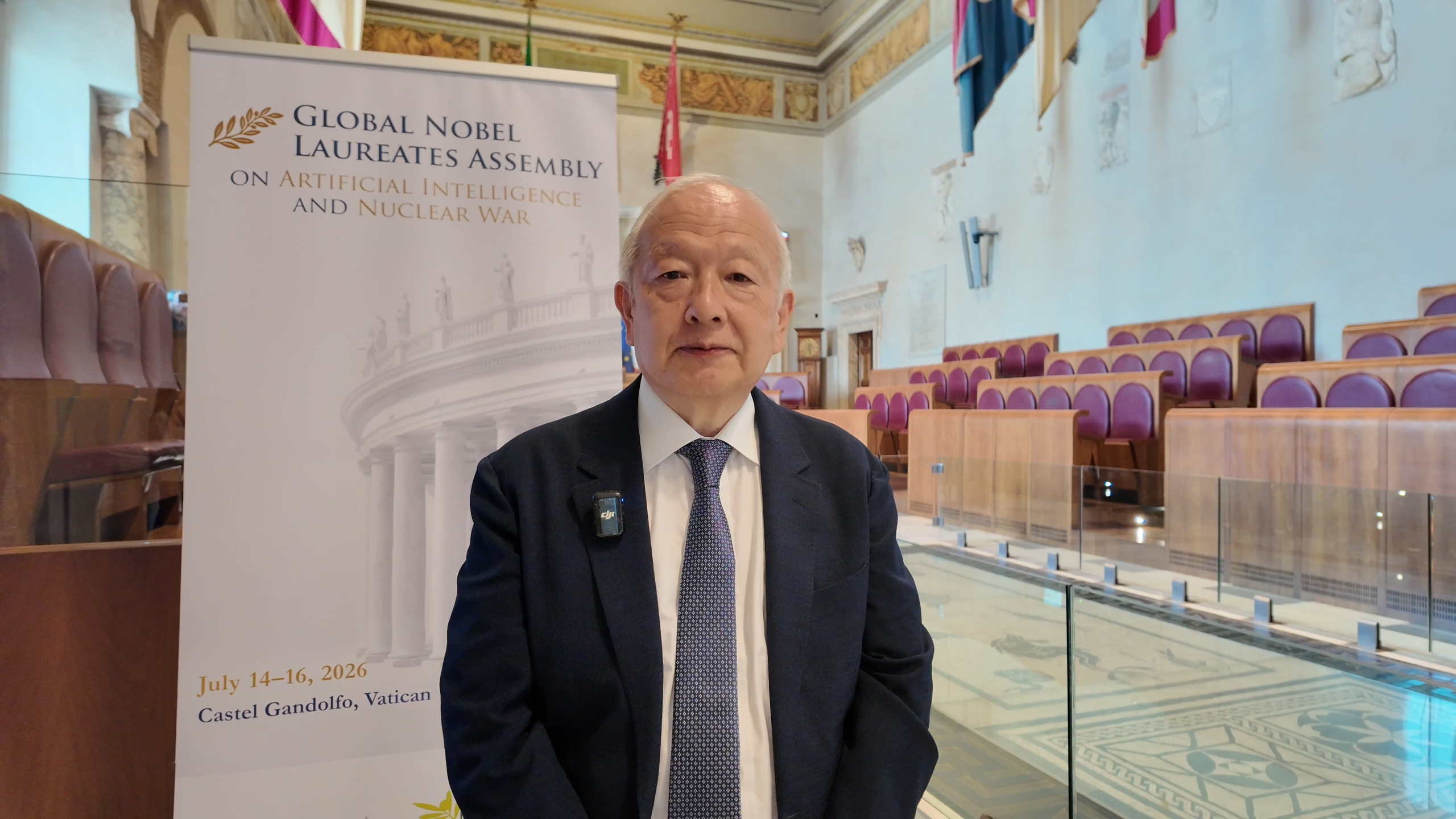
As the world confronts the twin challenges of nuclear weapons and rapidly advancing artificial intelligence, moral leadership has become as important as political action. In this interview, a prominent Buddhist peace advocate and the Executive Director of the Office of Public Affairs of Soka Gakkai, Mr Yoshiyuki Nagaoka, reflects on why human dignity must remain at the heart of global efforts to abolish nuclear weapons and regulate emerging technologies. Drawing on the outcomes of the Global Nobel Laureates Assembly on Artificial Intelligence and Nuclear War in Rome, he explains why faith communities, governments, civil society, the media, and young people all have a shared responsibility to build a culture of peace. He argues that education, compassion, and the ability to empathize with the suffering of others are humanity’s strongest safeguards against both nuclear catastrophe and the misuse of artificial intelligence.
London Post:- Can the language of human dignity and the common home reshape public opinion on nuclear disarmament?
Yoshiyuki Nagaoka: The word human dignity and disarmament of a nuclear weapon has a very strong tie. One strong reason is that I participated in this conference mostly at the working session group on the faith group representative interfaith dialogue. So we had a very heated discussion and everyone representing their own rich tradition of faith community.
After two days discussions, we came to unanimous consensus that human dignity is the one every faith tradition can treasure. So the urgent needs of international network on strongly voicing and expanding the appeal to abolition of mass destructive weapons such as nuclear weapons or autonomous weapons. I think we need the all faith community united.
So to treasure the human dignity is a very one key point to do so. That’s what I really learn and be confident about it.
LP:- What do you think? Is nuclear abolish a normal obligation of humanity?
Yoshiyuki Nagaoka:- Yes, I fully agree and be confident in so. The reason is we as a Buddhist see the roots of a nuclear weapon is the tremendous insensitivity to the humanity and tremendous the inaccountability for humanity.
LP:- How should faith communities speak about AI and nuclear weapons?
Yoshiyuki Nagaoka: Yes, with the rapid development of artificial intelligence, we have same concerns as nuclear weapons. Let me just tell you that I see the original motivation for humans to develop science and techniques is to reduce and minimise pains and time-consuming labours to make life better comfort.
But within this original desire as a human being, we tend to unconsciously falling the trap as our civilisation is going to be so-called painless civilisation, which is trying to avoid pains, which may sound good that you can live without pain and more comfort. But the trap with this trend is that it’s desensitise human as no sensitivity to others pain as well. So, it’s further isolate and divide humanity.
That’s the root view of AI weapons.
LP:- What practical next step should governments, the world, actually, take now to reduce nuclear risk?
Yoshiyuki Nagaoka: So, we joined our international organisations, institutions to further promote the treaty on the proliferation of nuclear weapons, TPNW. And to go through to the end to demolish the nuclear weapons is our goal.
Answer: So that’s conviction and the pledge commitment is no change. But also in addition, as you described, we will face the new challenge like autonomous weapons as such. And because we see the same ethical and moral challenge as well, our organisation is now preparing the new statement against such new technologies and the new weapons as well.
So, we will make an international appeal to join the people with the same mind.
LP:- If you had to deliver one message to the younger generation, what it would be about the nuclear danger for facing humanity today?
Yoshiyuki Nagaoka: Yes. I remember when I heard Hiroshima Hibakusha, she said the peace education’s ultimate essence is imagination.
In Japanese language, the word imagination is also based on the sensitivity to others. (So how can you personalise others’ pain as your own? So, this process really depends on education. So, it doesn’t mean only limited to school education.
When I speak education, I put more emphasis on learning rather than teaching. So education must be the mutual learning process, either to provide the information, either to receive new information. We help each other to deepen our understanding, deepen our philosophy.
So that’s the value of education. So we really like to carry on this legacy of education to create peace to our next generation.
Actually, in this conference, I recognised the Italian youth-initiated nuclear abolition exhibition.It’s namely Sensatomica. It’s initiated and driven by young generation in Italy. So this is already happening.
So I’d like to support this youth initiative to be expanded internationally. Spectrum can help free the world from nuclear weapons. So by sharing the same concerns and the same root illness to share their understanding on this is really broadening the united humanity as well.
So that would be the strongest weapon responding to this challenge from nuclear weapons.
LP:- How can civil society and media help rebuild momentum for nuclear abolition?
Yoshiyuki Nagaoka :That’s a very good question. I think media’s role is very essential.
And I really hope that the media also sets light on the moral, ethical challenge as well. On top of the political messages, economical messages, which is also important. But civil society inspiring ordinary people and bringing their power into this process is very essential what media can do.
Also, as a civil society, we do our best to do through educational process to achieve the same goal.
(The London Post extends its sincere gratitude to Mr. Yoshiyuki Nagaoka for graciously taking the time to share his valuable insights and perspectives through this interview.Interview by Raza Syed).
Note:This article is produced by London Post, in collaboration with INPS Japan and Soka Gakkai International, in consultative status with UN ECOSOC.