
By M.Imomov( Political analyst Strategic Focus)
Today’s geopolitical reality demonstrates that the world is entering a new stage of balance of power. The prolonged Russia–Ukraine war, tensions in the Middle East, the pressure policy of the United States and Israel toward Iran, as well as the fragmentation of global logistics systems, have accelerated the formation of new regional centers in international relations. Under such complex conditions, Central Asia is turning into an independent geopolitical space where strategic decisions for Eurasia are being shaped. At the center of this transformation stands the open, pragmatic, and integration-oriented policy initiated by President Shavkat Mirziyoyev. In recent years, Uzbekistan’s initiatives have helped restore an atmosphere of trust in the region, reopen borders, intensify trade and transport ties, and transform Turkic integration into a real political and economic platform. In this transformation, Uzbekistan and its active role within the Organization of Turkic States (OTS) hold particular importance.
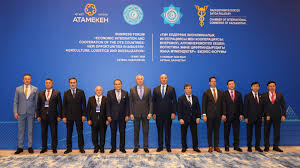
The OTS summit scheduled for May 15, 2026, in Turkistan, Kazakhstan, is expected to become a strategic turning point demonstrating that the political consolidation and economic integration of Turkic states have entered a new phase amid global geopolitical turbulence. Under current conditions, the OTS is no longer viewed merely as an institution of cultural cooperation, but rather as a new regional bloc shaping alternative logistics corridors across Eurasia, industrial cooperation, and mechanisms of collective economic security. One of the main driving forces of this process is increasingly becoming Tashkent.
Uzbekistan’s role in this process has significantly strengthened. Thanks to the pragmatic foreign policy course promoted by President Shavkat Mirziyoyev, the OTS has begun transforming from a declarative platform into a practical integration model. Before Mirziyoyev’s era, Turkic unity was largely limited to symbolic and cultural formats, whereas today it is becoming a real geo-economic platform based on the economy, transport, investment, and industrial cooperation. More than half of the 116 initiatives proposed by Uzbekistan within the organization have already been implemented in practice, demonstrating Tashkent’s strategic approach toward regional integration. This fact alone confirms that today’s Turkic activation is not accidental, but rather the result of Uzbekistan’s systematic state policy. The main essence of these initiatives is to preserve Central Asia’s economic subjectivity amid growing external geopolitical pressure and to protect the region from external logistics and security shocks.
Economic indicators also show that this process is not accidental. By the end of 2025, Uzbekistan’s trade turnover with OTS member states reached 10.8 billion US dollars, increasing by 9.6 percent. These figures deserve special attention amid the slowdown in the global economy and growing sanctions pressure. The existence of 2,137 joint ventures with Türkiye and an investment portfolio worth 3.2 billion dollars, as well as 1,212 enterprises with Kazakhstan and a trade volume of 5 billion dollars, indicate the emergence of new industrial chains within the OTS space. By the beginning of 2026, a total of 4,352 enterprises with OTS capital participation were operating, confirming that Turkic integration has become not merely a political slogan but a real economic platform.
In modern geopolitical conditions, logistics has acquired particular strategic importance. The Russia–Ukraine war has endangered northern transit corridors, while increasing pressure on Iran raises concerns regarding the stability of southern corridors. Against this background, Uzbekistan is becoming one of the central links of the Middle Corridor system. The transportation of 19.6 million tons of cargo by rail through Kazakhstan, the doubling of export transportation volumes with Kyrgyzstan, and the signing of an alliance agreement with Azerbaijan demonstrate Tashkent’s strategy of transforming into a secure logistics hub connecting East and West. As the main architect of this strategy, Mirziyoyev has managed to reposition the region on the global transport map. In the 21st century, states that control transport corridors also gain instruments of regional influence.
Cooperation within the OTS is no longer limited only to member states. Relations with observer states are also shaping a new geo-economic configuration. Trade turnover with Turkmenistan through the “Shavat–Dashoguz” trade zone reached 1.203 billion dollars, indicating the strengthening of internal economic interdependence within Central Asia. Hungary’s 165-million-dollar poultry cluster project in Syrdarya and its 59-million-dollar investment in the “New Tashkent” infrastructure project demonstrate that mechanisms are emerging within the OTS platform to attract European technologies and capital into the region.
Most importantly, today’s OTS integration is not geopolitical romanticism. It is a strategy aimed at preserving economic security, logistics independence, and political subjectivity amid global instability. For a long time, Central Asia was viewed as a geopolitical “zone of competition” among major powers, but now the region is gradually transforming into a space capable of making independent decisions. President Mirziyoyev’s open regional policy has launched this historic transformation. The Turkistan summit may become the next historic stage of this transformation.