

By, Shams Abbasi
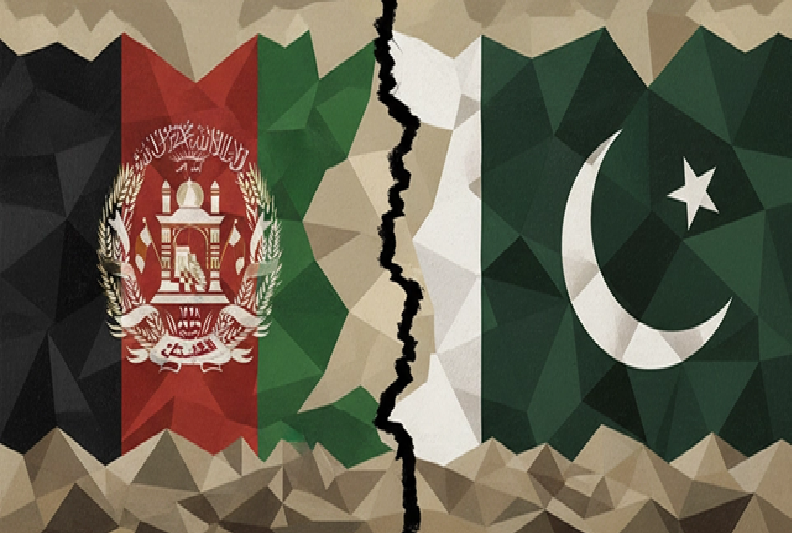
Mediated by China, recent negotiations between Pakistan and the Afghan Taliban have ended without any meaningful outcome. Both sides have effectively returned to their original positions. The failure of talks held in Doha, Istanbul, Riyadh, and Urumqi can largely be attributed to a single unresolved issue: Pakistan’s demand that the Afghan Taliban issue a formal religious decree (fatwa) against terrorist organizations.
However, the situation has now moved beyond the question of issuing a written commitment. While the Afghan Taliban appear willing to provide such assurances, Pakistan has shifted its approach, having grown wary of what it perceives as repeated false promises and misrepresentations. At this stage, both parties seem more focused on securing strategic advantage than on reconciliation.
Pakistan’s interests in Afghanistan are not primarily geo-economic; rather, Afghanistan remains heavily dependent on Pakistan for its survival. Meanwhile, India has been attempting to restore its diminished geopolitical standing in the region. This, however, has proven difficult without posing a security challenge to Pakistan. Consequently, India sought two key advantages through engagement with the Afghan Taliban: first, to exert security pressure on Pakistan, and second, to expand its geo-economic footprint in Afghanistan.
These efforts, however, have not yielded the desired results. Pakistan countered by strengthening its engagement with Iran, which in turn compelled India to scale back its involvement in the Chabahar port project. While this development has caused setbacks for India, it has also placed Afghanistan in a precarious position. Faced with limited options for survival, Afghanistan was expected to reorient itself toward Pakistan. Yet Pakistan appears unwilling to fully engage with an Afghanistan governed by the current Taliban leadership, and despite repeated overtures, the Taliban have received little response.
Pakistan has also taken several strategic steps in the region. It reportedly engaged with Tajikistan to facilitate the removal of Indian presence from a base allegedly supporting the Afghan Taliban. It further strengthened intelligence-sharing mechanisms with Iran, contributing to India’s reduced role at Chabahar. Additionally, during periods of heightened tensions, Pakistan focused on neutralizing weapons depots considered potential security threats.
As a result, Afghanistan now faces a form of landlocked dependency, a situation that arguably aligns with Pakistan’s strategic preferences. Islamabad appears to favor a government in Kabul that maintains closer ties with Pakistan rather than India, thereby reducing the likelihood of a two-front security scenario and allowing Pakistan to remain focused on its eastern border.
Internally, the Afghan Taliban are increasingly preoccupied with preserving their hold on power. Reports indicate a series of arrests targeting individuals within their own ranks. Among those detained is Mutahsim Agha Jan, a senior Taliban figure and former finance minister during Mullah Omar’s era. Agha Jan, who had spent time in Istanbul before being persuaded to return by Mullah Yaqoob, is considered a significant figure within the movement and is said to have facilitated substantial financial investments.
His arrest is reportedly linked to efforts by a group of religious scholars and figures, including Nazar Mohammad Afghani, Najibullah Muneeb, and Zahid Rashdi to establish a new religious movement that could include both Pakistani and Afghan clerics. This initiative was perceived as pro-Pakistan in orientation.
In addition, several Taliban members were recently detained in Badakhshan, including Abdullah Rahmani, a unit commander in the Ministry of Defense’s communications battalion, as well as other officials and media personnel. While one individual was released on bail, others were transferred to Kabul for further investigation.
Separately, on April 15, tribal leaders from eastern Afghanistan’s Nuristan region and Pakistan’s Chitral district held negotiations without Taliban authorization. These talks reportedly led to an agreement to reopen trade routes between the Kamdesh and Barg-e-Matal districts. The negotiations were held at a Pakistani military center, reflecting Islamabad’s parallel efforts to establish alternative economic and logistical pathways.
Pakistan has signaled its intent to develop independent trade routes while exerting pressure on the Afghan Taliban. By securing access to Central Asia through Iran, Pakistan has effectively limited Afghanistan’s regional options. At the same time, concerns are growing within Afghanistan about internal instability. The Taliban’s existing military resources may prove insufficient to counter potential internal uprisings, and there are indications that multiple opposition movements could emerge.In this evolving landscape, the Afghan Taliban face mounting challenges, both externally and internally, as regional power dynamics continue to shift.