

By Dr Majid Khan (Melbourne):
It is barely wider than the English Channel at its narrowest point. It sits between the rocky coastline of Iran to the north and the sun-bleached shores of Oman to the south. For most of recorded history, the Strait of Hormuz was simply a passage a place ships moved through on their way somewhere else. Today, it is the most consequential piece of water on Earth, and its closure is delivering what analysts are already calling the largest disruption to global energy supply since the oil shocks of the 1970s.
The closure of the Strait of Hormuz has triggered the most significant oil supply shock since the 1970s, with WTI crude surging past $100 per barrel and Brent crude reaching $112. Since late February 2026, when the United States launched military operations against Iran, the consequences have cascaded with extraordinary speed from the Gulf to the gas pumps of Manila, from the LNG terminals of Qatar to the boardrooms of Brussels.
Its two unidirectional sea-lanes facilitate the transit of around 20 million barrels of oil per day, representing roughly 20% of global seaborne oil trade, primarily from producers like Saudi Arabia, the United Arab Emirates, Iraq, and Qatar. That single statistic one fifth of the world’s daily oil supply flowing through a gap barely wide enough to accommodate two lanes of supertanker traffic has always made strategists nervous. What was once a theoretical vulnerability is now a lived catastrophe.
The crisis did not arrive without warning. Tensions between Washington, Tel Aviv and Tehran had been building for years, punctuated by a brief 12-day air conflict in June 2025. When a new round of nuclear negotiations in Geneva collapsed, the trajectory toward open war became difficult to arrest.
On 28 February 2026, the United States struck Iran. Tehran’s response was immediate and consequential. On 2 March 2026, an Islamic Revolutionary Guard Corps commander issued a public announcement through Iranian state media that the Strait of Hormuz was closed, warning any vessel attempting passage that forces would attack.
The declaration triggered a cascade of maritime abandonment. Major container shipping companies including Maersk, CMA CGM and Hapag-Lloyd suspended transits through the strait and related routes. Houthi-controlled Yemen simultaneously announced it would resume attacks on Israel and commercial ships in the Red Sea, forcing Suez Canal traffic to be rerouted around Africa’s Cape of Good Hope, adding weeks to transit times and increasing shipping costs.
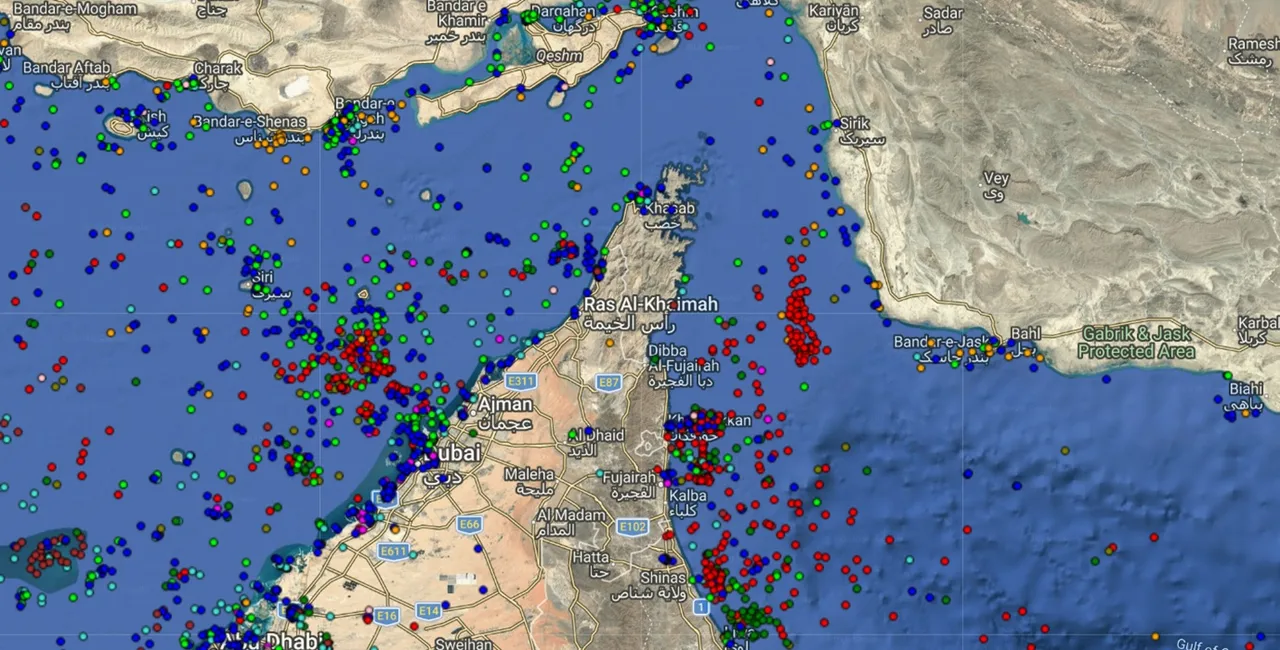
Since mid-March, Iran had conducted 21 confirmed attacks on merchant ships, leading tanker traffic to drop by approximately 70% initially and ultimately to near zero. Over 150 vessels sat anchored in open Gulf waters, their crews waiting, their cargo going nowhere. On 27 March, the IRGC escalated further, announcing that the strait was closed to any vessel going “to and from” the ports of the United States, Israel, and their allies.
The numbers that have followed are staggering in their velocity. Brent crude surpassed $100 per barrel on 8 March 2026 for the first time in four years, rising to $126 per barrel at its peak, surging faster than during any other conflict in recent history. U.S. government officials and Wall Street analysts have begun considering the prospect that oil prices might surge to an unprecedented $200 per barrel. Goldman Sachs has forecast WTI at $105 for April, while options traders are increasingly pricing in scenarios that would have seemed fantastical just months ago.
But this crisis is not simply an oil story. It is a broader commodity shock of a kind the modern world has never experienced. The Strait of Hormuz remains effectively closed, affecting global supply of oil and gas, but also of aluminum, fertilizers, Sulphur, naphtha and other materials.
The Gulf region produces nearly half of the world’s urea and 30% of its ammonia, with about one-third of the world’s fertilizer passing through the strait. Urea prices have increased by 50% since the start of the war. The LNG disruption is also impacting fertilizer production, threatening the spring planting season in the Northern Hemisphere and potentially driving global food prices higher through the remainder of 2026.
The economic modelling is grim. A closure of the Strait that removes close to 20% of global oil supplies from the market during the second quarter of 2026 is expected to raise the average WTI price of oil to $98 per barrel and lower global real GDP growth by an annualized 2.9 percentage points in that quarter alone. If the strait remains closed through a third quarter, those figures worsen considerably.
If there is a geography of pain in this crisis, it runs east. In 2024, an estimated 84% of crude oil and condensate shipments through the strait were destined for Asian markets, with China receiving a third of its oil via the strait. The consequences of that dependency are now playing out across the continent in real time.
The impact can be felt everywhere, but in Asia where nearly every country is highly dependent on Middle Eastern oil the war has caused outright energy panic, with governments scrambling to respond and having few short-term answers. In Bangladesh, the newly elected government has closed universities and placed the military in charge of oil depots. In India, nationwide protests about fuel are starting up again.
In the Philippines, diesel prices have nearly doubled pre-conflict diesel prices hovered around 52 to 53 Philippine pesos per liter but have since surged to nearly 100 pesos per litre in some areas, devastating logistics networks and the public transport sector.
Taiwan faces a particularly acute vulnerability. The island, a key semiconductor manufacturer, reported it had gas supplies for just 11 days. For a nation whose chip factories underpin the global technology supply chain, this is not merely an energy crisis it is a threat to the digital infrastructure of the modern world.
The LNG situation carries a particular severity. Unlike oil, for which pipeline alternatives exist in limited quantities, about 93% of Qatar’s and 96% of the UAE’s LNG exports transit through the Strait, representing 19% of global LNG trade. Global LNG supply would drop by over 300 million cubic meters per day double the average amount of gas that passed through the Nord Stream pipeline in 2021.
Saudi Arabia and the UAE both operate pipeline infrastructure that bypasses the Strait, but combined, these routes offer only 3.5 to 5.5 million barrels per day of bypass capacity a meaningful but partial offset to the full Hormuz throughput. Saudi authorities have diverted some crude exports via the Red Sea port of Yanbu, and OPEC+ has pledged additional output increases, but the arithmetic does not add up to a solution.
Iran has set up its own alternative shipping channel, north of Larak Island rather than the main channel south of the island. One ship reportedly paid $2 million to use Iran’s channel, with payments being assessed by the Iranian Revolutionary Guards in Chinese yuan. It is an extraordinary development: a new, extorted toll route through a waterway the world once considered part of the global commons.
Strategic petroleum reserves are being released, Saudi Arabia and the UAE are rushing to reroute oil via pipelines that circumvent the Strait, while the U.S. and other governments have announced a record release of stockpiled oil to help tame prices. But reserves, by definition, are finite, and oil executives and analysts warn that the Strait needs to be reopened by mid-April or oil supply disruptions will get significantly worse.
Behind every tanker anchored in the Gulf sits a geopolitical equation of profound complexity. Iran did not close the Strait of Hormuz impulsively. It is wielding what its leaders have long described as their ultimate card the ability to bring global energy markets to their knees without firing a single missile at Washington or Tel Aviv.
What makes the closure of the Strait of Hormuz different from previous oil supply disruptions is the breadth of its reach: a complete cessation of oil exports from the Gulf region amounts to removing close to 20% of global oil supplies from the market, about 80% of which is shipped to Asia.
Meanwhile, Russia finds itself in an unexpectedly advantageous position. The conflict is materially improving Russia’s competitive position in crude oil markets. With Middle Eastern barrels facing logistical disruption, both India and China face strong incentives to deepen their reliance on Russian supply.
On 29 March, Pakistan hosted a diplomatic meeting with Egypt, Saudi Arabia and Turkey to discuss reopening the Strait. It is a sign that secondary powers those with no part in starting this war are now scrambling to end its economic consequences. The United States military began operations to reopen the Strait on 19 March, but as of 30 March, the waterway remains severely disrupted.
In conversations with more than three dozen oil and gas traders, executives, brokers, shippers and advisers, one message was repeated repeatedly: the world still hasn’t grasped the severity of the situation. Many drew parallels with the 1970s oil shock, warning a prolonged closure of the Strait of Hormuz would threaten an even bigger crisis.
The Strait of Hormuz has always been more than a shipping lane. It is the physical expression of a global energy system built on concentration, dependency and the assumption of uninterrupted flow. That system is now broken not by an act of nature, but by deliberate human choice and the question the world must now answer is not simply how to reopen a waterway, It is whether a global economy that allows 21 miles of contested water to hold it hostage has learned anything at all.
Every day that Iran is willing and able to threaten shipping in the strait puts the world closer to serious economic damage. The clock is ticking and the world is watching through petrol station queues in Manila, empty gas cylinders in Kashmir, and futures screens in Chicago as the price of dependency is paid in real time.