


By Dr Majid Khan (Melbourne):
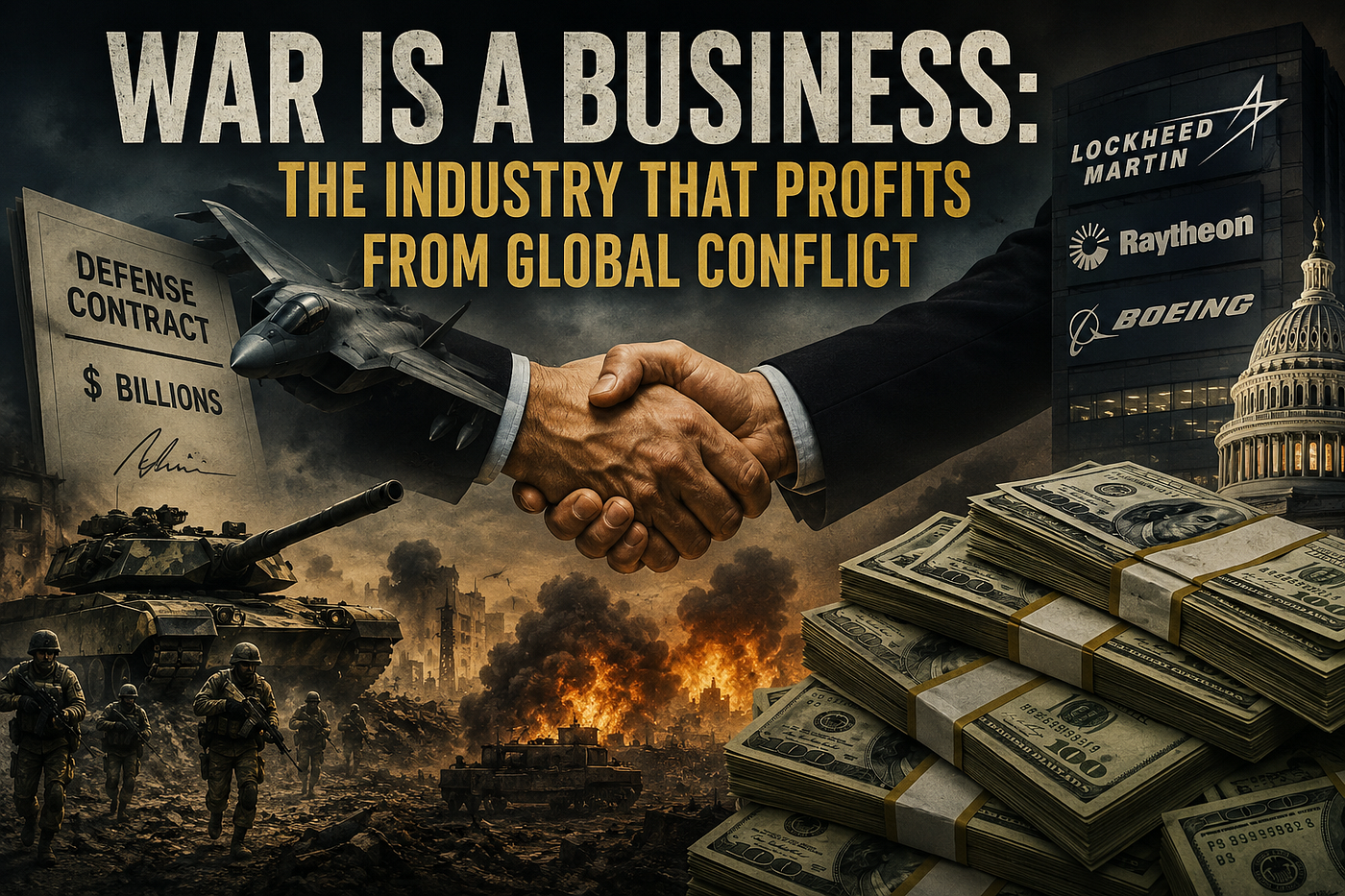
In the first decades of the twenty‑first century, global conflicts have reshaped world order in ways that extend far beyond battlefields and peace negotiations. Wars in Ukraine, Gaza, and the Middle East’s abrupt second theatre of conflict involving Iran have not only caused immense human suffering and geopolitical realignment but have also sustained and amplified a remarkable economic engine: the global arms industry. In these conflicts, wars have become more than clashes of armies; they have become consistent generators of revenue for an entrenched network of defence manufacturers, arms dealers, and strategic suppliers whose profit margins expand with each escalation and prolongation of violence.
The long duration of armed engagement in Ukraine since 2022 and the recurrent outbreaks of violence in Gaza have rewritten the economic contours of global defence markets. They have transformed the business of war into a lucrative enterprise that thrives as long as hostilities endure, with weapons procurement and military resupply contracts often reaching unprecedented highs. Researchers and analysts have documented that global arms revenues hit record levels in recent years, driven primarily by demand generated from wars and the ongoing geopolitical tensions globally. According to the Stockholm International Peace Research Institute, global arms makers saw their combined sales reach the highest level ever recorded, with revenues driven sharply upward by the wars in Ukraine and Gaza as nations sought to replenish depleted stocks and modernise arsenals at a time of heightened insecurity. This surge marked a continuation of an upward trend that has shaped defence production strategies through multiple theatres of conflict.
The logic of this phenomenon is at once simple and stark. When nations are embroiled in war or fear imminent conflict, they purchase weapons. They buy missiles, drones, air‑defense systems, and munitions. They refurbish military fleets and expand strategic procurement. They award multi‑billion‑dollar contracts to major defence firms to supply what marching soldiers and strategic planners deem indispensable. The result is a global defence industry that makes its greatest profits not in times of peace, but in times of sustained hostilities and perennial threat.
The Russia‑Ukraine war, which began in 2022 and still shapes European security policy, remains one of the single largest drivers of global weapons demand. Ukraine’s need for defensive systems and combat munitions not only sustained orders for Western manufacturers but also transformed some parts of the Ukrainian defence industry into exporters themselves. Reports noted rising interest in Ukrainian tactical solutions like low‑cost interceptor drones and electronic warfare systems, sought out by allies and partners far beyond the Eastern European battlefield. This shift underscores how conflict can create new nodes of arms commerce where none existed before, embedding war economies deeper into international defence markets.
In the Middle East, the recurrent conflicts in Gaza have spurred a parallel surge in defence procurement. Wars between Israel and Hamas have driven both internal militaries and external partners to invest in advanced weaponry. Defence outreach has included purchases of drones and interceptors, unmanned aerial systems, and counter‑rocket technologies as part of broader security strategies. The Israeli arms industry, for example, has been at the forefront of exporting such systems, witnessing growth in revenues driven by consistent global demand. This growth reflects a broader pattern: when conflict erupts, even localized ones, they reverberate across international defence markets.
The latest iteration of this trend is unfolding in the war involving Iran in 2026, triggered by coordinated strikes by Western powers on Iranian targets amid long‑standing tensions over nuclear activities and regional influence. The war has already had profound effects on global energy, stock markets, and industrial supply lines, but it has also become another major theatre where defence contractors and arms producers are reaping financial gains as nations react to the escalation. The conflict’s economic side effects, from surging oil prices to disrupted global trade, illustrate the broader costs of war, but the profits gained by companies supplying weapons and military technologies stand in stark contrast to the disruption affecting civilian economies and global markets.
The dynamics of the Iran conflict have mirrored patterns in Ukraine and Gaza: as hostilities intensify, demand for weapons and defence systems grows. Western defence companies and in many regions emerging defence firms have reported historic high order books and expanded production lines to meet the surge. Financial markets have noted sharp increases in defence stocks, with investors viewing the arms sector as among the few beneficiaries of an increasingly unstable global landscape. Analysts from international institutions have observed that contracts and replenishment orders from NATO allies and Gulf states have rushed to refill inventories depleted by conflict. What was once surplus stock becomes a prompt for new manufacturing cycles, new deliveries, and extended fiscal commitments by governments worldwide.
The sheer scale of arms revenues in this era poses difficult questions about the relationship between war and profit, especially in an age when international diplomacy and conflict resolution mechanisms exist alongside sprawling defence industrial complexes. Critics argue that the intertwining of geopolitical strategy with industrial capacities has created a situation in which the very businesses that supply weapons have an implicit economic incentive to see conflict persist or expand. This is not merely a matter of nations defending themselves. It is, as some observers note, a business model embedded within international security institutions and national policy frameworks, where continuous procurement sustains factories, jobs, and shareholder returns. Defence contracts, once awarded, involve long timelines, advanced production capabilities, and the creation of specialized supply chains. These elements resist abrupt contraction, meaning that a sudden shift from a state of conflict to peace could threaten economic stability within the arms sector itself.
Indeed, during the early years of the Russia‑Ukraine war, Western defence companies saw their order books grow dramatically. Firms that upon which NATO and allied governments relied for missiles, interceptor systems, aircraft engines, and battlefield technologies reported rising revenues as they fulfilled long‑term contracts tied to sustained conflict. Similar patterns were visible during earlier phases of the Gaza escalations. Even as humanitarian organizations warned against the human toll, defence manufacturers pointed to growing sales and backlogs that reflected a prioritization of arms spending over domestic infrastructure or social programs in wartime budgets.
Global military analysts argue that it is not unusual for defence production to rise during war; demand drives supply. Yet this dynamic has taken on a broader socio‑economic implication in the twenty‑first century. Because major global economies are both politically tied and economically integrated with defence production, the interests of arms manufacturers influence, directly or indirectly, national security priorities. This influence is seen in legislative appropriations, government contracts, and political lobbying that shape foreign policy. As long as governments view their security environment through the lens of persistent threats, industry demand persists and makes war‑related spending a predictable part of national budgets.
The consequence is a world in which arms dealers, major defence firms, and related suppliers have become among the consistent winners of conflict, even as societies, cities, and civilians bear the burden of destruction and loss. Defence industries do not wage wars, but their economic fortunes are inexorably linked to their continuation. Whether it is replenishing ammunition after a long battle in eastern Ukraine, selling air defence systems to Gulf states concerned about regional instability, or manufacturing drones in response to a new Middle Eastern combat theatre, the business of war is global. It raises profound moral and strategic questions: can a system that benefits financially from conflict ever truly prioritize peace? And if so, how does world order evolve in a way that decouples national security from industrial profit?
For now, the lessons of recent years are clear. From the fields of eastern Ukraine to the besieged streets of Gaza, and from the oil‑rich Persian Gulf to the headlines driven by the 2026 Iran war, the pattern is unmistakable: as long as wars rage, the global arms trade thrives. The world’s most powerful nations continue to invest in weapons systems, not just as instruments of defence, but as economic engines for an industry that sees chronic instability as an enduring source of revenue. In an era when diplomacy and economic cooperation could offer alternatives, the intertwining of war and profit remains one of the most intractable paradoxes of modern international relations.