

By Mohammad Raashid (Islamabad):
A complex and high-stakes geopolitical contest, often described as a modern “Great Game,” is intensifying across Pakistan’s largest province, Balochistan, while local grievances over rights and development frequently dominate public discourse, analysts and officials point to deeper international dimensions involving strategic ports, foreign powers, militant alliances, and advanced technology that appear to be shaping the security landscape.
Baluchistan’s Gwadar Port, a cornerstone of the China-Pakistan Economic Corridor (CPEC), is viewed globally as a potential game-changer for regional trade and connectivity. Observers note that its success could significantly impact the maritime interests of neighboring countries, particularly Iran, whose Chabahar port serves as a competing hub.
Recent developments have added layers to these tensions including the controversial tribal leader joined a political party. Pakistan’s Prime Minister Shehbaz Sharif, addressing an Apex Committee meeting in Quetta, highlighted threats linked to the Taliban-led government in Afghanistan, India, and other foreign actors, both allied and adversarial. Reports of the Taliban engaging with regional figures and potential defense ties between India and certain neighbors have further complicated the picture.
Mir Shafique ur Rehman Mengal appeared as a Last Sentinel of Baluchistan, On July 8, 2026, the Baloch Liberation Army’s (BLA) Majeed Brigade launched a coordinated assault on the fortified residence and central compound of Mir Shafique ur Rehman Mengal in Khuzdar district, Balochistan. The assault began with two vehicle-borne improvised explosive devices (VBIEDs), believed to be suicide car bombs, followed by armed militants storming the compound, Mir Shafique Mengal survived in the attack.
As BLA and other insurgents’ groups, Mir Shafiq ur Rehman Mengal is a controversial tribal/political figure from Khuzdar, Balochistan. Widely viewed by Baloch nationalists and groups like the BLA/BLF/LeB, BUA, etc. as a key pro-Pakistan state-backed militia leader and “death squad” operator.
BLA and similar insurgent’s groups see him as a direct threat because, as per BLA, Mir Shafique ur Rehmand Mengal, founder of Baloch Musallah Difaee Tanzeem (MDT), As per BLA this armed militia, formed around 2008.
Mir Shafique ur Rehman Mengal joined the Pakistan People’s Party (PPP) in early 2026, met President Asif Ali Zardari, and received a ticket for NA-256 (Khuzdar). This integrates him further into mainstream pro-federation politics, giving him more influence, resources, and protection, while nationalists see it as co-opting tribal power against their cause.
Security sources and analysts express concern over the sophisticated weaponry used by groups like the Baloch Liberation Army (BLA). These armaments reportedly exceed what might be expected for non-state actors operating in rugged terrain, raising questions about external supply chains. Pakistan’s security establishment, which has demonstrated advanced cyber and intelligence capabilities in past operations against adversaries, faces persistent difficulties in countering militant communications in vast, signal-poor areas of Balochistan.
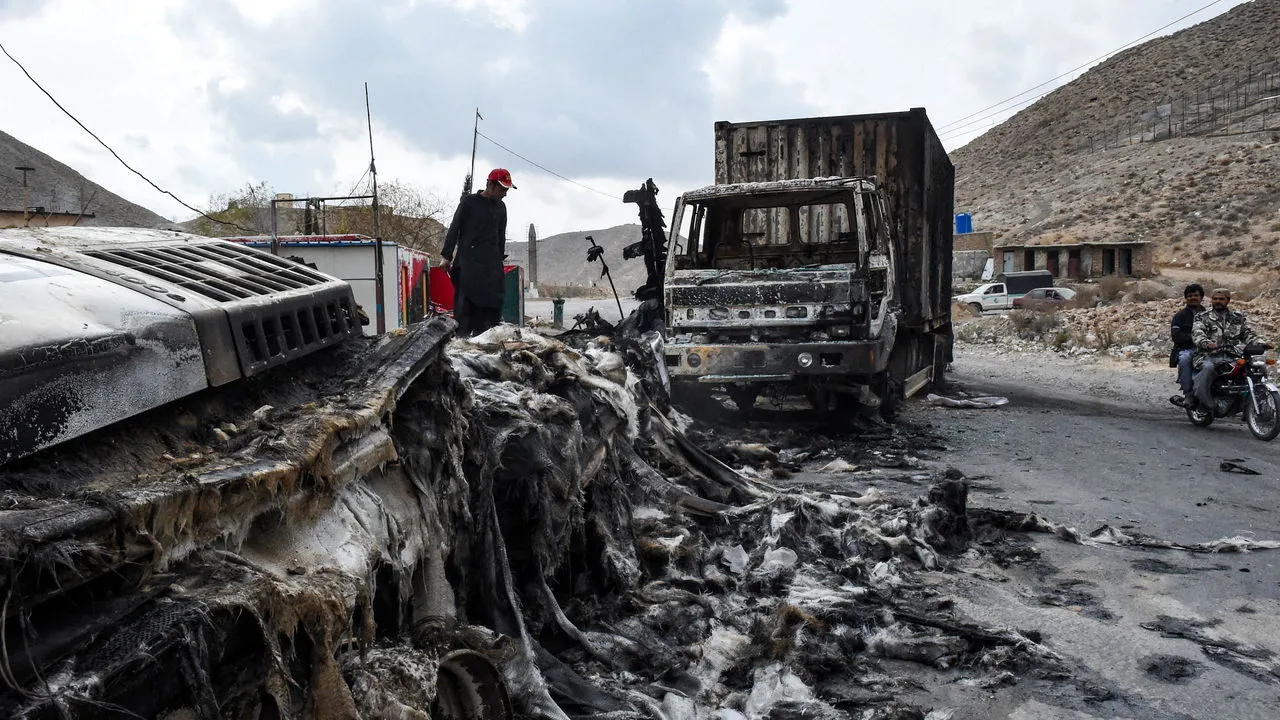
Mobile coverage is often nonexistent between distant cities, yet militant groups appear to maintain coordination. Incidents such as the attack on the Jaffar Express and a recent deadly assault on a train in Quetta, where the blast’s intensity reportedly ignited vehicles at a distance underscore the operational sophistication. Some accounts suggest satellite-based communications, possibly resembling tactics used in other regional unrest involving covert device distribution and internet access.
A former U.S. intelligence official’s remarks following the Quetta incident, questioning potential Israeli involvement, have added to speculation, though no conclusive evidence has been publicly presented.
One of the most puzzling aspects is the apparent tactical convergence between ideologically opposed factions. The BLA, which projects a secular, liberal image (as articulated by figures like leader Harbiyar Marri in international forums), has been linked in recent operations with the Tehrik-e-Taliban Pakistan (TTP) and ISIS affiliates. This cooperation occurs despite mutual accusations of apostasy and enmity in other contexts.
The Taliban government has accused Pakistan of harboring ISIS, yet joint actions against Pakistani targets continue. Allegations persist of historical U.S. involvement in establishing certain groups in Afghanistan, with lingering concerns over abandoned weaponry and funding streams that could fuel cross-border militancy. India’s acknowledged role in supporting insurgent elements is frequently cited in Pakistani security briefings.
Selective targeting further fuels debate, attacks frequently focus on Chinese-linked CPEC projects in Balochistan, while projects associated with Western (U.S. or Canadian) interests appear spared. This pattern, combined with broader diplomatic maneuvers, suggests coordinated external strategies.
Pakistan and China have pushed for the BLA to be designated a terrorist organization at the United Nations, but the effort faced opposition from countries including the United Kingdom and the United States. This has deepened suspicions about differing priorities among global powers.
The province’s vast geography, strategic location, and resource wealth make it a natural theater for proxy rivalries involving India, Iran, Afghanistan, and major powers. As one local commentator summarized: “The method resembles tactics used elsewhere, satellite links, covert networks, and hybrid warfare, but applied with greater intensity against Pakistan.”
Pakistani authorities continue operations to restore stability, emphasizing development alongside security. However, officials warn that without addressing both local aspirations and external interference, the “Great Game” risks further escalation, with profound implications for regional peace and the broader Islamic world. The situation remains fluid, with ongoing intelligence assessments and diplomatic engagements. Pakistani leaders have called for national unity and vigilance against both internal divisions and foreign orchestration.