


In recent years, the international film industry has increasingly spoken about diversity, cultural inclusion, and the need for new voices. Yet in reality, the global screen remains deeply hierarchical: some countries are automatically perceived as producers of “major cinema,” while others are still assigned the role of cultural periphery.
When Western audiences hear about films from Central Asia, the Caucasus, or the post-Soviet space, the reaction is often predictable: “local exoticism,” “niche festival cinema,” or “regional agenda.” In recent years, another label has been added to this list — that of “political statement,” often overshadowing the artistic dimension itself. Behind these definitions lies an old cultural stereotype: the assumption that cinema from so-called “third world countries” exists somewhere outside the global artistic process. Such films are often expected in advance to offer either political commentary, poverty, trauma, or cultural distance.


Curiously, it is independent platforms in the UK, Canada, and the United States that have recently begun challenging this approach faster than major institutions. The paradox is especially striking today, when the global film industry publicly celebrates diversity and multiculturalism, while real films from large parts of the world remain almost invisible to Western audiences.
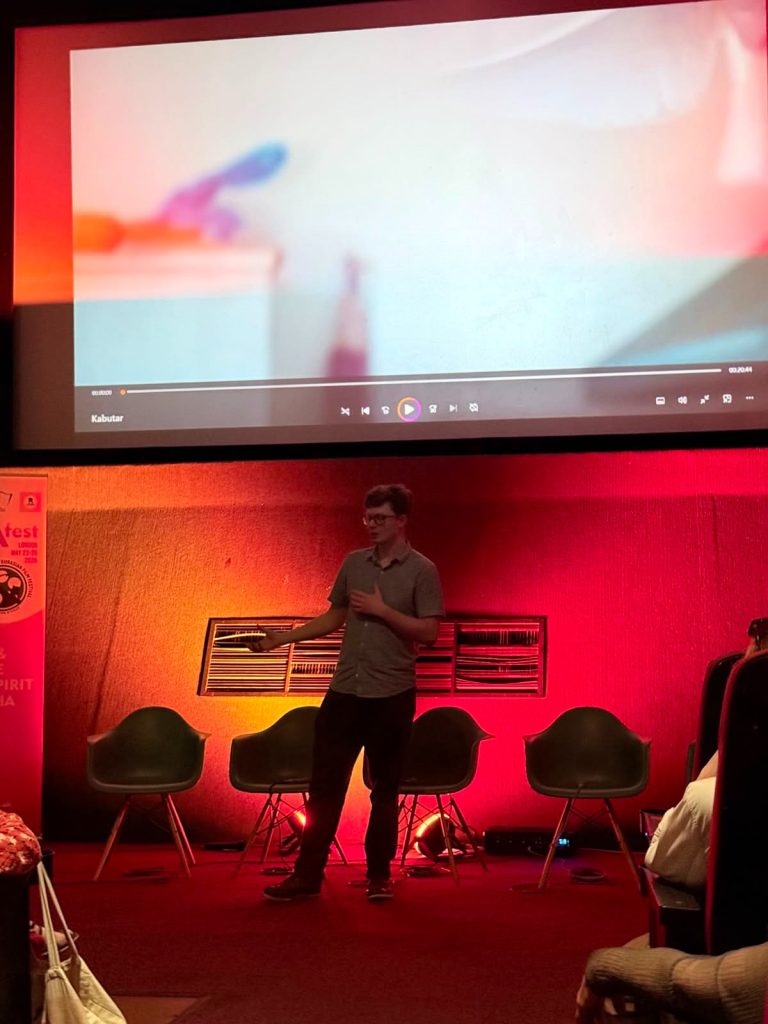
A recent example is the ninth season of the ECG Eurasian Film Festival, which has just concluded in London. During its first few years, the festival existed as an “international section” of the Romford Film Festival and as an attempt to introduce British audiences to films that almost never reached European distribution. In 2021, the festival received IMDb accreditation and became the first film festival to return to an offline format after the pandemic.


Does it attract hundreds of spectators? Of course not. Stereotypical thinking does not change overnight, and even the largest industry giants need decades and billions of dollars to cultivate new viewing habits among mass audiences. Yet initiatives like this train something else entirely. Initially, such events attract viewers who are deeply engaged with cinema and, in many ways, shape its future. The opportunity to develop cinematic taste and visual literacy through diverse material and direct dialogue with filmmakers themselves (and this is not a metaphor — directors personally present their works) is precisely how stereotypes begin to break down.

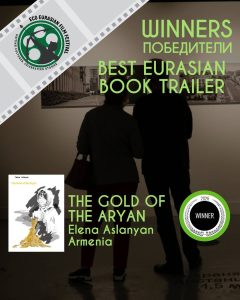
Another revealing detail is the remarkable diversity of tone and subject matter within the ECG Eurasian Film Festival 2026 programme itself. This is easy to trace through the winners. The undisputed leader was K-Poper by Ebrahim Amini, telling the story of an Iranian teenage girl who falls in love with a Korean K-pop singer and dreams of travelling to Seoul to see him and participate in a competition against her mother’s wishes. The top prize in Animation went to Swiss photographer Bellopropello for an animated film about how smartphones are reshaping human behaviour and social habits. Best Documentary was awarded to Russian director Vladimir Sumashedov for his film about an artist who attempted to stop the bloodshed of World War II through the power of art. The award for Best Book Trailer — itself a genre still unusual for mainstream audiences — went to Armenian writer Elena Aslanyan’s The Gold of the Aryans.

The Uzbek film Batyr Zakirov & Frank Sinatra: The Meeting That Could Have Happened…, which received the Audience Choice Award, explores an impossible encounter between two musical worlds: the Soviet East and American popular culture.
The Kazakh film Children’s, the Seeds of the Future by Saule Rysbaeva reflects on the humanitarian future through the stories of children, while the Uzbek animated project Legends of the Great Silk Road by Gulchekhra-Begim Makhmudova revisits the cultural legacy of the Silk Road — without attempting to adapt its identity to Western expectations.
The programme also featured A New Look: Uzbek Fashion Post-Independence, a documentary on the emergence of fashion in independent Uzbekistan, directed by young British filmmaker Dan Akhm. And perhaps this is the festival’s most important achievement: audiences begin to see not a “distant region,” but universal human stories.
In the end, what matters is not even which awards these films received. What matters more is that perhaps this is where the real dividing line in modern cultural politics now lies — not between East and West, not between “centre” and “periphery,” but between an old vision of world art and a new one, where the right to complexity, quality, and international dialogue is no longer determined by geography.
And if ten years ago films from Eurasia first had to explain why they deserved attention at all, today an increasingly different question is being asked: why did the global industry spend so long pretending not to notice them?