

By Srushti Hode
Climate change is increasingly being recognised as a defining security and geopolitical challenge in the Indo-Pacific region, with South Asia emerging as one of its most vulnerable epicentres. India, Pakistan, and Bangladesh are experiencing a convergence of environmental stresses that are no longer limited to ecological concerns but are now deeply intertwined with questions of national security, economic stability, and regional order. Recent policy research, including analysis by the Centre for Strategic and Contemporary Research (CSCR) in Pakistan, has gone further to describe climate change in South Asia as an “existential security threat,” particularly for India and Pakistan, where rising temperatures, extreme weather events, and water stress are already placing significant pressure on governance structures and development priorities.
The CSCR study highlights that climate change in the region is functioning as a threat multiplier, intensifying existing vulnerabilities such as population density, weak infrastructure, agricultural dependence, and pre-existing geopolitical tensions. In particular, the rapid melting of Himalayan glaciers, unpredictable monsoon patterns, and increased frequency of floods and heatwaves are disrupting the delicate hydrological balance of river systems such as the Indus basin. This is creating long-term concerns over water security, food production, and cross-border resource pressures, while also exposing a persistent gap between climate risks and institutional preparedness across the region.
India is experiencing increasing exposure to climate-related stress, particularly through more frequent and intense heatwaves, rising water scarcity across agrarian regions, and growing strain on urban infrastructure driven by rapid urbanisation and population pressure. Observations from policy institutions such as the Observer Research Foundation (ORF) highlight that climate impacts are already affecting labour productivity, agricultural output, and public health outcomes, especially in regions dependent on monsoon variability. While renewable energy expansion, particularly in solar capacity, has grown significantly, climate adaptation remains uneven and fragmented across states, with rural and climate-sensitive areas facing higher levels of vulnerability. The overall challenge is less about long-term policy ambition and more about the immediate need to strengthen climate resilience systems that can respond to escalating environmental shocks at scale.
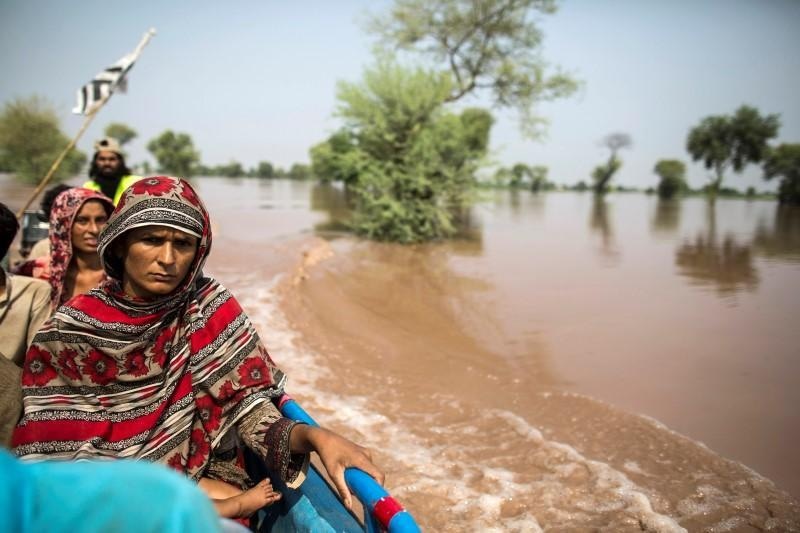
Pakistan continues to rank among the most climate-exposed countries globally, with recurring extreme weather events underscoring how environmental shocks can rapidly escalate into large-scale national crises. Recent flooding patterns, including the 2022 disaster, are frequently cited in policy and security literature as evidence of systemic vulnerability, exposing gaps in disaster preparedness, public infrastructure resilience, and food security mechanisms. More recent climate assessments continue to highlight that Pakistan remains highly vulnerable to climate variability, particularly in relation to erratic monsoon behaviour and accelerating glacial melt in the northern regions. The growing pressure on the Indus basin is increasingly viewed through both an environmental and strategic lens, as water stress deepens concerns around agricultural sustainability, internal stability, and broader regional interdependence.
Bangladesh faces a different but equally severe set of risks, primarily driven by its low-lying geography and high population density. Rising sea levels, salinity intrusion into agricultural land, and increasingly intense cyclonic activity are contributing to large-scale displacement, with rural populations steadily migrating towards urban centres. This form of climate-induced migration is already placing additional pressure on housing, employment, and public services, making Bangladesh one of the most cited global examples of long-term climate vulnerability and adaptation stress.
Across the broader Indo-Pacific strategic framework, climate change is now being understood not simply as an environmental challenge but as a structural “risk multiplier” that intersects with energy security, food systems, migration flows, and regional geopolitics. Think tanks such as Chatham House have consistently argued that South Asia’s climate vulnerabilities cannot be separated from questions of governance and security, particularly as resource scarcity and environmental shocks become more frequent. In this context, shared river systems such as the Indus, Ganges, and Brahmaputra bind India, Pakistan, and Bangladesh into a single ecological system, even as political relations remain fragmented.
Despite these challenges, the region also presents significant potential for cooperation. Experts have long suggested that climate pressures could create space for limited but meaningful collaboration in areas such as early-warning disaster systems, joint river basin management, renewable energy integration, and climate finance mechanisms. However, persistent geopolitical tensions continue to limit institutional coordination, even as the intensity of climate impacts increases.
Ultimately, climate change in South Asia is no longer a distant or theoretical concern but an immediate and evolving reality that is reshaping the region’s economic priorities and security calculations. As highlighted in CSCR’s research and echoed in wider Indo-Pacific policy discourse, the gap between rising climate vulnerability and slow policy adaptation is becoming one of the defining challenges of the region. Whether India, Pakistan, and Bangladesh respond through cooperation or continued fragmentation will significantly shape not only their domestic futures but also the broader stability of the Indo-Pacific in the decades ahead.